

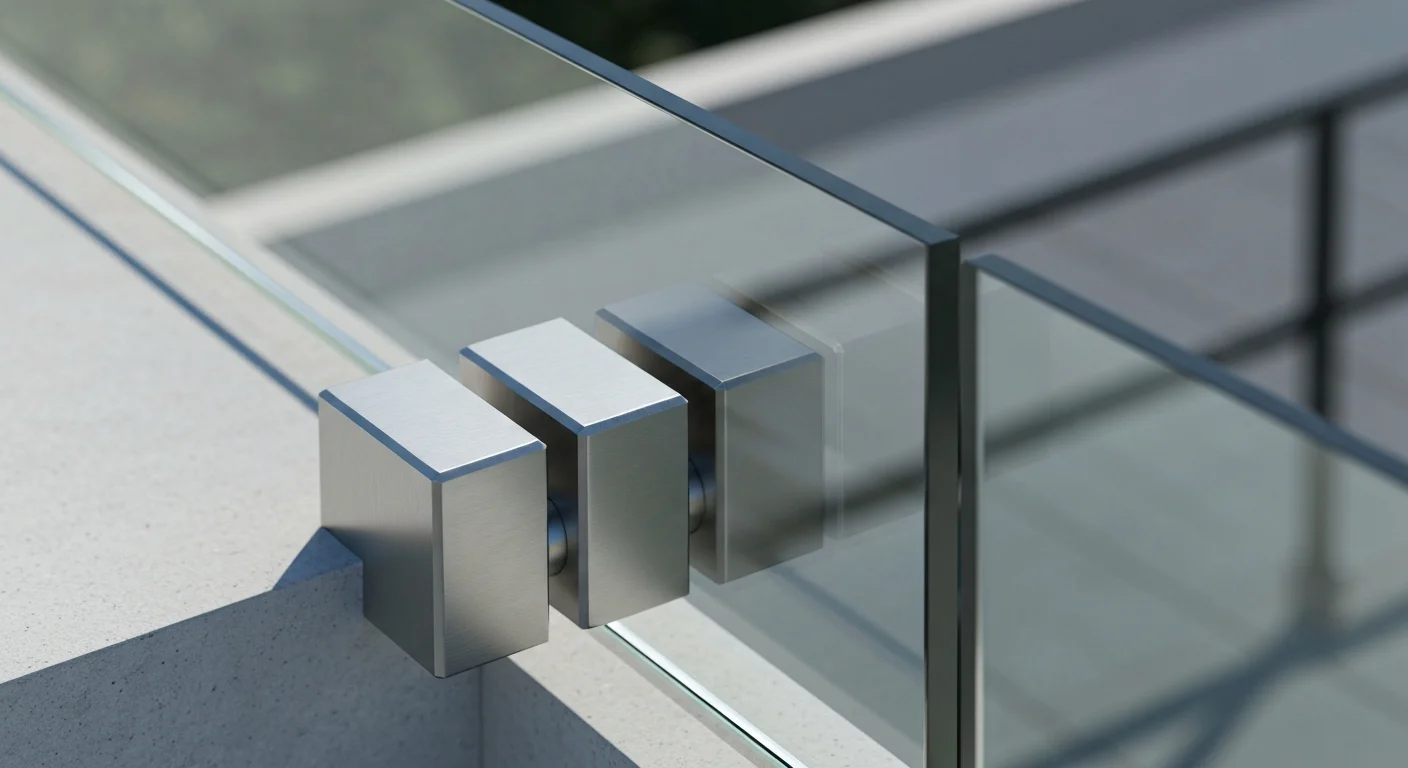
Glass Railing Hardware Explained: Posts, Clamps, Base Shoes & Spigots
For a completely unobstructed modern view, choose premium base shoes or heavy-duty spigots manufactured from marine-grade Duplex 2205 or Grade 316 stainless steel. For budget-conscious residential projects that still require robust structural support, select post-supported clamp systems utilizing powder-coated aluminum or Grade 304 stainless steel. The correct glass railing hardware depends entirely on your installation environment, local structural wind load codes, and the specific thickness of your tempered glass panels. Choosing low-quality zinc-plated alloy or non-rated hardware leads to rapid rust corrosion, structural instability, and failed local building inspections. Luxury Staircase Railings recommends prioritizing structural engineering certifications over aesthetic minimalist profiles when designing exterior systems in high-exposure regions. Investing in professional-grade mounting components ensures your modern structural system remains safe and visually striking for decades. High-quality fixtures maintain their aesthetic integrity under intense wind pressures and environmental stresses. Understanding the functional differences between these anchoring methods will protect your investment and guarantee compliance with modern safety protocols in 2026.
Key Takeaways
- Prioritize Material Grades: Use Duplex 2205 or Grade 316 stainless steel for coastal and outdoor projects to prevent tea staining and pitting corrosion.
- Understand Load Requirements: Select hardware certified to meet the 200-pound concentrated load requirement mandated by international building codes.
- Choose the Right Method: Base shoes offer a seamless monolithic look, while spigots provide excellent water drainage for exterior decks and pool areas.
- Avoid Direct Metal-to-Glass Contact: Always utilize high-grade EPDM gaskets and nylon isolation spacers to prevent localized stress points that cause glass shattering.
- Factor in Glass Thickness: Ensure your hardware matches your glass panels, typically requiring 1/2-inch to 9/16-inch tempered or laminated safety glass.
Understanding Glass Railing Hardware Categories
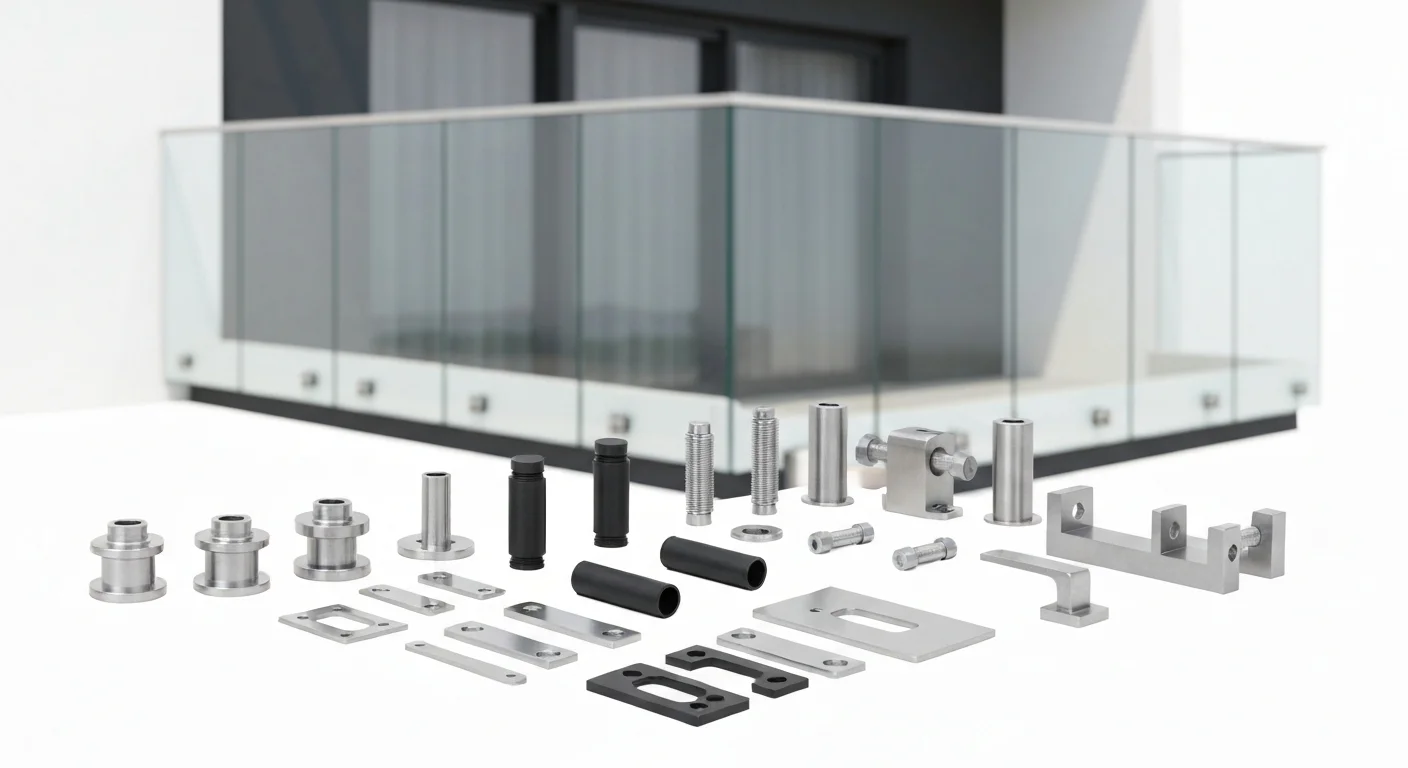
Glass railing installations rely on four core hardware categories: clamps, spigots, base shoes, and structural posts.
Clamps and brackets serve as the physical connection points between glass panels and adjacent walls, posts, or columns. These components use internal rubber compression gaskets to squeeze the glass panel securely without scratching the polished surface. High-quality clamps ensure that the clamping pressure is distributed evenly across the outer edges of the safety glass. This prevents localized pressure points that could lead to catastrophic failure. Clamps are available in round, square, or low-profile designs to suit varied architectural preferences.
Spigots are heavy-duty, surface-mounted or core-drilled clamps that support glass panels from beneath without requiring vertical posts. They elevate the glass roughly two inches off the floor. This elevation allows rainwater, debris, and pool runoff to flow away freely. This drainage capability makes spigots an excellent option for wet coastal environments, swimming pools, and open outdoor patios. Because they rely on a friction-fit mechanical grip, spigots do not require you to drill holes in the glass panels themselves.
Base shoes provide a continuous structural channel along the bottom edge of the glass panels. This design supports the heaviest glass thicknesses and delivers a highly sought-after minimalist aesthetic. Installers secure the base shoe directly to the concrete subfloor or wooden deck framing using high-strength structural anchor bolts. A high-quality frameless glass railing system typically relies on these continuous channel profiles to achieve a clean, floating appearance.
Material Selection: Stainless Steel vs. Aluminum vs. Zinc
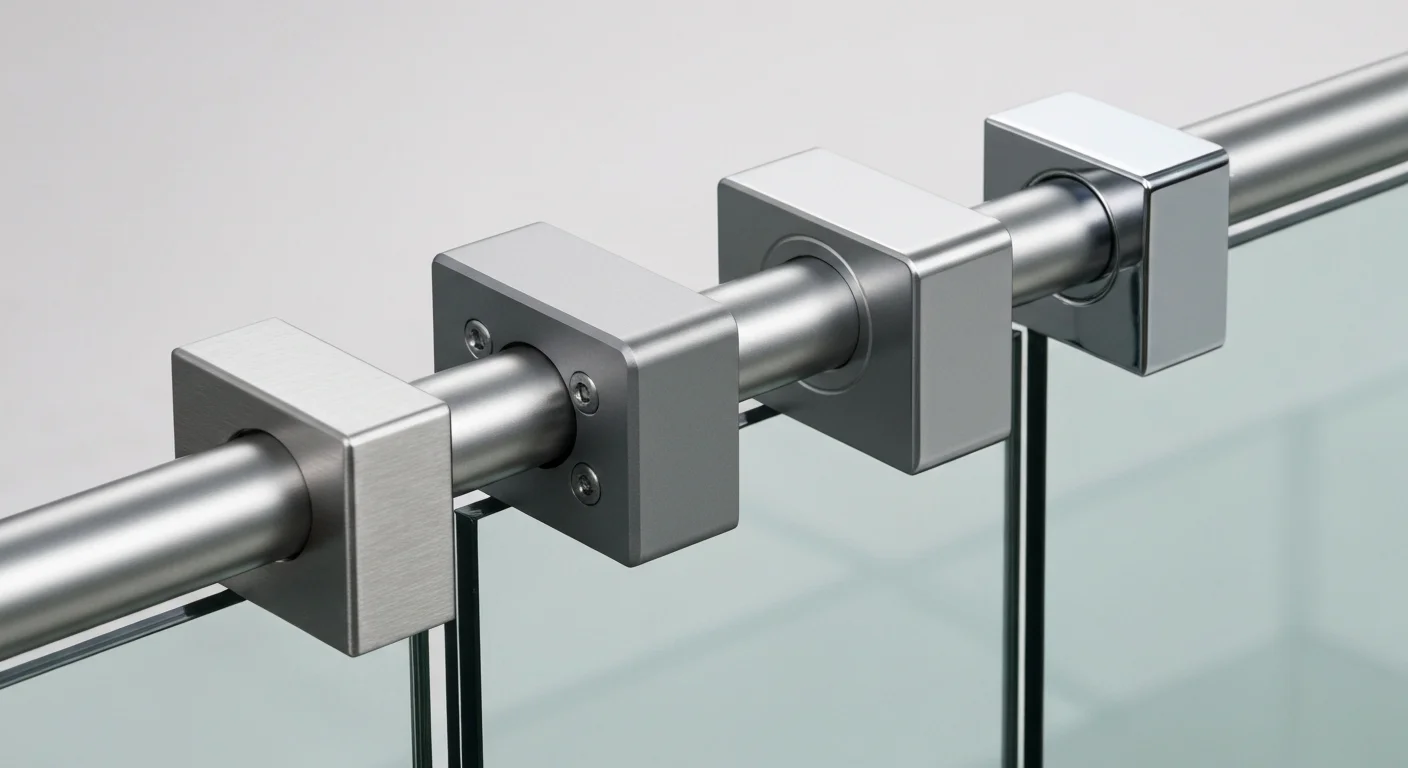
Choosing the right material for your glass mounting hardware dictates the structural lifespan, rust resistance, and maintenance schedule of the entire railing system.
Stainless steel remains the industry standard for commercial and high-end residential applications due to its exceptional tensile strength. Grade 304 stainless steel offers excellent structural performance for dry, interior locations such as home staircases and loft spaces. However, it will develop surface oxidation, often called tea staining, when exposed to outdoor humidity, rain, or salt air. Designers must reserve Grade 304 components exclusively for controlled indoor environments.
Grade 316 stainless steel contains molybdenum, which dramatically improves resistance to chlorides, road salts, and coastal ocean air. For marine environments, Duplex 2205 stainless steel represents the gold standard of hardware materials. It provides double the yield strength of Grade 316. It also possesses unmatched resistance to stress corrosion cracking. This makes it the ideal choice for beachfront properties in Florida, California, and Texas.
Powder-coated aluminum offers a lightweight, cost-effective alternative that resists rust naturally without the premium price tag of stainless steel. Standard aluminum components work wonderfully in sheltered residential locations where extreme structural forces are rare. However, avoid cheap zinc-plated carbon steel alloys at all costs for exterior projects. The thin zinc coating degrades within a few seasons, leaving the underlying steel vulnerable to rust. This rust quickly stains your glass and compromises structural safety.
Choosing the Best Glass Railing Systems Hardware for High-Wind and Coastal Areas
Selecting the best glass railing systems hardware for high-wind zones requires specifying heavy-duty Duplex 2205 stainless steel spigots or structural base shoes capable of withstanding extreme lateral pressure.
Coastal installations present unique physical challenges that demand highly engineered mounting solutions. Winds whipping off the ocean can create dramatic pressure differentials, placing massive bending stress on glass balustrades. In these microclimates, structural calculations must guide every single hardware decision. You cannot rely on standard hardware templates when designing for hurricane-prone coastlines.
According to wind design criteria outlined by the American Society of Civil Engineers, building envelopes in hurricane-prone regions must withstand wind velocities exceeding 110 miles per hour. Standard residential-grade clamps cannot handle these cyclic pressures safely. Instead, projects in coastal zones must utilize heavy-duty, thick-walled aluminum or steel base shoes. These channels distribute wind loads evenly across the entire lower edge of the laminated glass panels.
Additionally, water pooling around mounting hardware accelerates electrochemical corrosion, commonly known as galvanic corrosion. Designers must utilize non-conductive isolation shims and UV-stabilized nylon gaskets to prevent direct metal-to-metal contact between fasteners and clamps. Regular maintenance is also critical. Even marine-grade stainless steel requires periodic freshwater rinsing to clear away accumulated salt crusts. When choosing between glass and stainless steel systems for coastal regions, hardware durability must remain your primary focus.
Comparative Analysis of Structural Glass Balustrade Components
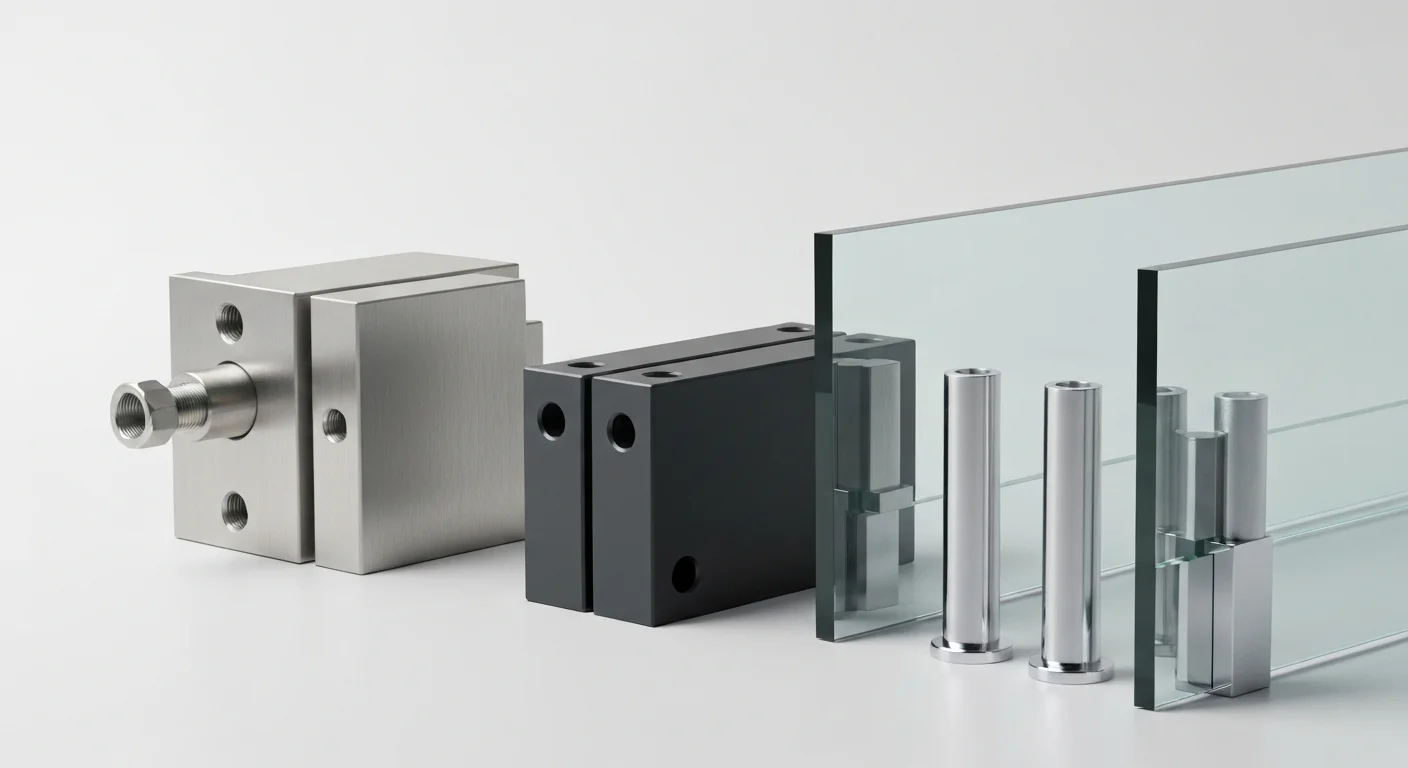
Evaluating structural glass balustrade components requires comparing initial material costs, mechanical load capacities, and the ease of physical installation.
Each mounting method alters the visual impact, architectural profile, and total installation budget of your project. For instance, base shoe channels hide the mounting points completely but require precise leveling and specialized tools. Spigots provide a modern floating appearance and simplify water drainage but require drilling into the subfloor. Post-and-clamp configurations cost less and install quickly but interrupt the continuous glass aesthetic with vertical metal bars. Understanding these differences helps architects and homeowners select the correct components for their specific design goals in 2026.
| Hardware Type | Relative Cost | Best Application | Key Advantage |
|---|---|---|---|
| Base Shoes | Premium ($150–$400/ft) | Modern frameless balconies and high-wind outdoor decks | Maximum continuous structural support and clean minimalist look |
| Spigots (Talon Grips) | Moderate to High ($60–$120/unit) | Pool surrounds, coastal patios, and exterior walkways | Excellent water drainage and modern floating appearance |
| Glass Clamps | Budget-Friendly ($15–$45/unit) | Post-supported interior staircases and low-rise residential decks | Highly adjustable and cost-effective structural connection |
| Stair Wall Brackets | Budget-Friendly ($20–$50/unit) | Interior corridors, enclosed stairs, and commercial hallways | Ensures precise ADA clearance and steady continuous grasp |
While base shoes offer the absolute highest structural integrity, they require pristine alignment. If the subfloor is even slightly uneven, the top of the glass panels will be noticeably misaligned. Spigots allow for minor leveling adjustments during installation via internal adjustment screws. This feature makes them a favorite for DIY-friendly projects and experienced installers alike.
Expert Step-by-Step Installation Protocols for Frameless Systems
Installing frameless glass railing hardware requires a systematic approach to ensure perfect panel alignment and absolute structural safety.
Professional installers follow a precise layout and leveling sequence to avoid glass breakage and structural failure. A single misaligned anchor can create extreme localized stress. This stress may cause tempered glass panels to shatter hours after installation. Precision measurement and patience remain the most critical tools on any railing installation site.
Let us examine the exact sequence required for a flawless base shoe or spigot installation:
- Substrate Verification: Confirm that the structural mounting surface, whether concrete or wood joists, can support the heavy dead load of the glass panels.
- Layout and Marking: Use a high-precision laser level and chalk line to mark the exact centerline for the hardware anchors.
- Drilling and Anchor Setting: Drill anchor holes into the substrate and secure the spigots or base shoes using marine-grade stainless steel threaded studs and structural epoxy or expansion anchors.
- Plumbing and Shimming: Place high-density plastic shims beneath the hardware to ensure every component is perfectly level across the entire run.
- Glass Insertion and Isolation: Carefully lower the tempered glass panels into place, ensuring they sit directly on rubber setting blocks and are completely isolated from any metal surfaces by EPDM gaskets.
- Final Alignment and Torque: Adjust the glass panels until the top edges align perfectly, then tighten the compression bolts using a calibrated torque wrench to the exact foot-pounds recommended by the manufacturer.
Avoid using standard silicone sealants as structural support. Only certified structural silicone or specialized mechanical wedges should hold glass panels in place. For complex layouts, such as modern staircase railing systems, hiring a licensed railing contractor prevents expensive code violations and hazardous installations.
Pricing and Lifetime Cost Analysis of Railing Hardware
The overall cost of glass railing hardware ranges from $15 per clamp for basic residential interior setups to over $400 per linear foot for high-end, structural-grade commercial base shoe channels.
When planning a railing renovation, looking purely at the initial purchase price is a common trap. Cheaper, non-certified hardware often requires frequent replacement, costly structural repairs, and extra labor charges due to installation difficulties. Cheap hardware eventually costs more over time than high-end materials.
According to research published by the International Code Council, non-compliant railing failures represent one of the leading causes of residential deck injuries during high-occupancy events. Upgrading to fully certified, load-tested hardware minimizes liability risk and guarantees long-term durability. To ensure your project meets local building codes, hardware must resist a minimum concentrated force of 200 pounds applied at any point along the top rail, as verified by rigorous testing from ASTM International.
Let us break down the standard pricing structures observed in 2026 for high-quality components:
- Premium Duplex 2205 Spigots: Retails between $80 and $150 per spigot. Two spigots are typically required for every four-foot glass panel.
- Heavy-Duty Aluminum Base Shoe: Costs approximately $90 to $160 per linear foot, excluding the specialized internal dry-glaze wedge kits which add another $20 to $45 per foot.
- Structural Glass Clamps: Range from $20 to $60 per clamp depending on whether they are flat-backed for walls or curved-backed for round metal posts.
- Handrail Bracket Attachments: High-end, adjustable handrail brackets cost between $35 and $85 each, providing essential structural support for secondary grab rails.
By investing in robust, corrosion-resistant hardware from the beginning, you avoid the heavy labor costs associated with removing heavy, fragile glass panels just to replace a rusted structural clamp a few years down the road.
FAQ
What is the best material for outdoor glass railing hardware?
The best material for outdoor applications is marine-grade Duplex 2205 or Grade 316 stainless steel. These alloys offer superior resistance to salt-air corrosion, pool chemicals, and harsh weathering. For dry interior spaces, Grade 304 stainless steel or powder-coated aluminum offers an excellent, cost-effective alternative.
How thick should glass be for a frameless railing system?
Frameless systems typically require tempered or laminated safety glass with a thickness of 1/2 inch (12 mm) or 9/16 inch (14 mm). This thickness provides the necessary structural rigidity to withstand wind loads and impact forces without needing vertical posts. Always check your local building codes to ensure your glass thickness meets localized structural regulations.
Can I use standard rubber gaskets for outdoor glass hardware?
No, standard rubber gaskets will dry out, crack, and shrink when exposed to UV radiation and temperature fluctuations. You must use high-quality EPDM or Santoprene gaskets specifically engineered for exterior glazing applications. These materials retain their elasticity and cushioning properties over decades of intense sun and rain exposure.
Is it cheaper to install base shoes or spigots for glass railings?
Spigot systems are generally more cost-effective and easier to install than continuous base shoe channels. Spigots require fewer anchor points in the subfloor and allow for simpler water drainage on outdoor decks. Base shoes cost more for the raw materials and require highly precise leveling across the entire run, which increases labor expenses.
Which building codes govern glass railing hardware installations?
Glass railing systems must comply with the International Building Code (IBC) and International Residential Code (IRC) standards. These codes require the hardware and glass assembly to resist a concentrated load of 200 pounds applied to the top rail. Additionally, they dictate safety factors and specify the use of tempered or laminated safety glass.
How do I clean and maintain stainless steel railing hardware?
Clean your hardware periodically with fresh water, mild dish soap, and a soft microfiber cloth to remove surface salt and dirt. Avoid using harsh steel wool or abrasive cleaners, which can scratch the protective oxide layer of the stainless steel. Applying a thin coat of marine-grade wax or metal protectant twice a year will significantly extend its luster and prevent tea staining.
See also: How to Choose the Right Stair Railing for Your Home
