

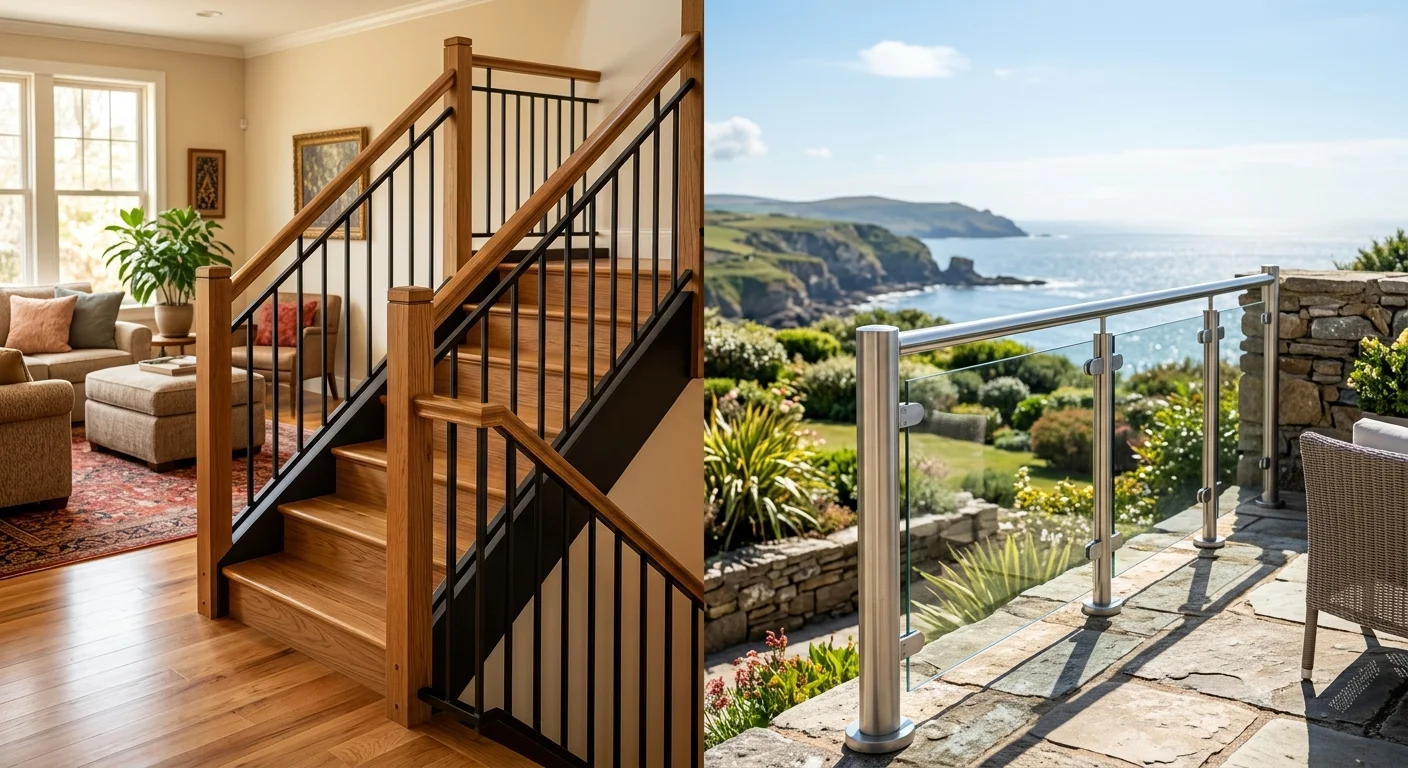
Interior vs. Exterior Railings: Key Differences Explained
For interior installations where environmental exposure is non-existent, prioritize warm tactile materials such as white oak, dark walnut, architectural wrought iron, or unlaminated monolithic glass to achieve custom interior integration. For exterior applications exposed to precipitation, ultraviolet radiation, and humidity fluctuations, select marine-grade 316 stainless steel, electrostatic powder-coated structural aluminum, or ionoplast-laminated safety glass engineered for high wind loads. While interior systems focus on ergonomic handgrip profiles and interior architectural cohesion, exterior systems demand structural anchorage designed to withstand lateral wind pressures and thermal expansion. Matching the material specification directly to the installation environment prevents structural degradation and costly retrofits.
Key Takeaways
- Environmental Resistance: Exterior railings require non-porous metals, UV-stable coatings, and moisture-resistant hardware to prevent rust, rot, and delamination.
- Material Specifications: Interior systems utilize 304-grade stainless steel, solid hardwoods, and monolithic glass, whereas exterior systems demand 316-grade stainless steel, powder-coated aluminum, or SGP laminated glass.
- Building Code Requirements: Exterior elevated decks often enforce stricter height regulations (up to 42 inches in commercial or high-rise zones) compared to standard 36-inch residential interior guards.
- Anchoring Mechanics: Outdoor installations require specialized flashing, drainage weep holes, and thermal expansion joints to protect structural floor substrates from moisture intrusion.
- Lifecycle Maintenance: Interior railings need periodic dusting and timber polishing, while exterior systems require semi-annual washdowns to remove corrosive airborne salts and pollutants.
Key Differences Between Indoor and Outdoor Railing Systems
Location dictates every engineering decision when designing a guardrail or handrail system. While indoor railings exist within climate-controlled environments, outdoor systems must endure severe temperature swings, direct rain, ice, and intense solar radiation. Selecting the wrong specification for an application compromises structural integrity and accelerates material failure.
Interior railings function primarily as safety barriers and decorative elements within a home or commercial building. Humidity levels remain relatively stable, eliminating the threat of rapid atmospheric corrosion or biological growth. Consequently, fabricators can utilize unsealed organic timbers, carbon steel with decorative paint, and delicate glass edge treatments without fearing weather-related decay.
According to field research from the National Association of Home Builders, structural components exposed to outdoor environments experience structural degradation up to five times faster than their indoor counterparts when unsealed. Outdoor railings must withstand continuous moisture exposure, which triggers galvanic corrosion in mixed-metal assemblies and wood rot in organic balusters. Furthermore, airborne contaminants such as coastal sea salt or industrial smog strip away low-grade coatings rapidly.
Thermal movement also represents a major operational distinction. Exterior railings expand and contract continuously throughout seasonal heat cycles. An aluminum top rail stretching 20 feet can expand significantly across a 50-degree temperature differential. Exterior fasteners and connection splices must incorporate expansion slots to accommodate this movement. Interior railings experience minimal thermal expansion, allowing for rigid, fully welded continuous runs without expansion joints.
Selecting the Best Materials for Indoor vs. Outdoor Railings
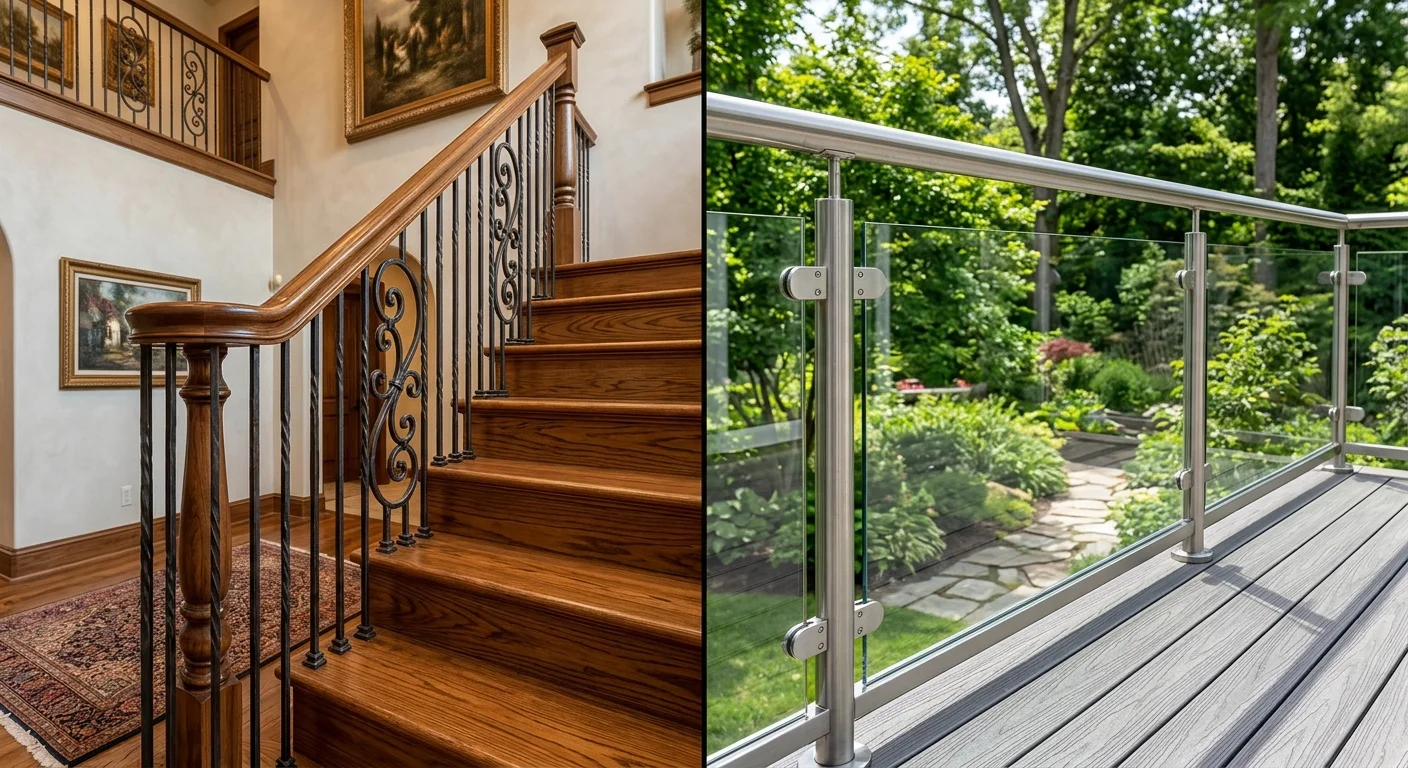
Material selection defines both the aesthetic longevity and maintenance cycle of any installation. Indoors, aesthetic flexibility allows for luxurious finishes that would instantly fail outside. Hardwoods like red oak, hickory, and walnut deliver rich warmth for interior staircases, costing between $45 and $120 per linear foot installed. However, exposing these untreated species to rain results in warping, splitting, and fungal rot within months.
When selecting metals, grade selection is paramount. Indoors, 304-grade stainless steel provides excellent corrosion resistance at a reasonable price point of $80 to $180 per linear foot. For exterior balconies, oceanfront decks, or pool enclosures, 316-grade stainless steel is essential. Grade 316 contains molybdenum, an alloying element that resists chloride pitting caused by coastal salt spray and de-icing chemicals. Utilizing 304-grade stainless steel outdoors frequently results in tea-staining, a unsightly brown surface corrosion.
Aluminum represents one of the most reliable options for high-durability exterior applications. Extruded aluminum coated with an AAMA 2604 or 2605 powder finish creates an impervious barrier against moisture and UV degradation, priced competitively between $65 and $150 per linear foot. Unlike iron or carbon steel, aluminum does not rust when exposed to moisture. For modern architectural concepts, homeowners frequently evaluate steel vs. aluminum railings to balance structural stiffness against weatherability.
Glass selection requires careful engineering based on location and code requirements. For indoor applications, monolithic tempered glass panels (typically 3/8-inch or 1/2-inch thick) offer clean lines and uninterrupted light transmission. Outdoors, structural glass must handle localized wind loads and impact hazards. Modern codes frequently dictate laminated tempered glass featuring a structural interlayer like Sentech SGP (SentryGlas Plus). If an exterior panel shatters, the stiff interlayer keeps the glass upright, maintaining safety. You can review detailed structural options in our guide on tempered vs. laminated glass choices for architectural barriers.
Comparing Railing Attributes: Interior vs. Exterior
The following matrix compares core parameters between indoor and outdoor applications to assist in material specification.
| Railing Parameter | Interior Railing Systems | Exterior Railing Systems |
|---|---|---|
| Primary Material Options | Solid Hardwoods, 304 Stainless Steel, Carbon Steel, Monolithic Tempered Glass | 316 Stainless Steel, Powder-Coated Aluminum, Structural SGP Laminated Glass, Composite |
| Primary Hazard Exposure | Physical impact, minor cleaning chemical exposure, human skin oils | Rain, snow, solar UV, salt spray, freezing cycles, wind loads |
| Building Code Focus | Graspability, 4-inch sphere rule, 200 lb concentrated load resistance | 42-inch elevated height, wind resistance pressure, structural post anchoring, drainage |
| Fastener Hardware | Standard zinc-plated or interior carbon steel screws | 316 stainless steel fasteners, isolation gaskets, chemical anchors |
| Typical Price Range | $50 – $250 per linear foot installed | $75 – $400+ per linear foot installed |
| Maintenance Interval | Annual inspection; periodic dusting or surface polishing | Semi-annual pressure washing, coating inspection, bolt torque check |
Building Codes and Safety Standards for Indoor and Outdoor Systems
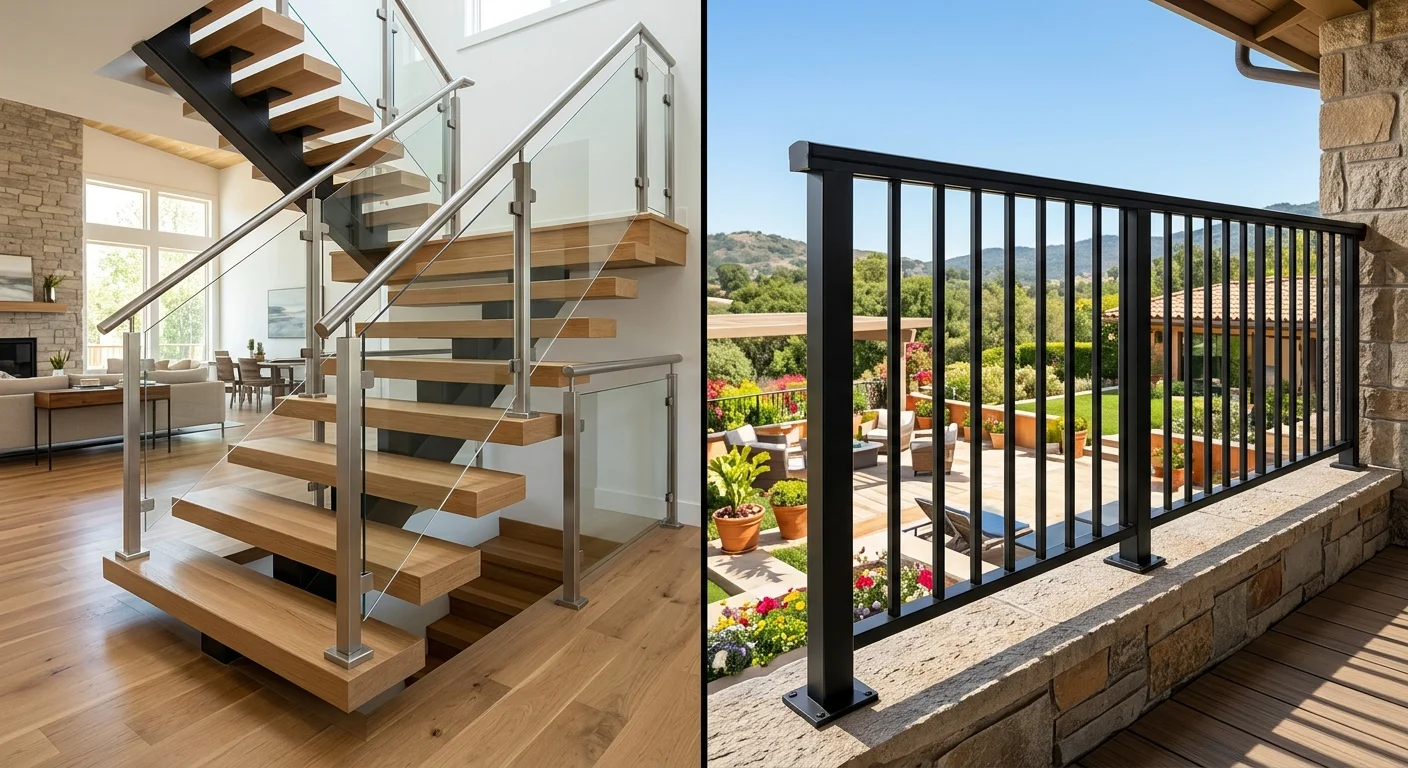
Safety regulations enforced by local building departments govern guardrail construction regardless of location. The International Code Council sets base standards through the International Residential Code (IRC) and International Building Code (IBC). However, exterior systems must comply with additional environmental structural load criteria.
Both interior and exterior guardrails must resist a concentrated load of 200 pounds applied in any direction at the top of the handrail or guard. In addition, intermediate balusters or glass infill panels must withstand a 50-pound horizontal load applied over a one-square-foot area. In residential interior settings, the minimum guardrail height is typically 36 inches above the finished floor or stair tread nosing.
Exterior installations often face stricter height requirements, particularly on elevated decks, balconies, and rooftops. Commercial applications and multi-family exterior balconies generally require a 42-inch minimum guard height. The standard 4-inch sphere rule applies universally: openings between balusters, cables, or structural members must not allow a 4-inch diameter sphere to pass through, preventing small children from slipping through the barrier.
Exterior glass systems face rigorous wind-load testing based on localized exposure categories defined by regional wind maps. Coastal regions exposed to hurricane-force winds require structural glass systems backed by engineering calculations. Posts must be anchored deep into structural floor framing, rim joists, or concrete slabs using engineered lag bolts or epoxy anchor rods designed to resist severe overturning moments. If you are upgrading a interior space, modern indoor railing designs provide streamlined aesthetic mounting without these harsh engineering constraints.
How to Choose and Install the Right Railing Solution
Executing a successful railing installation requires a methodical approach that addresses structural support, building code requirements, and long-term durability from design through final trim work.
- Evaluate Environmental Exposure: Determine whether the installation site is indoor climate-controlled, covered exterior (porch), or direct exposure (oceanfront deck). Identify specific threats such as saltwater mist, direct rainfall, or high wind loads.
- Inspect Structural Substrate: Verify that the mounting substrate—whether timber joists, steel beams, or concrete slabs—can support the required structural loads. Add blocking inside floor cavities prior to drywall or decking installation.
- Select Code-Compliant Materials: Choose materials engineered specifically for the target environment. Match metal alloys to atmospheric conditions and ensure wood species specified for outdoor use possess natural decay resistance (such as teak, ipe, or pressure-treated pine).
- Detail Proper Waterproofing and Isolation: For outdoor posts mounted through decking surfaces, install physical flashing, silicone sealants, and neoprene washers. Prevent galvanic action by placing rubber or plastic isolation shims between dissimilar metals.
- Execute Engineered Fastening: Secure post bases using grade-matched structural lag bolts or stainless steel wedge anchors. Tighten to manufacturer torque specifications and verify plumb alignment using a digital level.
- Apply Protective Surface Sealants: Finish raw timber with exterior-grade sealers containing UV inhibitors, or apply specialized metal sealants to stainless steel components to maintain long-term corrosion resistance.
Long-Term Maintenance and Corrosion Prevention Guidelines
Preventative maintenance schedules vary widely between indoor and outdoor environments. Indoor railings require low operational effort. Wipe wood handrails with specialized wood soaps to prevent build-up of skin oils, and clean interior glass panels using standard ammonia-free glass cleaners. Inspect mechanical joints annually to confirm set screws remain tight on stainless steel or iron fittings.
Exterior systems require proactive maintenance to protect against surface oxidation and coating breakdown. Standards published by ASTM International indicate that localized surface pitting in stainless steel can reduce component fatigue strength over time if left unmanaged. Outdoor metal systems should be washed down twice a year using warm water, mild liquid detergent, and a soft microfiber cloth to strip away salt deposits and dirt accumulation.
On powder-coated aluminum or painted steel railings, inspect post bases, welded joints, and fastener penetrations quarterly for chips or hairline cracks. Water infiltrating beneath a powder coat finish leads to filiform corrosion, causing the coating to bubble and peel away. Touch up minor chips immediately using manufacturer-approved zinc-rich primers and matching topcoat touch-up pens.
For custom outdoor railing installations utilizing cable infill, check cable tension annually. Thermal cycling causes stainless steel cable strands to stretch slightly over time. Use a tension gauge to confirm cable tension remains within recommended ranges (typically 200 to 300 pounds of tension per strand) to ensure the system satisfies the 4-inch sphere safety code.
Professional Advice: Avoiding Costly Railing Design Mistakes
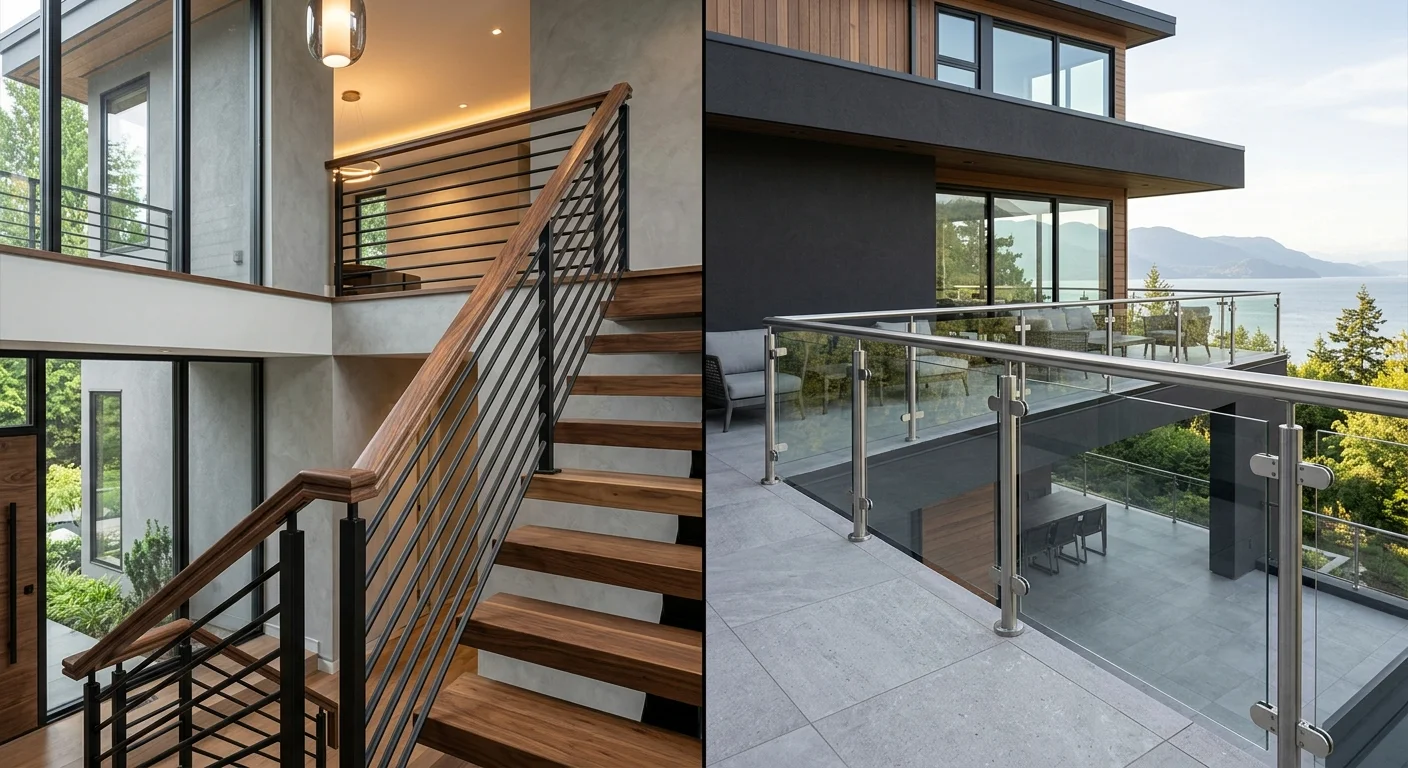
One of the most frequent mistakes made during railing specification is utilizing interior-grade hardware in outdoor environments. Zinc-plated carbon steel screws, common in interior timber framing, rust rapidly when exposed to exterior moisture. As the fastener corrodes, it expands—a phenomenon known as oxide jacking—which cracks surrounding timber or spalls concrete deck anchors. Always specify 316-grade stainless steel hardware for outdoor installations.
Another common mistake involves failing to account for water drainage on exterior surface-mounted base shoe glass channels or aluminum posts. Base shoes installed on outdoor decks must feature pre-drilled weep holes or drainage shims beneath the channel. Without weep holes, rainwater pools inside the channel, submerging the glass edge and delaminating PVB interlayers or freezing and cracking the aluminum channel in cold climates.
Finally, avoid ignoring galvanic corrosion when mixing dissimilar metals outdoors. Direct contact between aluminum and stainless steel or carbon steel creates an electrochemical reaction in the presence of moisture, corroding the softer metal rapidly. Always utilize non-conductive nylon washers, neoprene isolation pads, or anti-seize lubricants when joining different metal alloys in outdoor systems.
Frequently Asked Questions
What is the main difference between indoor and outdoor railing materials?
Indoor materials prioritize interior design harmony and warm textures, utilizing woods like oak, bare carbon steel, and interior 304 stainless steel. Outdoor materials require superior environmental durability to resist moisture, UV rays, and corrosion, favoring 316 marine-grade stainless steel, powder-coated aluminum, and weather-resistant composite materials.
Can you use an indoor railing for an outdoor deck?
No, you should never install an indoor-rated railing system on an outdoor deck. Indoor materials lack UV-stable coatings, moisture resistance, and anti-corrosive properties, leading to rapid rotting, metal rust, finish failure, and dangerous structural degradation when exposed to exterior elements.
Which type of glass is required for exterior glass railings?
Exterior glass railings typically require laminated tempered safety glass with an ionoplast structural interlayer (such as SGP). This construction ensures that if a glass panel breaks, the interlayer holds the shattered glass fragments together within the frame, maintaining structural protection against wind load and fall hazards.
How tall does an outdoor balcony railing need to be?
Residential outdoor balcony railings generally require a minimum height of 36 inches under IRC standards, while commercial structures and multi-family residential balconies under IBC standards usually require a minimum height of 42 inches above the finished deck surface.
How do you prevent outdoor metal railings from rusting?
Prevent rust by selecting naturally corrosion-resistant metals like marine-grade 316 stainless steel or aluminum, ensuring metals receive electrostatically applied powder coatings, using stainless steel fasteners, and washing down the system semi-annually to remove accumulated environmental salts and dirt.
Is aluminum or steel better for outdoor railings?
Aluminum is generally superior for most outdoor residential railings because it does not rust when exposed to moisture and features excellent resistance to salt air when powder-coated. However, structural steel is preferred for ultra-high load commercial applications where maximum rigidity and structural span are required.
