

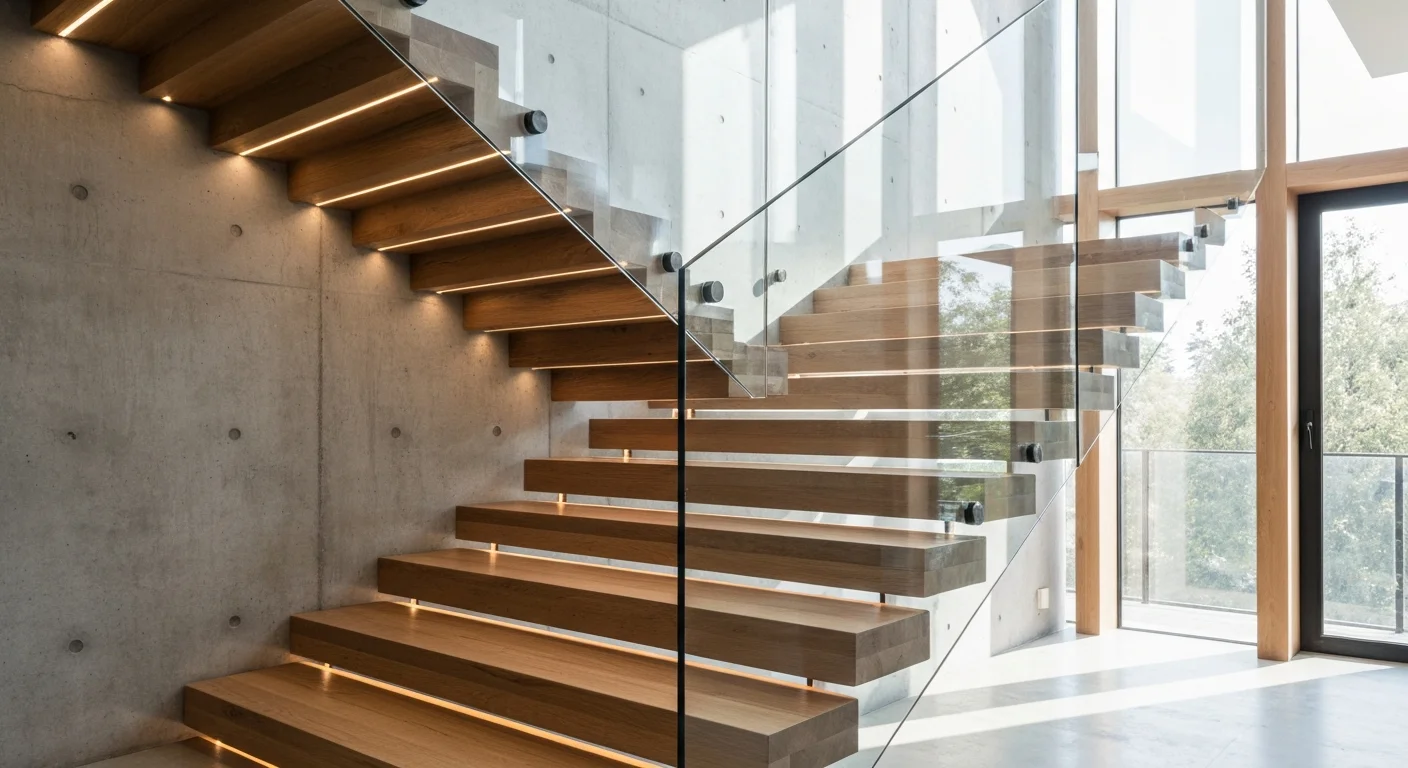
25 Best Floating Stairs Ideas: A Guide to Modern Designs
For a clean, modern interior that maximizes natural light, a cantilevered floating stair with frameless glass railings and thick hardwood treads is the premier choice. Homeowners seeking a structural statement without tearing open existing load-bearing walls should choose a steel mono-stringer system. These floating systems eliminate the solid risers of traditional stairs, turning a functional transit point into a striking architectural focal point. The ideal design depends entirely on your home’s framing structure, local building codes, and budget constraints. Professional installers must calculate exact load-bearing requirements before fabrication begins. By selecting high-quality materials and utilizing hidden support systems, you can achieve a lightweight, gravity-defying look that enhances the overall market value of your property. Whether you are remodeling a coastal estate or planning a new urban build, these stairs create a seamless flow between levels while preserving open floor plans. The following blueprint highlights the best structural configurations, premium materials, and modern layouts to inspire your project.
Key Takeaways
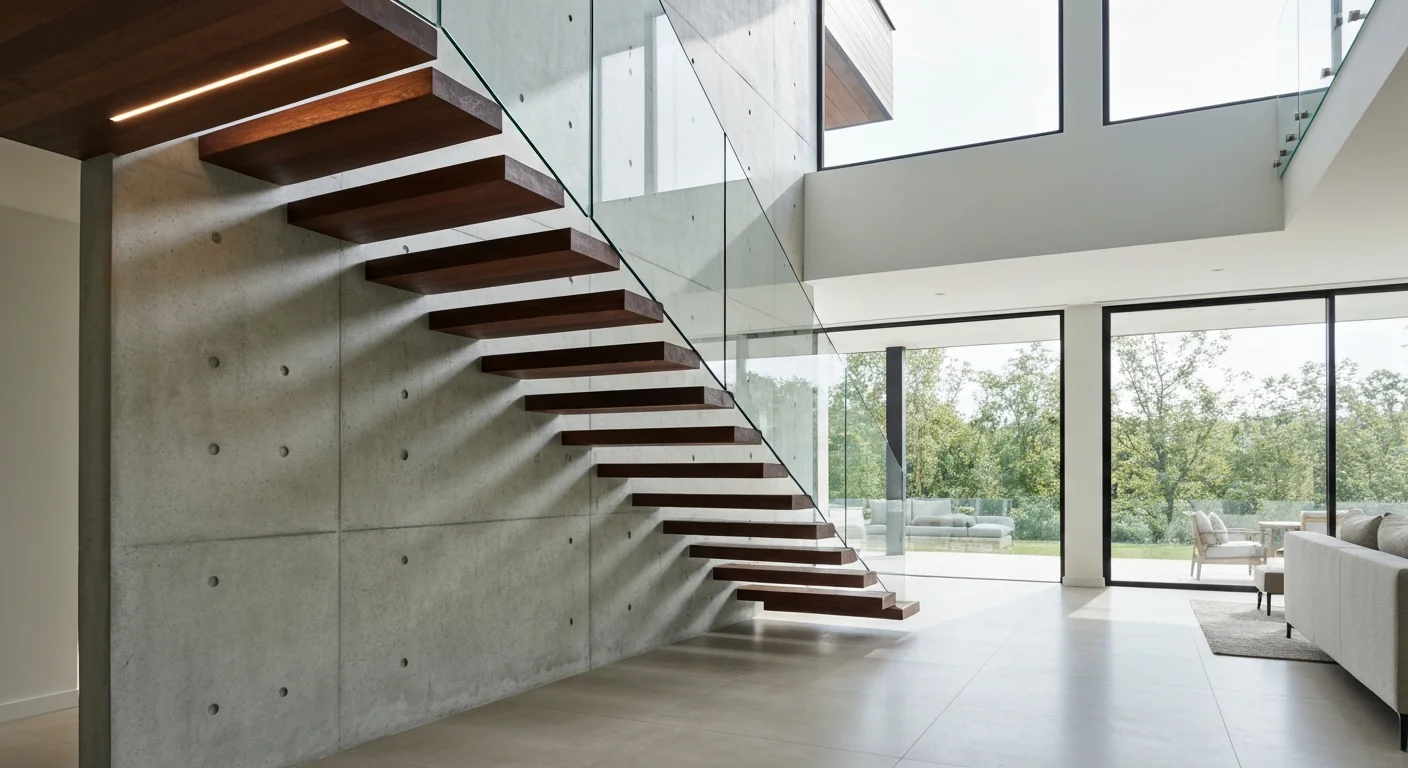
- Cantilevered designs hide support brackets inside the wall for a pure gravity-defying aesthetic.
- Mono-stringer steel beams offer a robust, easier-to-install alternative that fits open-concept floor plans.
- Building codes restrict open risers to a gap of less than four inches for safety compliance.
- Thick white oak and glass are the leading material choices for modern luxury residential layouts.
- Proper engineering prevents structural bounce, ensuring long-term safety and staircase durability.
Innovative Floating Stair Ideas to Transform Your Living Space
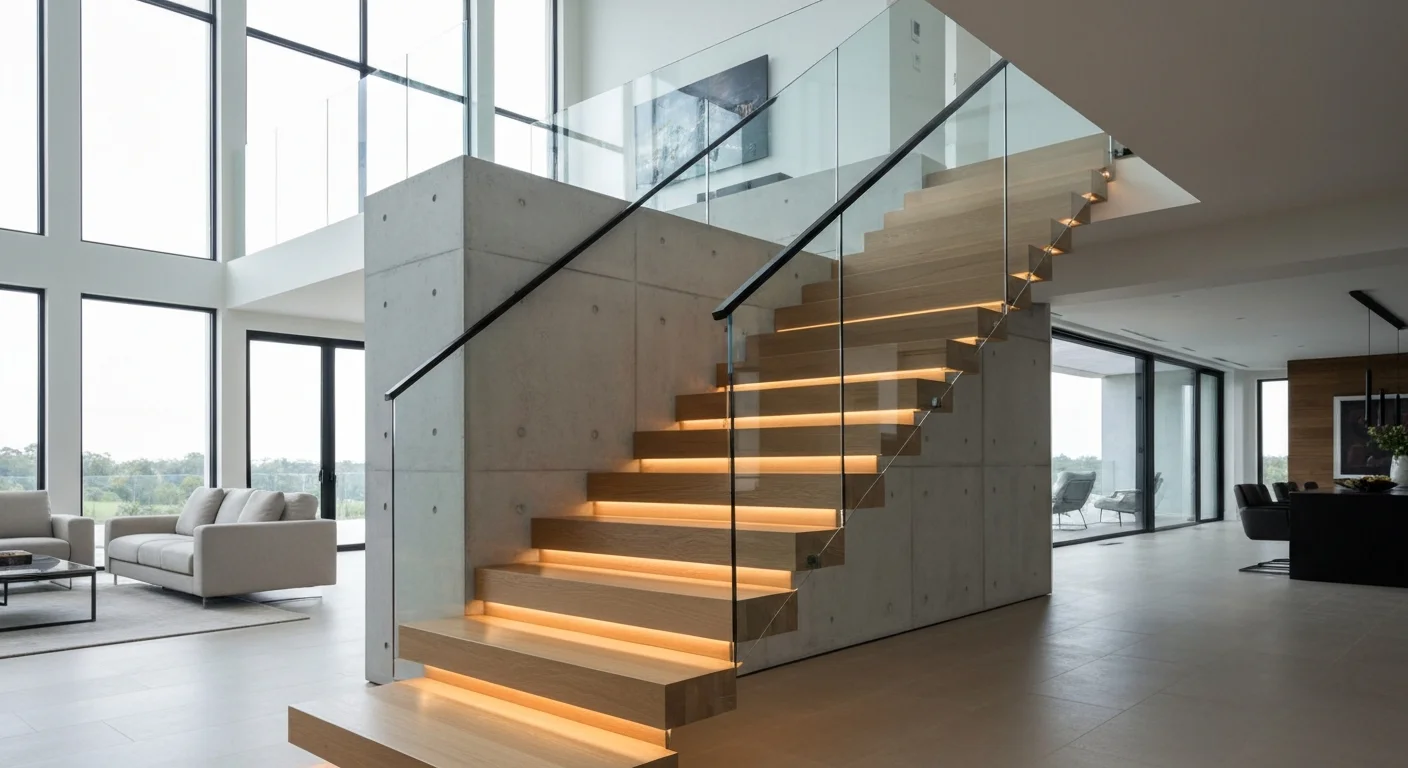
Innovative floating stair designs transform standard homes by introducing sculptural lines, open sightlines, and dramatic focal points. By eliminating the solid risers and bulky stringers of traditional construction, these systems invite light to pass freely through the room. This makes narrow hallways and compact entryways feel significantly larger. In modern interior architecture, the staircase is no longer just a utility. It serves as a central piece of art that anchors the surrounding design elements.
One of the most popular configurations is the cantilevered system, where each step appears to emerge directly from the wall. This setup works beautifully with integrated LED strip lighting routed into the underside of each tread. The soft, downward glow highlights the texture of the wall and provides safe pathfinding at night. For homes with expansive views, pairing these steps with a minimalist glass railing system preserves sightlines to the outdoors. The glass panels act as a protective barrier without adding visual weight to the space.
Another compelling design idea involves utilizing the open space beneath the steps. Traditional staircases create dark, closed-off closets that shrink a room. In contrast, the airy pocket beneath a floating stair can house a minimalist writing desk, a low-profile credenza, or an indoor garden. To achieve a harmonious look, match the wood species of your stair treads with nearby flooring or cabinetry. This design continuity unifies the entire room.
If you prefer a bolder, industrial aesthetic, consider leaving the metal support elements exposed. A single, raw-steel mono-stringer running down the center of the flight provides an elegant, sculptural backbone. You can paint the steel matte black to create a strong contrast against light-colored walls, or leave it unfinished for an urban loft vibe. For a softer look, wrap the steel stringer in matching hardwood to mimic a completely timber-based structure.
For multi-story luxury homes, a curved glass staircase with floating treads offers an unparalleled sense of grandeur. The graceful bend of the handrail combined with floating steps creates a fluid, organic movement through the center of the home. This configuration works exceptionally well in double-height entryways, where the staircase can be viewed from multiple angles. Adding custom-milled wood treads provides a warm, organic contrast to the cool glass panels.
Consider the following inspiring layouts to elevate your interior design:
- The Floating Ribbon: Treads connected by thin, folded metal plates that mimic a continuous piece of ribbon winding upward.
- Waterfall Treads: Hardwood steps that wrap seamlessly around a central steel stringer, showing no visible fasteners.
- Ceiling-Suspended Steps: Treads supported on one side by thin, vertical stainless steel cables anchored directly to the ceiling joists.
- The Stone Monolith: Thick, floating slabs of limestone or marble anchored to a reinforced concrete wall for a high-end, tactile experience.
- Minimalist Block Steps: Chunky, hollow wood boxes that slide over internal steel blades, creating a clean, seamless geometric block look.
Structural Configurations: How the Floating Stair Defies Gravity
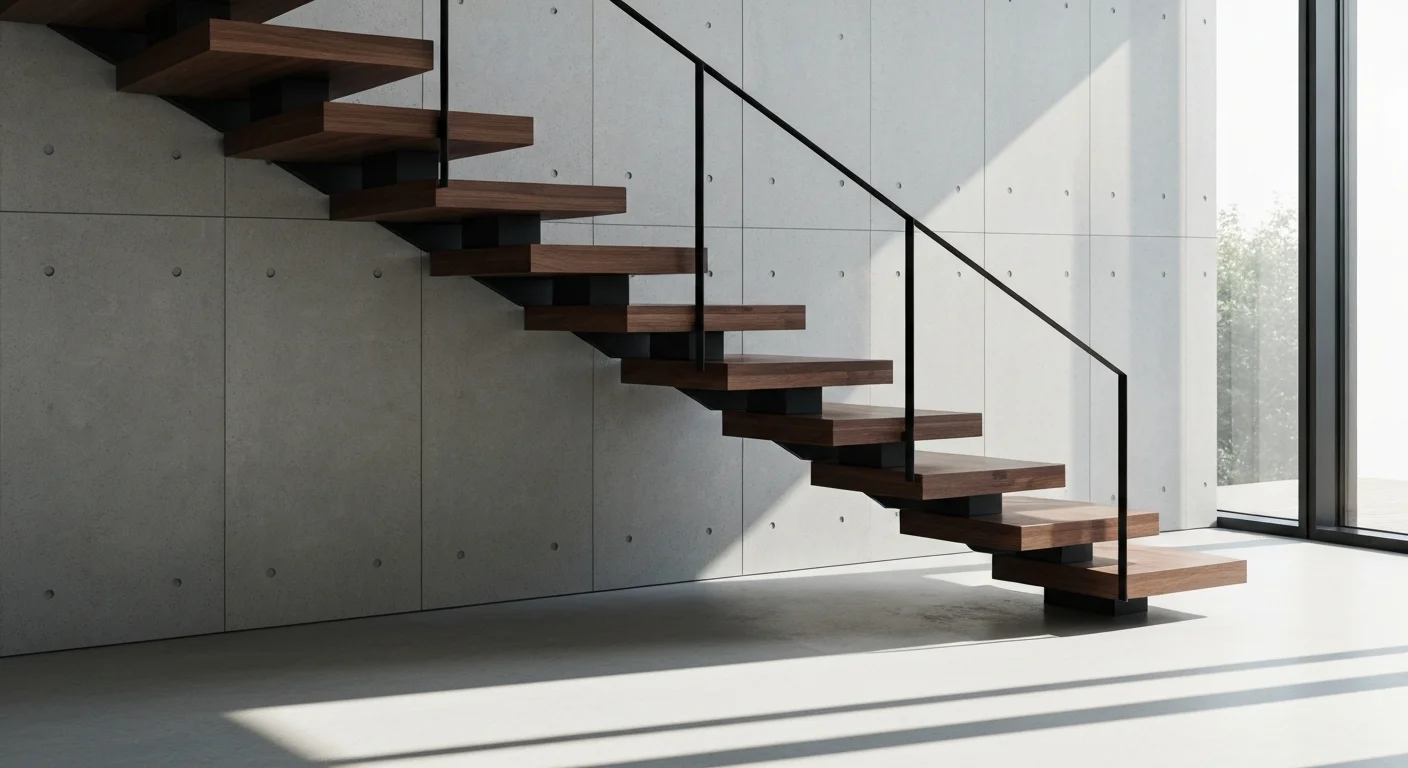
A floating stair relies on hidden engineering, using concealed steel stringers, wall anchors, or structural glass to support tread loads. Understanding how these systems carry weight is essential for planning a safe installation. While traditional stairs distribute weight across walls, floors, and risers, floating configurations must concentrate these loads into specific, engineered points. Without proper structural planning, the staircase can suffer from excessive bounce, wobble, or structural failure.
The cantilevered configuration is the most technically demanding floating layout. This design requires a heavy steel plate or a series of steel brackets to be bolted directly to the wall framing before drywall is installed. Each step is then mounted to these brackets, which act as levers. The wall itself must be constructed with engineered lumber or steel studs to handle the high torsional forces exerted when a person steps on the outer edge of a tread. A common professional mistake is failing to reinforce the wall, which leads to drywall cracking and unstable steps.
For homes where opening up the walls is not feasible, a mono-stringer system is the ideal alternative. This setup utilizes a single steel beam—usually a square or rectangular tube—running directly beneath the center of the steps. Steel mounting plates are welded to the top of the stringer, and the treads are bolted securely to these plates. This distributes the weight vertically down to the floor plate and header joist, eliminating the need for heavy wall reinforcement. The mono-stringer remains visible, but its central placement preserves the open, floating feel of the treads.
Double-lateral stringers offer a third structural option. In this configuration, thin steel plates are positioned on both sides of the treads, sandwiching them in place. These stringers can be exposed, or they can be recessed into the adjacent walls to keep them out of sight. Recessed double stringers provide excellent structural rigidity while maintaining a pure cantilevered look on both sides of the flight. This setup is highly recommended for wider staircases that experience heavy foot traffic.
When engineering these systems, professional contractors must adhere to strict building code requirements. For instance, the gap between open risers must be less than four inches to prevent small children from slipping through. Additionally, the staircase must be designed to support a concentrated live load of at least 300 pounds at any point on the tread. Working with an experienced specialty contractor ensures that your custom layout meets these structural requirements without compromising on design.
If you are planning a high-end residential project in South Florida, installing custom floating stairs in Miami, Florida requires careful consideration of local hurricane building codes and structural concrete framing. Concrete structures provide an exceptionally rigid anchor point for cantilevered brackets, resulting in incredibly solid, bounce-free steps. Our engineering team designs these systems to integrate seamlessly with both concrete block and traditional wood-framed walls.
Premium Materials for a Custom Floating Staircase
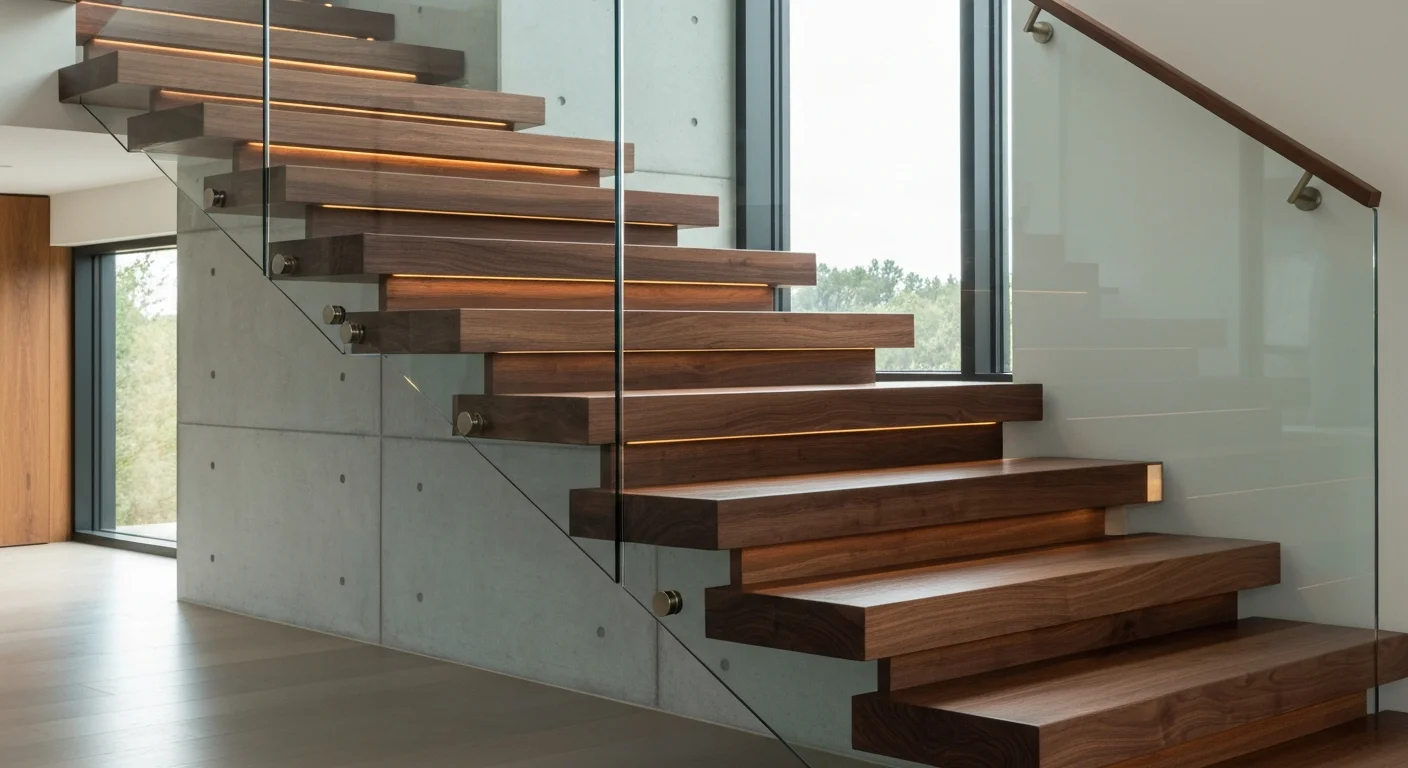
The selection of tread and railing materials determines the architectural style, acoustic profile, and tactile feel of your floating staircase. Wood remains the most popular choice for floating steps due to its warmth, versatility, and structural strength. Hardwoods like white oak, walnut, and maple are ideal because they can resist denting and wear over decades of use. The thickness of the tread is also crucial. Standard stairs use one-inch boards, but floating steps typically require a thickness of three to four inches to look proportional and hide internal steel support sleeves.
Glass is another premium material that elevates modern floating designs. Thick, laminated glass treads provide an ultra-modern, translucent look that allows light to pass completely unobstructed. These steps are manufactured using multiple layers of tempered glass bonded together with a tough interlayer. To ensure safety, the top surface of the glass tread must feature an acid-etched or ceramic-fritted slip-resistant pattern. This prevents slips while keeping the steps easy to clean and maintain.
For an industrial or minimalist aesthetic, metal treads offer unmatched durability and a sleek profile. You can opt for powder-coated steel pans filled with polished concrete, terrazzo, or natural stone inserts. This combination provides a heavy, solid feel underfoot while maintaining a slim, floating profile. Aluminum is another lightweight, corrosion-resistant alternative that works exceptionally well for outdoor floating stairs on modern decks or patios.
To help you compare the most popular materials for floating steps, consider this breakdown of their key characteristics:
- White Oak: Exceptional grain patterns, highly durable, accepts stains beautifully, and matches modern Scandinavian styles.
- American Walnut: Rich, dark tones with elegant swirling patterns that bring high-end mid-century modern warmth.
- Laminated Glass: High-tech aesthetic, maximizes light, but requires frequent cleaning to maintain a pristine look.
- Polished Concrete: Heavy, raw industrial texture, highly durable, but requires robust structural wall framing to handle the weight.
- Powder-Coated Steel: Sleek, thin profiles, customizable in any color, but can produce more footstep noise if not dampended properly.
A Comparison of Floating Stairs Structural Systems
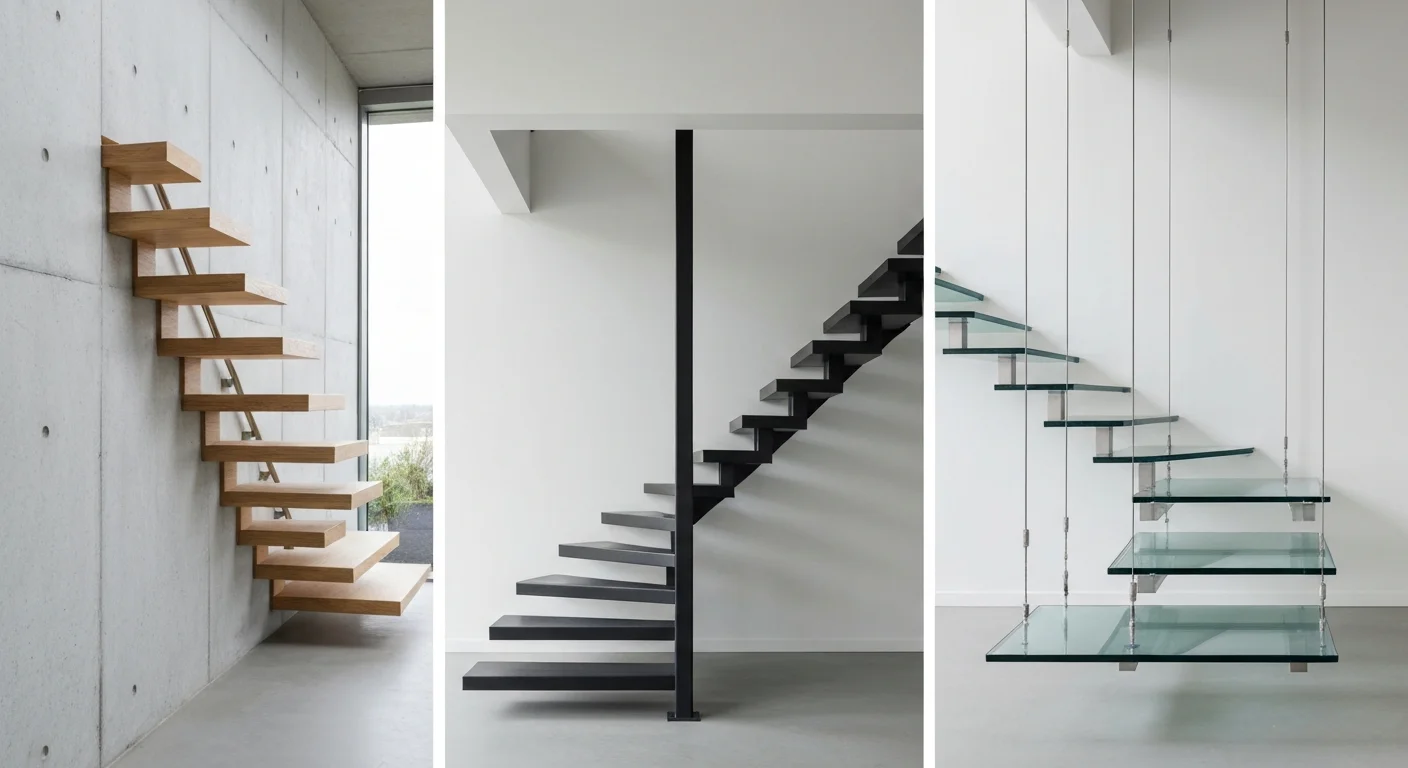
Choosing the right structural support system requires balancing aesthetic desires, installation complexity, and total project budgets. Each system has unique framing requirements that must be addressed early in the architectural planning phase. While some systems are highly versatile and can be retrofitted into existing homes, others must be planned before the foundation is poured. The table below outlines the core differences between the four primary floating staircase structures.
| System Type | Structural Mechanism | Best Use Case | Relative Cost Range |
|---|---|---|---|
| Cantilevered | Concealed wall brackets bolted to heavy-duty wood or steel wall studs. | Ultra-minimalist modern homes with open, spacious wall runs. | $35,000 – $75,000+ |
| Mono-Stringer | A single central steel beam running underneath the center of the treads. | Renovations, open floor plans, and industrial-style interiors. | $18,000 – $35,000 |
| Double-Lateral | Two steel plates flanking the sides of the treads, exposed or recessed. | Wide staircases, heavy commercial traffic, and high-load zones. | $25,000 – $50,000 |
| Glass-Supported | Structural glass side panels acting as load-bearing balustrades. | High-end custom luxury homes looking for maximum light transmission. | $50,000 – $100,000+ |
Expert Installation and Crucial Safety Engineering Principles
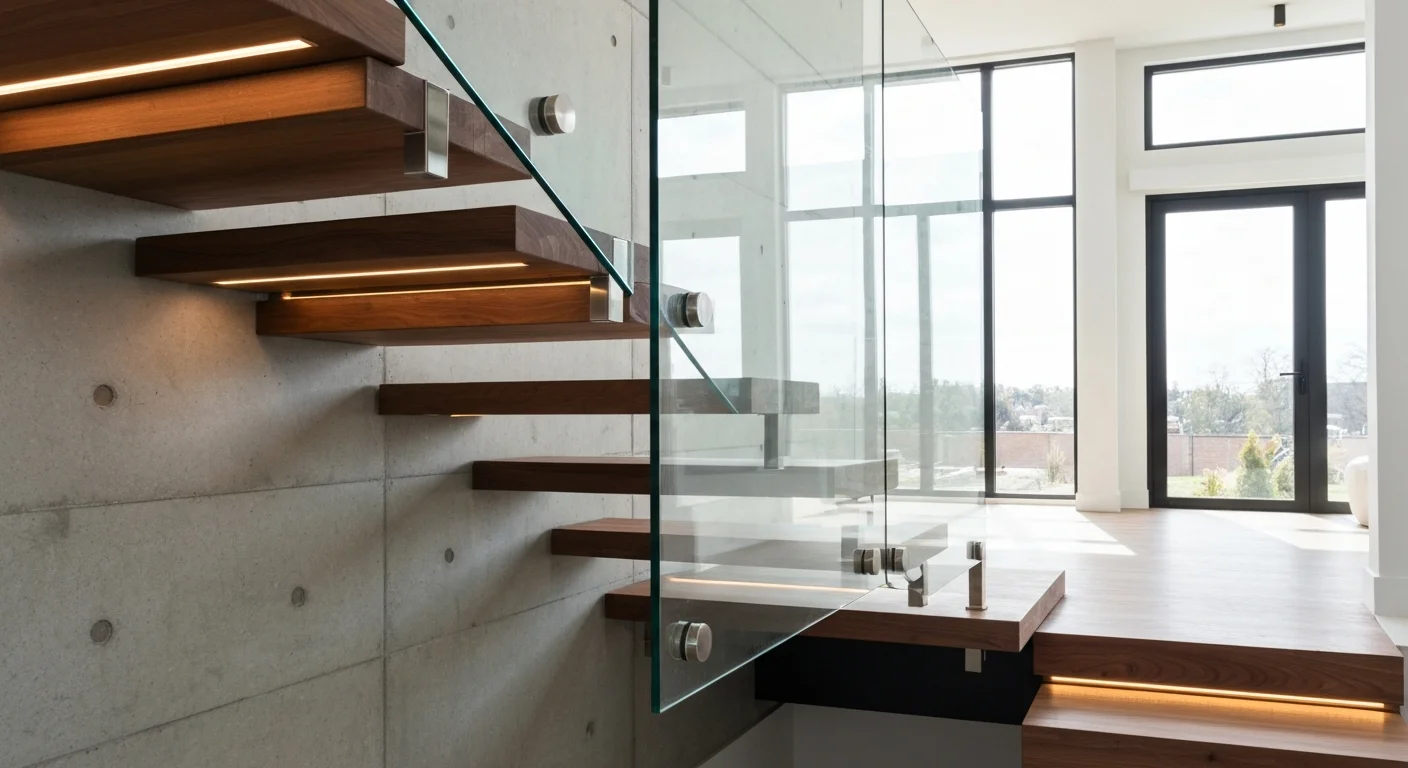
Safe floating staircase installations require strict adherence to local building codes, structural deflection calculations, and precise manufacturing tolerances. Because these stairs lack the structural support of traditional risers and stringers, they are subject to higher twisting forces. Every element must be engineered to prevent movement when multiple people use the stairs at the same time. Working with an experienced designer and custom fabricator is the only way to guarantee a safe, code-compliant finish.
According to the International Code Council (ICC), residential stairways must be designed to handle a uniform live load of 40 pounds per square foot. Additionally, individual treads must support a concentrated load of at least 300 pounds. Our engineering team uses advanced structural analysis software to calculate potential deflection. This ensures that the steps will not bend or bounce under load. Minimizing deflection is critical because even minor movement can cause glass railings to crack or drywall seams to split over time.
In addition to weight capacity, handrail and guardrail safety is paramount. The National Fire Protection Association (NFPA) outlines specific height and grip requirements for handrails to ensure safe transit. Guardrails must be at least 36 inches high for residential spaces (42 inches for commercial properties) and must prevent a four-inch sphere from passing through any opening. This rule prevents children from falling through open spaces between the steps or under the railing. Using glass panels or closely spaced cable rails is an excellent way to maintain safety while preserving the open feel of the staircase.
Investing in a high-quality staircase also yields substantial financial returns. Data from the National Association of Home Builders (NAHB) indicates that high-end architectural features like custom floating stairs can increase a luxury home’s overall market appeal. This addition often speeds up resale times in competitive luxury real estate markets. While the initial investment is higher than traditional carpentry, the long-term value, durability, and visual impact make it one of the most rewarding home improvements you can choose.
To ensure a flawless installation, follow this sequence of professional steps:
- Structural Assessment: Hire a structural engineer to evaluate the existing wall and floor framing capacities.
- Precise 3D Laser Scanning: Measure the space using digital scanners to capture exact floor-to-floor heights.
- Shop Drawings and Engineering: Create detailed CAD drawings detailing every weld, bolt, and bracket connection.
- Concealed Steel Framing: Open up the walls and install the heavy-duty steel stringer or cantilever brackets.
- Drywall and Finish Carpentry: Repair the drywall around the steel, leaving only the mounting brackets exposed.
- Tread and Railing Fitting: Slide the finished wood, glass, or stone treads over the brackets and lock them in place.
- Final Railing Installation: Mount the glass, metal, or cable balustrades to finish the structural safety system.
