


Learn What Is a Murphy Bed in This Complete Guide
A Murphy bed is a specialized, dual-purpose sleeping platform designed to fold vertically or horizontally into a wall cavity, cabinet, or closet system when not in use. For studio apartments or homes with tall ceilings, select a vertical wall bed to free up maximum floor space. For multi-functional home offices, a custom murphy bed with desk system remains the absolute best choice because it keeps your workstation fully functional during the day while transforming into a premium guest bed at night. These architectural space-saving units eliminate the need for dedicated, single-use guest bedrooms by folding flush against the wall, allowing any room to serve as an exercise space, office, or design studio. Modern designs feature advanced counterbalance mechanisms, making the daily physical transition effortless, safe, and whisper-quiet.
Key Takeaways
- Reclaim Valuable Space: Folding a wall bed away recovers up to 50 square feet of floor space, turning a cramped room into a multi-functional area.
- Mechanical Assistance: Advanced piston or spring systems offset the physical weight of the mattress, making operation safe and effortless for everyone.
- No Special Mattresses Required: Modern frames support standard coil, memory foam, or hybrid mattresses up to 12 inches thick without needing a box spring.
- Professional Installation is Crucial: Proper anchoring to wall studs is mandatory to support the immense leverage and leverage forces exerted during movement.
- Custom Integration: High-end millwork allows the bed cabinet to blend seamlessly with surrounding shelving, cabinets, or office desks.
Understanding the True Murphy Bed Meaning and Origin
Defining a folding bed requires looking at both its elegant mechanics and its rich history. By official definition, a Murphy bed is a standard bed frame that is hinged at one end to fold flat against a wall or inside a custom-built cabinet. This ingenious concept dates back to the early 20th century in San Francisco, California. Inventor William Lawrence Murphy wanted to host social gatherings in his modest, one-room apartment. According to the historical archives of the United States Patent and Trademark Office, Murphy patented his counterbalanced design in 1911 to legally bypass strict Victorian social codes that frowned upon hosting young women in a gentleman’s bedroom. By stowing his bed inside a standard closet, his private sleeping quarters instantly transformed into a respectable parlor room.
More than a century later, the primary objective of this furniture piece remains completely unchanged. Homeowners, urban developers, and interior designers use these architectural marvels to combat rising real estate costs and shrinking square footage. In 2026, the average size of urban apartments has stabilized at historical lows. Utilizing a hidden, fold-down bed allows residents to enjoy the utility of a multi-room house within a compact, single-room footprint. This high-end engineering ensures that valuable guest bedrooms do not sit empty and unused for most of the year, converting those spaces into functional everyday offices, playrooms, or creative studios.
How Do Murphy Beds Work to Save Space?
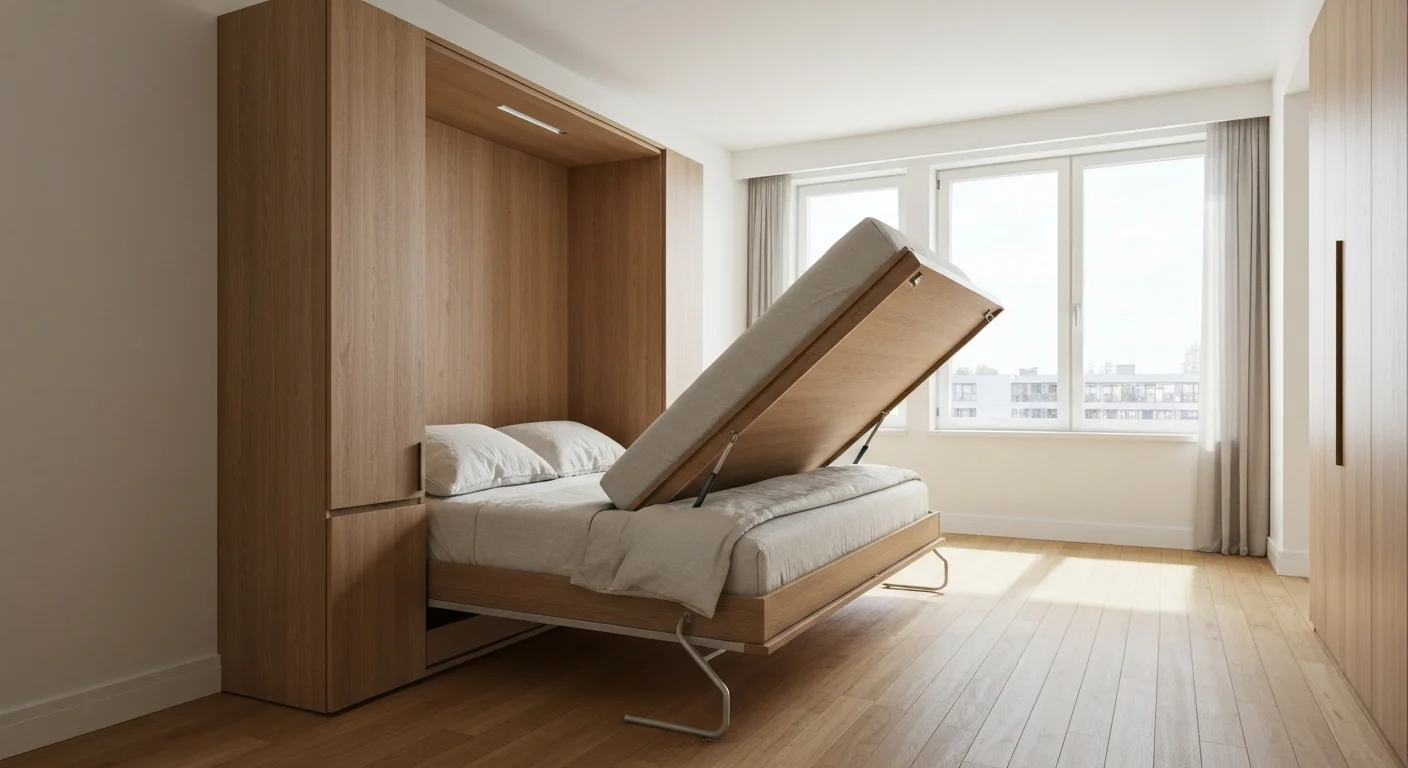
To understand the mechanics of a storable bed frame, one must look closely at the counterbalancing systems that make heavy, solid-wood platforms feel virtually weightless. A premium queen-size mattress combined with a solid hardwood cabinet door can easily weigh over 150 pounds. Lifting this structural weight daily without mechanical assistance would cause immense physical strain. Modern manufacturers utilize three primary engineering approaches to manage this load safely.
- Pressurized Gas Piston Systems: These assemblies use cylinders filled with pressurized gas to absorb the weight of the platform. They provide a smooth, silent glide and require minimal human strength to open or close. Piston systems are highly durable and are generally rated for thousands of cycles.
- Coil Spring-Loaded Mechanisms: This traditional approach relies on heavy-duty, high-tensile steel coil springs housed within the pivot hinge. Installers can easily adjust the lift assistance by adding or removing individual springs based on the physical weight of your chosen mattress.
- Manual Balance Pivot Frames: Simpler, modern designs bypass mechanical springs and pistons entirely. Instead, they utilize a carefully balanced wooden frame that pivots on a low-friction axle. While these require slightly more physical effort, they are highly reliable because they have no complex mechanical parts that can wear out.
Regardless of which lift mechanism you choose, the entire bed frame pivots smoothly on a heavy-duty steel axle. This axle must be anchored securely to either the floor plates or the wall framing. Durable nylon retention straps, safety latches, and locking pins hold the mattress firmly in place when the frame is rotated upward. When fully closed, automated safety locks prevent the bed from lowering unexpectedly, ensuring total safety for households with young children and active pets.
Wall Beds vs. Traditional Murphy Beds
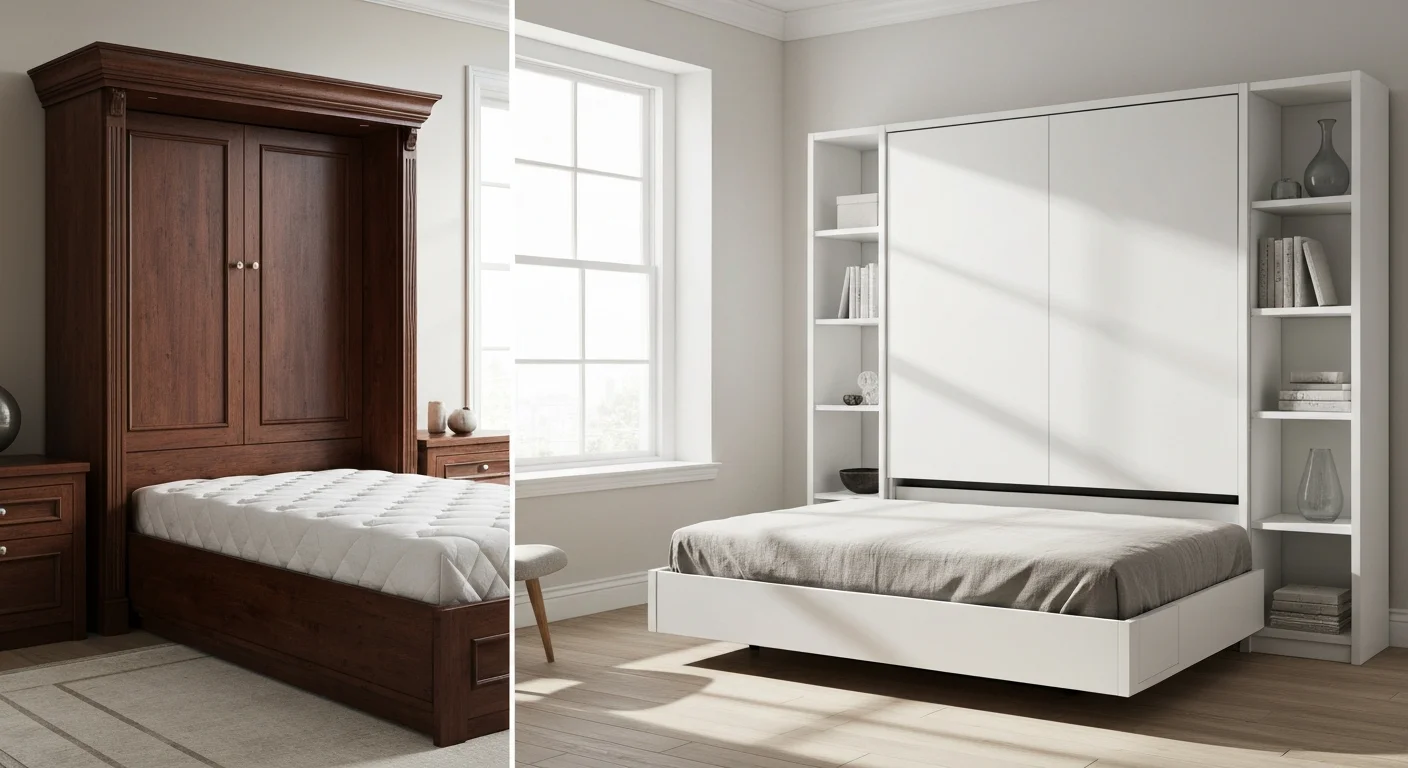
While many consumers and home decorators use the terms interchangeably, subtle engineering and architectural differences separate traditional Murphy units from modern wall beds. A traditional Murphy bed relies heavily on raw metal framing, exposed steel springs, and must be anchored directly into the floor. This floor-mounted style provides exceptional stability and is highly suited for historic properties with plaster walls. However, it often leaves permanent bolt holes in hardwood flooring or concrete subfloors, making it difficult to relocate or remove during a home renovation project.
In contrast, modern wall beds are completely self-contained cabinet systems. The entire apparatus attaches to the vertical wall studs using a structural header board. This design preserves your floor finishes, leaving only minor screw holes in the drywall behind the cabinet if you ever decide to move the unit. Modern wall beds are often integrated into extensive built-in cabinetry, incorporating side wardrobes, open display shelving, or recessed LED lighting. This seamless integration makes the closed unit look like high-end custom millwork rather than a hidden sleeping platform.
Choosing the Right Mattress for a Stow-Away Bed
Many homeowners worry that space-saving beds require uncomfortable, paper-thin mattresses. Fortunately, modern wall beds are engineered to accommodate standard, premium residential mattresses. However, there are three critical physical factors you must verify before purchasing a mattress for your fold-down frame: thickness, overall weight, and structural composition.
According to strict safety guidelines published by the U.S. Consumer Product Safety Commission, using a mattress that exceeds the manufacturer’s maximum thickness rating can prevent the cabinet doors from latching securely, posing a tipping hazard. Most standard wall bed cabinets are built to accommodate mattresses between 8 and 12 inches thick. If the mattress is too thick, it will compress tightly against the interior back wall, making it difficult to latch the unit fully closed.
Furthermore, look for a mattress with excellent structural integrity. When stored vertically for long periods, low-quality mattresses can suffer from internal spring displacement or foam slumping. To prevent this, always select a hybrid or high-density memory foam mattress. Ensure you utilize the integrated elastic retention straps. These straps must remain tightly buckled over the bedding to keep the mattress flush against the support slats during storage.
Comparison of Modern Stow-Away Bed Systems
Selecting the ideal fold-away bed requires comparing the various mechanical configurations available today. This table outlines the differences in functionality, application, and pricing across the industry.
| System Type | Lifting Mechanism | Ideal Use Case | Average Price Range (USD) |
|---|---|---|---|
| Traditional Floor-Mount | Heavy-Duty Steel Springs | Dedicated guest rooms with solid concrete floors | $1,200 – $2,500 |
| Modern Cabinet Wall Bed | Dual Gas-Piston Cylinders | High-use studio apartments and modern rentals | $1,800 – $4,500 |
| Manual Lift Platform | User-Assisted Pivot Hinges | Budget-conscious DIY spaces and home offices | $800 – $1,800 |
| Premium Custom Millwork | Integrated Mechanical / Motorized | Luxury home offices, custom libraries, and dens | $5,000 – $12,000+ |
Structural Installation: Professional Integrity vs. DIY Pitfalls
As structural craftsmen, we cannot overemphasize the importance of professional installation for any wall-mounted furniture system. A poorly anchored wall bed poses a severe physical risk to your home, family, and pets. According to safety database records compiled by the National Electronic Injury Surveillance System, improper furniture anchoring remains a leading cause of preventable home structural accidents. The primary mistake DIY enthusiasts make is attempting to mount a heavy piston system using plastic drywall anchors or toggles.
Drywall alone cannot support the pulling force exerted by a gas-piston or spring-loaded hinge. When you pull the bed down, physics multiplies the outward leverage pulling against the wall header. A licensed, professional installer will evaluate your wall construction—whether it consists of wood studs, metal studs, or concrete block—and use heavy-duty structural lag screws to lock the frame directly into the building’s structural skeleton. Additionally, baseboard molding must be precisely notched or removed to allow the cabinet to sit perfectly flush against the drywall, preventing dangerous gaps. If you are investing in a premium space-saving solution, professional installation protects your walls, your floors, and your family.
Maximizing Small Spaces with Multifunctional Design
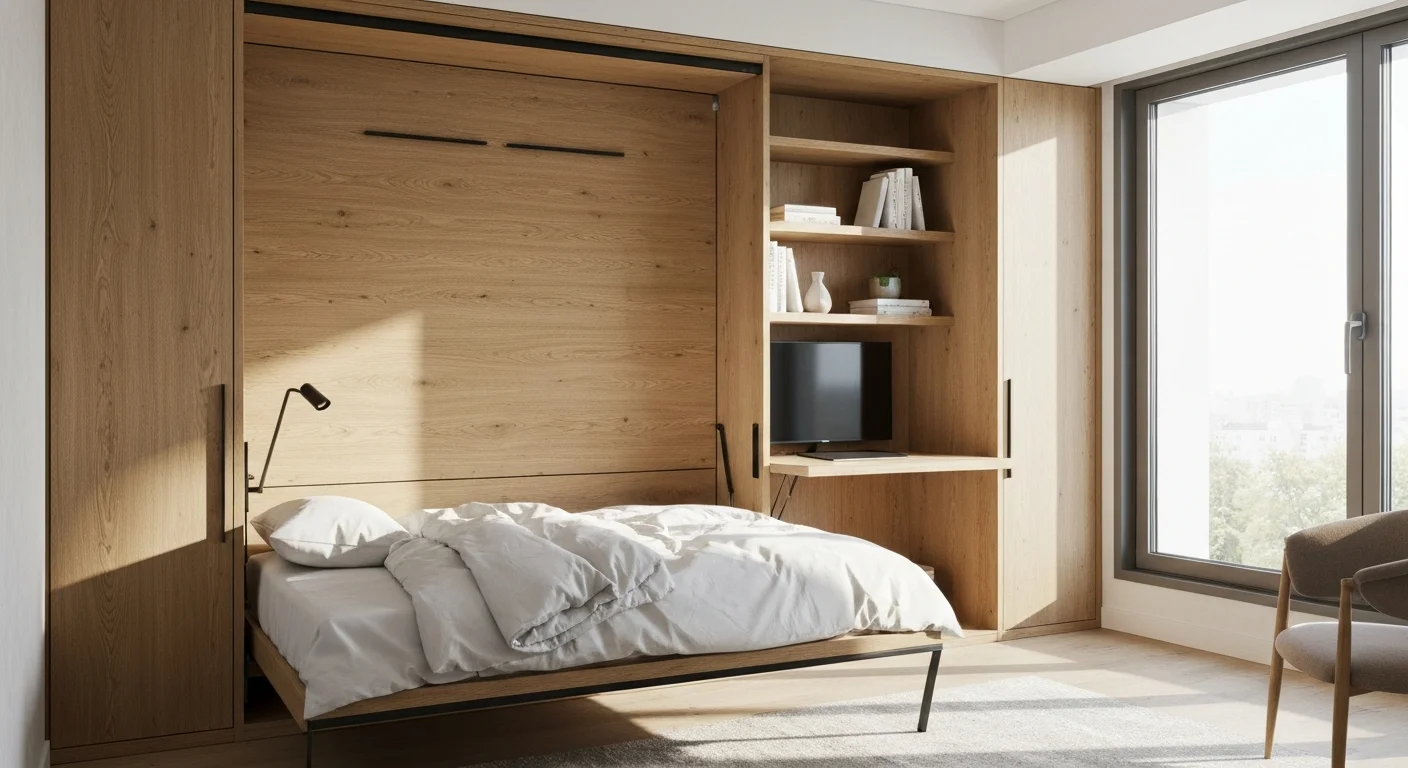
Integrating a fold-down bed is just one aspect of creating a highly functional home. When designing tight layouts, smart homeowners look for ways to optimize every square inch. Incorporating dual-purpose furniture is highly effective, but you can also look at architectural features. For instance, pairing a wall bed with clever under stairs storage ideas can completely transform a cramped townhouse or guest suite.
When the bed is closed, the room instantly opens up, allowing you to use the area for daily activities. In a home office, having the floor space clear allows you to move freely, exercise, or host clients. Adding custom cabinetry around the bed frame provides hidden storage for pillows, linens, and personal items. This maintains a clean, minimalist aesthetic. To elevate the visual appeal of these modern spaces, many homeowners install sleek architectural elements. Implementing high-end interior features like those found in our guide on 25 modern indoor railing ideas helps draw the eye upward, making compact rooms feel incredibly spacious and open.
FAQ
What is a Murphy bed?
A Murphy bed is a specialized, space-saving bed designed to fold vertically or horizontally into a wall cavity, closet, or custom cabinet when not in use, instantly reclaiming floor space for daytime activities.
How do Murphy beds work safely?
These beds utilize integrated gas-piston cylinders or steel coil spring systems to offset the weight of the frame and mattress, allowing users to lift and lower the platform with minimal effort while built-in safety latches prevent accidental lowering.
Which mattress is best for a wall bed?
The best mattress is a high-density memory foam, latex, or premium hybrid mattress between 8 and 12 inches thick that is structurally sound enough to store vertically without slumping or sagging over time.
Is a wall bed comfortable for everyday use?
Yes, because modern wall beds utilize supportive wooden slat suspension systems and accommodate standard, high-quality residential mattresses, they offer the exact same comfort and support as a traditional stationary bed.
Can you install a Murphy bed without drilling into the wall?
No, standard modern wall beds must be securely anchored directly to structural wood or metal wall studs using heavy-duty lag bolts to safely handle the immense leverage and mechanical forces during daily operation.
What is the average cost of a custom Murphy bed?
While basic DIY cabinet kits start around $800, premium custom-built Murphy beds featuring integrated desks, custom wardrobes, and professional structural installation generally range from $3,500 to over $10,000 depending on materials and finishes.
