

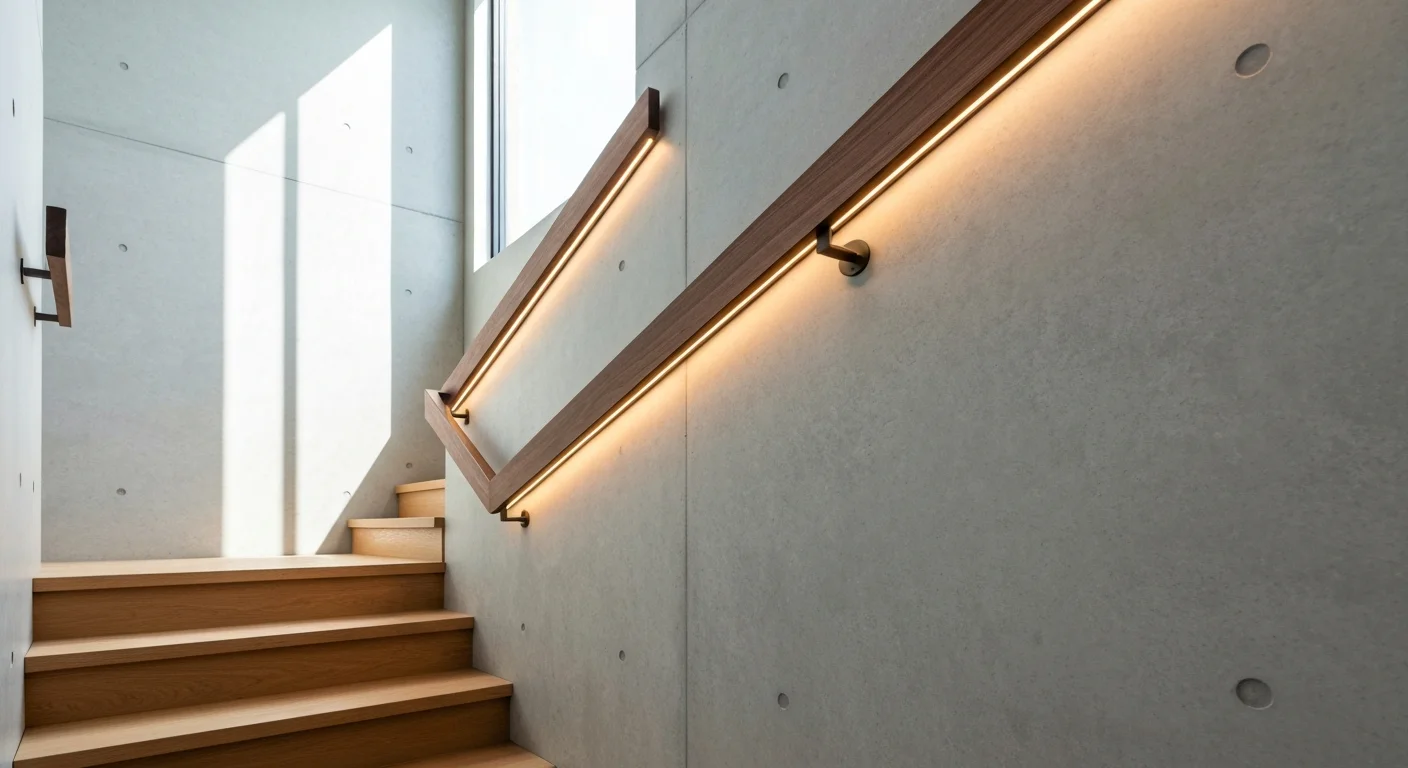
15 Stair Wall Railing Ideas to Update Your Staircase
For homeowners upgrading their staircase, the optimal choice for a modern interior is a sleek, minimalist metal or recessed LED-lit handrail, while traditional homes benefit from warm, solid white oak paired with brass hardware. Choosing the right wall-mounted handrail balances safety, ergonomics, and architectural style. If your space is tight, a recessed wall niche with a hidden handrail saves valuable corridor space. For open-plan modern spaces, a continuous matte black aluminum or stainless steel system provides a striking contrast against neutral walls. To achieve the perfect balance of function and design, select a material that mirrors your home’s architectural hardware and ensure it adheres to building safety codes.
Key Takeaways
- Code compliance requires wall-mounted handrails to sit between 34 and 38 inches above the stair nosing.
- A minimum wall clearance of 1.5 inches is required to allow for a safe, continuous grip.
- For modern homes, recessed lighting and minimalist black metal rails dominate design trends.
- Solid wood handrails require structural wall blocking during installation to prevent loose mounts over time.
- Stainless steel and anodized aluminum offer the lowest maintenance and highest durability for high-traffic staircases.
Critical Code Requirements for Wall Mounted Stair Railing Ideas
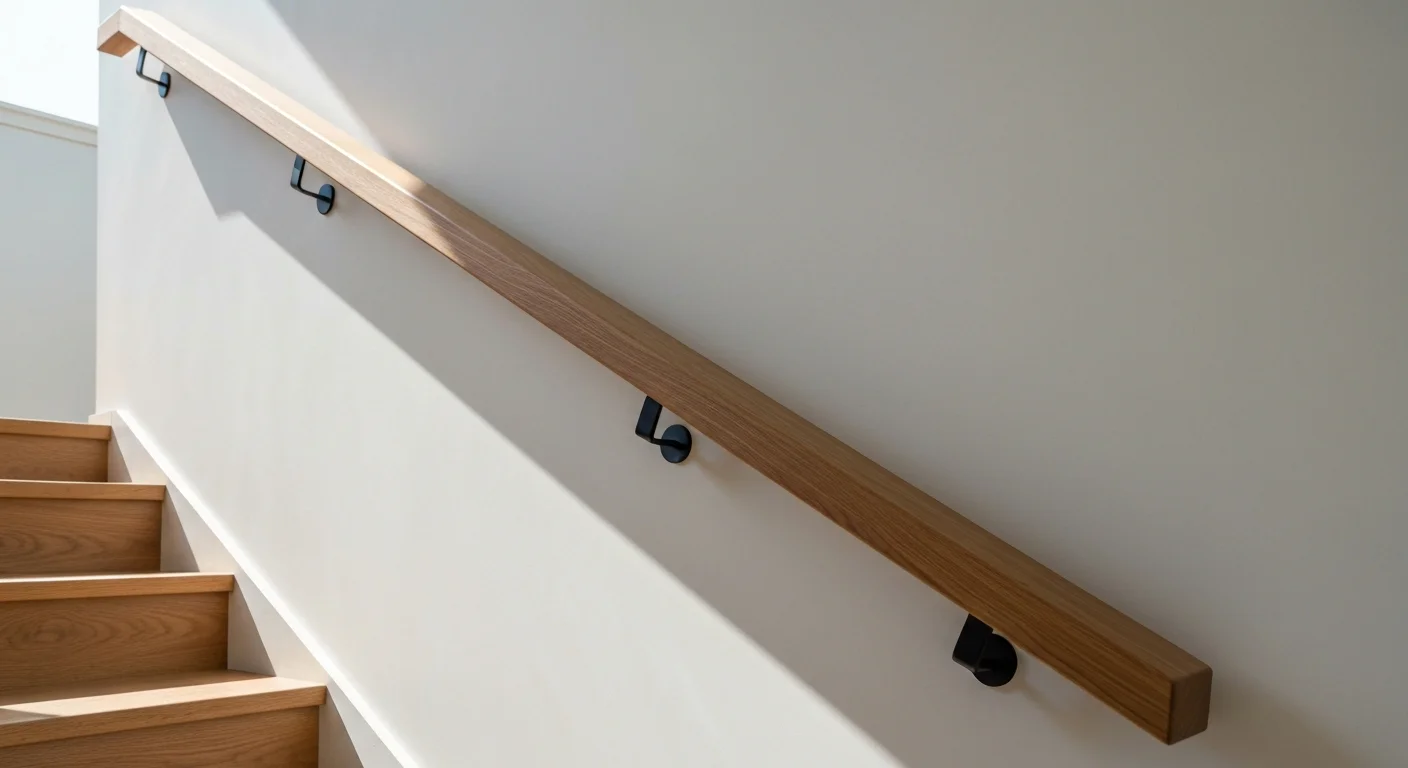
Safety is the primary objective when designing a functional staircase. While aesthetics define the style of your home, strict building codes dictate the structural dimensions of any handrail. According to safety guidelines published by the U.S. Access Board, residential and commercial handrails must be continuous across the entire flight of stairs. This ensures a user can maintain a secure grip from the top landing to the bottom step without interruption.
The distance between the wall and the handrail must be a minimum of 1.5 inches. This clearance prevents fingers from scraping against rough wall surfaces during a slip. Furthermore, the handrail itself must have a grip profile that is easy to grasp. Round profiles should have an outside diameter between 1.25 and 2 inches. If you prefer a square or custom-molded wood profile, the perimeter must measure between 4 and 6.25 inches. These dimensions ensure that children, adults, and elderly family members can successfully wrap their hands around the rail to arrest a fall.
Another crucial code element is the end termination. Handrail ends cannot simply stop mid-air; they must return smoothly to the wall or terminate in a rounded post. This design prevents clothing, purse straps, or grocery bags from snagging as people walk past. A snagged sleeve can easily cause a dangerous stumble on an active stairway. Incorporating safe returns into your design guarantees both compliance and physical safety.
15 Inspiring Stair Wall Railing Design Options
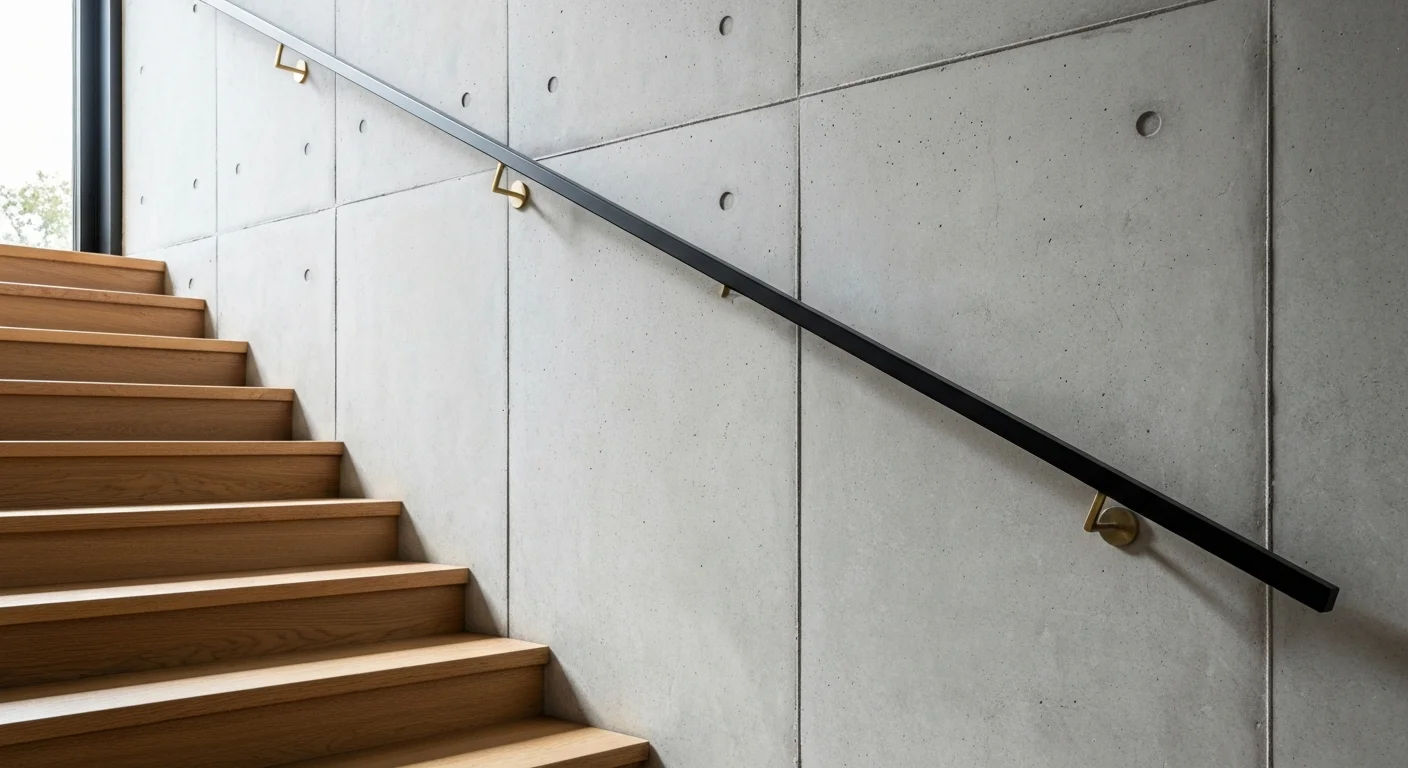
Modern homes benefit immensely from architectural updates that highlight clean lines, high-contrast textures, and integrated technology. Selecting the perfect custom stair wall railing allows you to tie your home’s levels together seamlessly. Here are fifteen designer-approved concepts to transform your staircase.
1. Recessed Drywall Handrail with LED Illumination
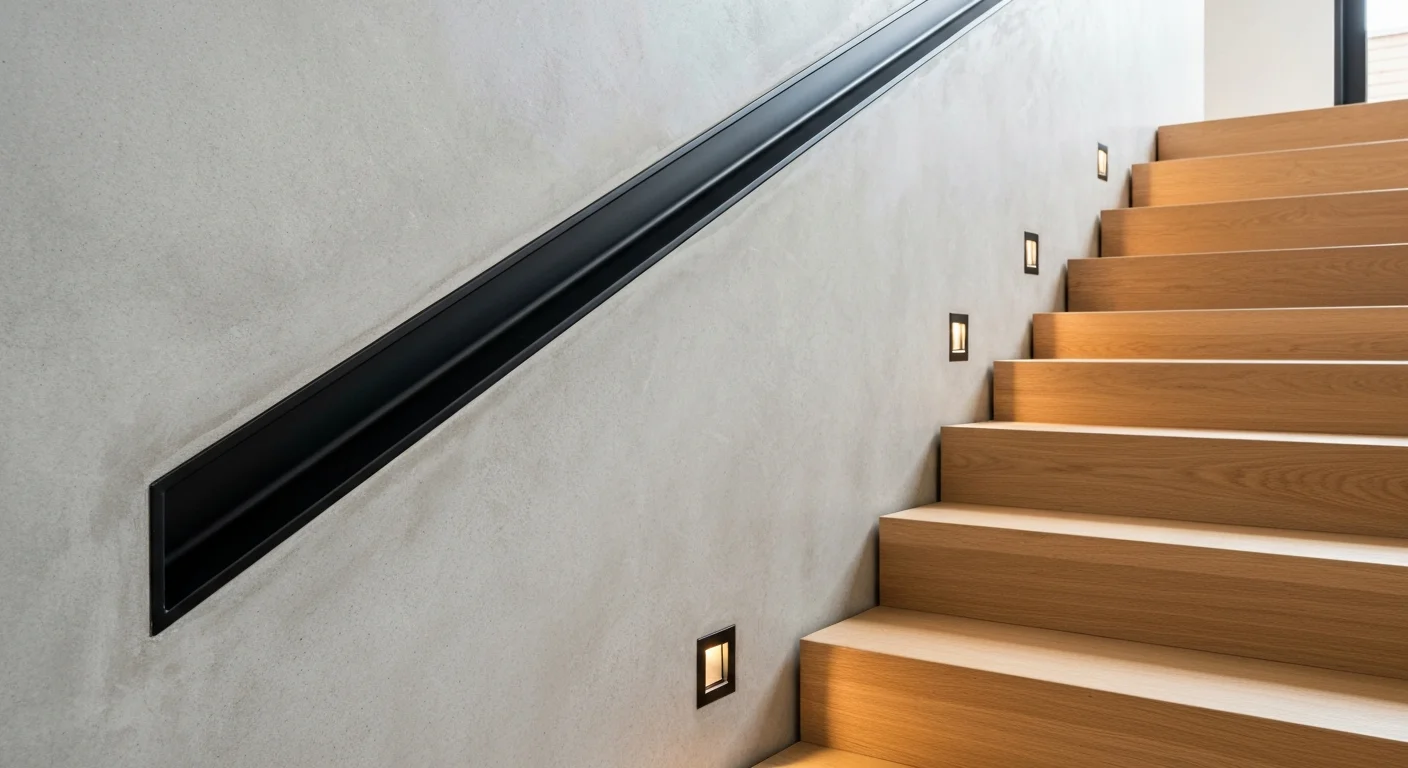
Recessed wall railings are carved directly into the wall cavity to preserve precious walkway width. The inner niche is framed out during drywall construction, creating a flush, architectural look. Installing low-voltage LED strip lights along the underside of the niche casts a soft glow directly onto the treads. This choice is incredibly functional for late-night navigation and provides a high-end, futuristic look.
2. Minimalist Matte Black Aluminum Profile
Matte black finishes remain a staple of contemporary design. A thin, round aluminum profile mounted with hidden wall brackets creates a striking graphic line against white or light-gray walls. Aluminum resists corrosion, scratches, and fingerprint smudges, making it ideal for busy entryways.
3. Warm White Oak with Polished Brass Brackets
White oak brings organic warmth to modern and transitional homes alike. Coating the wood in a clear matte finish preserves its natural, sandy-blonde color. Pairing this beautiful hardwood with polished brass brackets adds a touch of mid-century luxury. This combination elevates the staircase into a focal point without overwhelming the adjacent rooms.
4. Industrial Black Iron Pipe
For lofts, converted warehouses, or rustic modern farmhouses, heavy industrial piping is an excellent option. Using threaded black iron pipes, elbows, and floor flanges as wall brackets creates an ultra-durable, heavy-duty railing. This style pairs beautifully with exposed brick, concrete floors, and raw timber elements.
5. Frameless Glass Mounted Handrail
When looking to maximize natural light, a glass-mounted handrail is unmatched. Brackets are engineered to pass directly through tempered glass panels, attaching a sleek metal handrail to the structural wall behind or alongside the glass. It creates an airy, weightless aesthetic that suits minimalist coastal homes perfectly.
6. Luxury Polished Stainless Steel
Polished stainless steel reflects light and adds a brilliant, jewelry-like gleam to modern entryways. This material is incredibly strong and completely impervious to wear. It is especially popular in waterfront properties where salt air can rapidly degrade lesser metals.
7. Wrapped Full-Grain Leather Handrail
If you want a tactile, ultra-luxurious experience underfoot, consider a hand-wrapped leather railing. A slim metal core is wrapped in high-quality saddle leather and finished with tight stitching. Over time, the leather develops a beautiful patina from use, giving the home a bespoke, classic feel.
8. Classic Wrought Iron with Scroll Ends
Traditional architecture demands ornamental detail. A hand-forged wrought iron handrail with delicate scrollwork at the ends respects historic craftsmanship. This classic choice works beautifully in Mediterranean, Spanish colonial, or Parisian-style interiors.
9. Coastal Bleached Ash or Walnut
Coastal and Scandinavian designs emphasize light woods and soft textures. Bleached ash or walnut rails provide a soft, tactile grip. These hardwoods are highly durable, resisting the dings and dents that softer woods suffer during move-in days or active family life.
10. Square-Profile Contemporary Metal Railing
If you prefer sharp geometric lines over round profiles, a square-cut metal railing is a stellar choice. You can explore various modern staircase railings that use square-profile steel to deliver a bold, architectural statement. Be sure the corners are slightly eased so they feel comfortable in the palm of your hand.
11. Dual Symmetrical Wall Mounted Railings
For wide staircases or commercial-leaning designs, installing matching handrails on both sides of the stairway creates beautiful symmetry. This layout ensures maximum accessibility, allowing users to choose their dominant hand for support whether climbing or descending.
12. Rustic Live-Edge Hardwood Slab Railing
Bring the raw beauty of nature indoors with a live-edge wood handrail. A skilled carpenter selects a narrow, sturdy slab of walnut or maple, keeping the natural, organic edge intact on the outer side while flattening the mounting side. The wood is sanded smooth to prevent splinters and coated in a high-durability oil.
13. Polished Brass and Architectural Bronze Tubes
Brass and bronze railings offer a timeless, upscale look. Unlike polished brass, architectural bronze develops a deeper, richer tone as it ages and interacts with the oils of human hands. This material is popular in high-end luxury residences and historic preservation projects.
14. Nautical Rope with Heavy Cast Iron Brackets
In beachfront cottages or lakeside cabins, a thick marine-grade manila or cotton rope handrail adds whimsical, coastal character. The rope is threaded through heavy-duty iron rings secured to the wall studs. Large knots at the ends secure the rope in place while providing a relaxed, nautical vibe.
15. Flat-Bar Steel handrail with Low-Profile Brackets
A flat-bar steel railing features a wider, flatter top surface that is incredibly comfortable to rest your hand upon. Low-profile brackets mount to the underside, making the steel bar appear to float parallel to your drywall. It is an excellent match for mid-century modern homes and urban townhouses.
Selecting the Best Materials for Your Wall Stair Railing
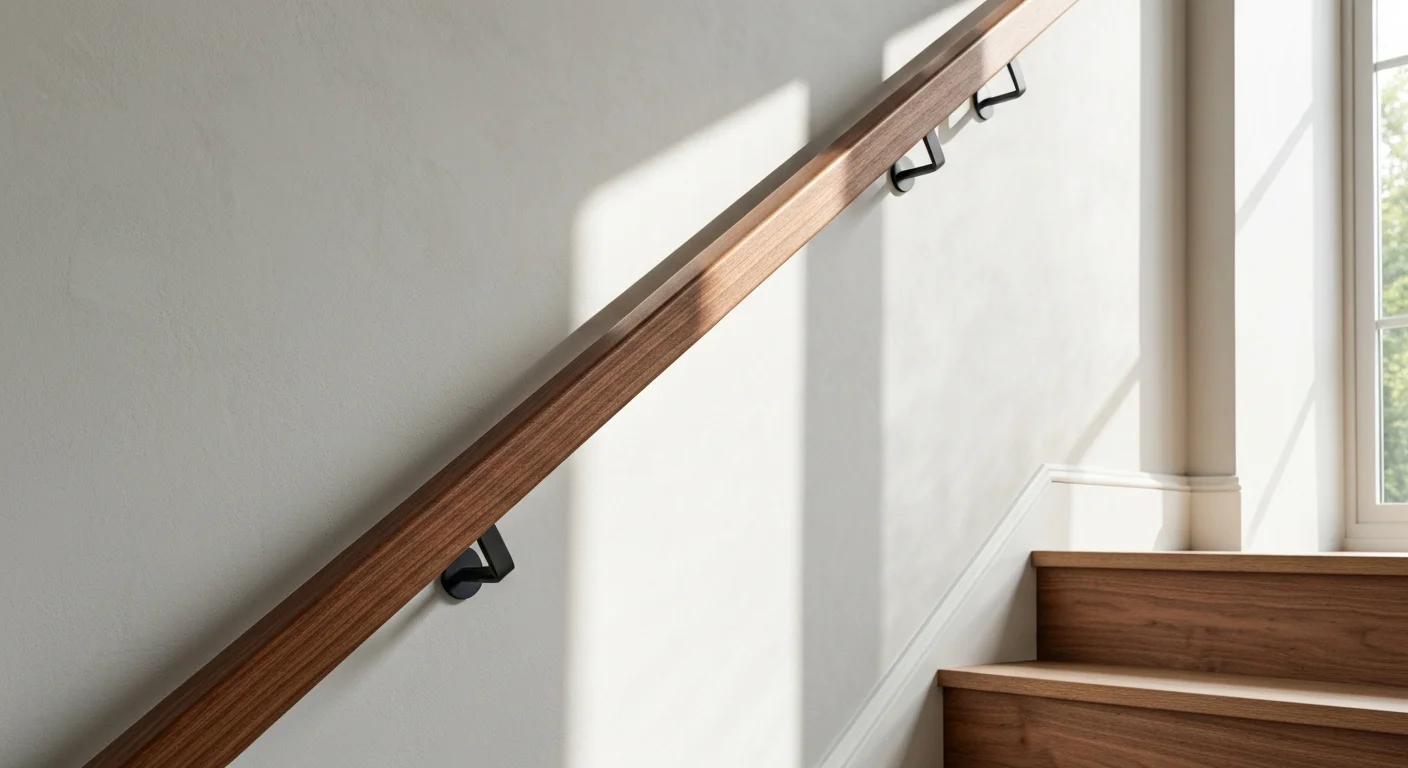
Choosing the correct material for your staircase requires a balance of style, maintenance, and budget. Each material carries unique benefits that impact the longevity and daily usability of your home’s traffic paths.
| Material | Aesthetic Vibe | Durability & Maintenance | Average Cost (Per Linear Foot) |
|---|---|---|---|
| Solid White Oak / Hardwoods | Warm, organic, classic, Scandinavian | High durability; requires occasional refinishing | $40 – $120 |
| Anodized Aluminum | Modern, sleek, minimalist, clean | Extremely high; zero maintenance, rust-resistant | $35 – $80 |
| Polished Stainless Steel | Ultra-modern, industrial, high-end luxury | Virtually indestructible; requires polishing for prints | $80 – $200 |
| Hand-Forged Wrought Iron | Traditional, rustic, Mediterranean, ornate | High durability; requires painting or sealing | $60 – $150 |
Wood remains a favorite for its organic warmth and comfortable feel. Unlike metal, wood never feels cold to the touch in winter or hot in direct sunlight. However, wood can scratch and eventually requires sanding and resealing to maintain its beauty over decades of use.
Metal options like stainless steel, anodized aluminum, and wrought iron offer unmatched structural strength. Aluminum is lightweight, easy to work with, and cost-effective. Stainless steel is heavier and offers a premium weight and luster, but it requires highly skilled fabrication and welding during installation, which increases labor expenses.
Professional Installation Tips and Crucial Errors to Avoid
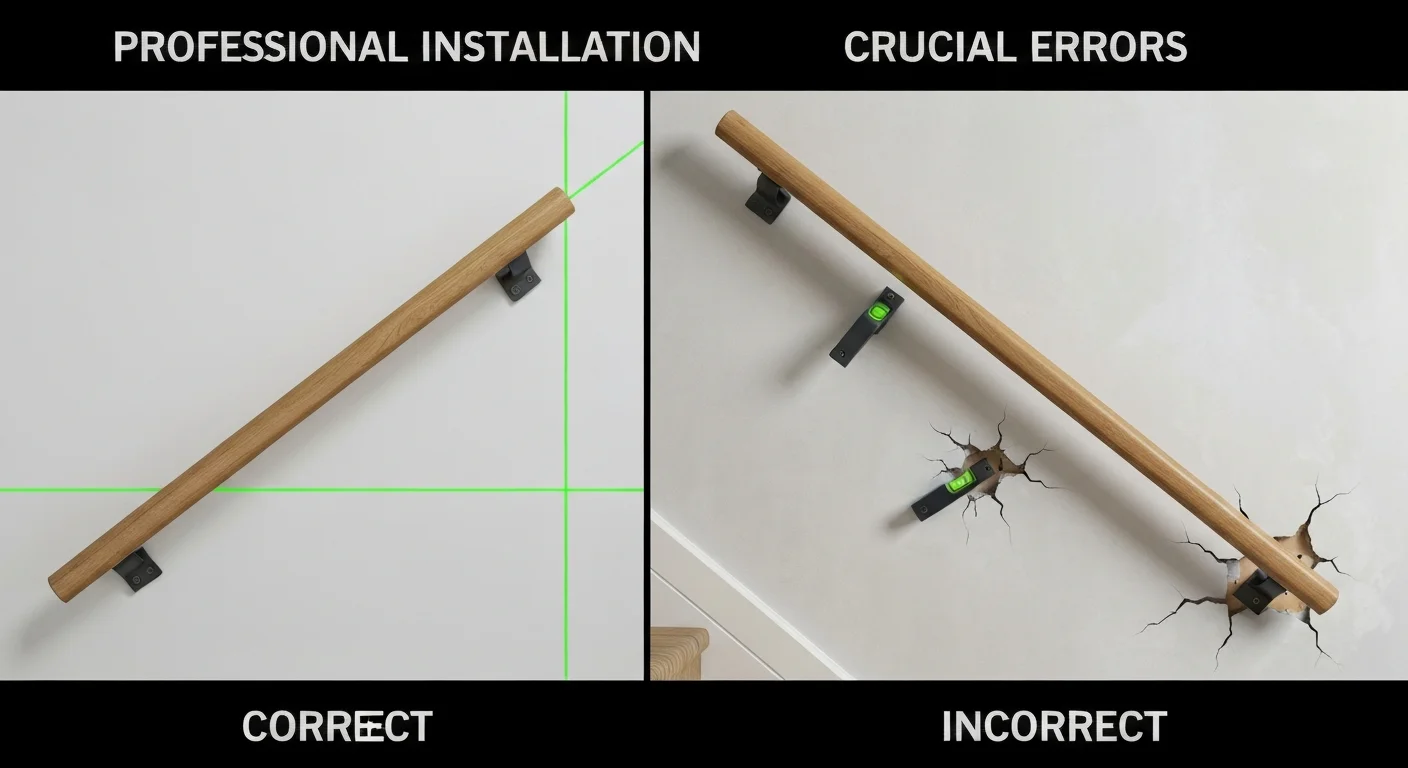
Installing a wall-mounted handrail is a high-liability project that demands professional precision. A loosely anchored handrail is a severe safety hazard. According to statistical databases tracking home accidents from the National Safety Council, falls on stairways account for a significant portion of accidental home injuries, highlighting the absolute necessity of secure safety barriers.
A common mistake is relying on drywall anchors to support a handrail. Drywall anchors will pull out under heavy pressure. Handrail brackets must be anchored directly into solid wood studs or structural blocking. If your staircase remodel involves tearing down drywall, always install continuous 2×6 wood blocking between the wall studs at the correct height before hanging new drywall. This gives your installer a solid, continuous wood target to screw the brackets into anywhere along the wall.
Follow this step-by-step process during installation to ensure structural integrity:
- Measure and mark the height of the handrail at 36 inches above the stair nosing at the top and bottom of the run.
- Snap a chalk line between these two points to establish a continuous, consistent angle for the handrail path.
- Use a high-quality stud finder to locate the wall studs along this line, marking their exact centers.
- Pre-drill pilot holes through the drywall and deep into the center of the wooden studs to prevent the wood from splitting.
- Mount the brackets securely using heavy-duty wood screws at least 3 inches in length to ensure deep penetration into the framing.
- Set the handrail onto the brackets, align the ends carefully, and secure the rail to each bracket from underneath.
Always respect the manufacturer’s specified bracket spacing. Typically, brackets should be spaced no more than 4 feet apart. Leaving too much distance between brackets allows the handrail to flex under heavy loads, which weakens the mounts over time. The structural safety guidelines from the International Code Council mandate that handrails must withstand a concentrated downward force of at least 200 pounds applied at any point along the rail.
Estimated Project Costs for a Custom Stair Wall Railing
Upgrading your handrail involves two primary cost components: materials and specialized professional labor. For a standard 12-foot straight staircase run, costs vary significantly depending on the design complexity and selected finish.
Budget options, such as paint-grade pine or standard aluminum kits, typically range from $300 to $600 for materials alone. If you choose to install these yourself, you can keep total costs under $700. However, these systems often lack the seamless appearance and structural rigidity of a custom-fit design.
Mid-range systems, such as solid white oak or anodized aluminum with designer brackets, usually cost between $800 and $1,800. This price range typically includes professional installation by a licensed contractor, ensuring all code requirements are fully met. Custom high-end materials, including recessed LED niches, polished brass, custom curved profiles, or glass-integrated systems, routinely range from $2,500 to over $6,000 depending on the length and complexity of the layout.
