

10 Creative Garage Handrail Ideas
For high-traffic, tight-clearance garage transitions, a heavy-duty wall-mounted metal handrail is the absolute best choice because it maximizes usable step width while complying with building safety codes. If your garage features open-sided stairs or lacks a sturdy adjacent wall, a floor-mounted aluminum or wrought iron post system provides the necessary stability without compromising premium floor space. Homeowners looking to elevate their utilitarian entry points should avoid cheap, splinter-prone wood and opt for industrial-grade powder-coated aluminum, stainless steel, or custom architectural metal fabrications. Investing in a resilient, professionally installed safety railing ensures long-term slip prevention, eases the strain of carrying heavy loads from the car, and withstands the unique humidity and temperature fluctuations common in garage environments. To select the perfect layout, consult our comprehensive guide on garage stair railing styles. Below, we outline the top structural choices, critical safety dimensions, and stylistic ideas to blend peak utility with high-end home design.
Key Takeaways
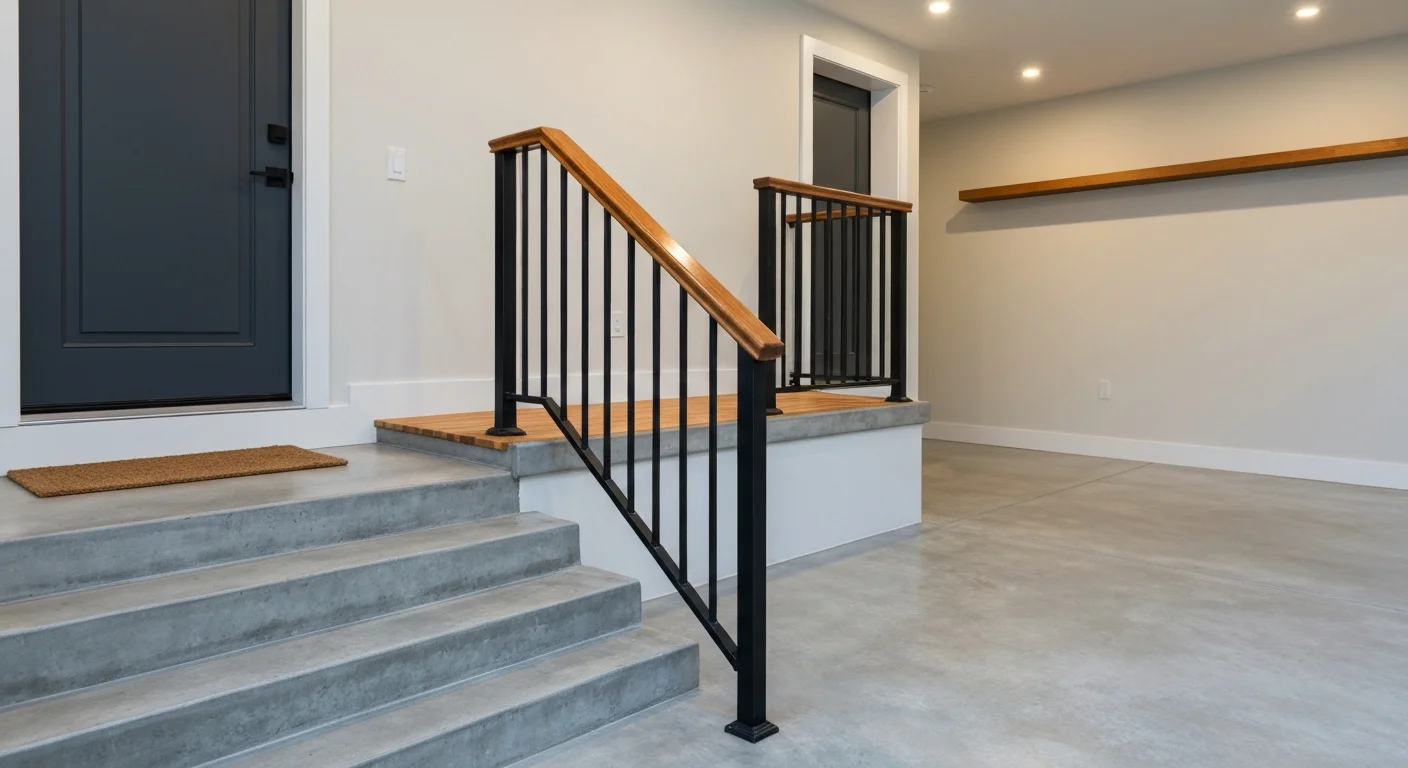
- Prioritize Space-Saving Profiles: Choose wall-mounted metal railings for narrow garage entries to maximize tread clearance and comply with ADA standards.
- Select Resilient Materials: Powder-coated aluminum and stainless steel outperform standard timber by resisting garage humidity, vehicle fumes, and chemical exposure.
- Verify Code Compliance: Ensure your rail sits between 34 and 38 inches high if your garage steps exceed 30 inches in total rise.
- Anchor to Structural Framing: Always fasten brackets directly to structural wood wall studs or anchor them deep into concrete floors rather than relying on drywall or masonry veneer.
- Elevate with Architectural Details: Custom-made metallic finishes and integrated lighting transform a functional safety feature into a sleek, value-adding design element.
Maximizing Safety and Style with a Handrail for Garage Steps
Garages serve as the primary entry point for millions of homeowners, yet their staircases are frequently overlooked during home improvement projects. Unlike interior staircases that enjoy climate-controlled conditions, the garage microclimate is subject to rapid shifts in temperature, humidity, and chemical exposure. Vehicle exhaust, oil drips, lawn care equipment, and moisture tracked in from tires create a slick, hazardous environment. A dedicated handrail for garage steps acts as a primary defense system against painful slips and falls in these high-traffic transition zones.
According to the Centers for Disease Control and Prevention, falls remain the leading cause of unintentional injury among older adults, highlighting the necessity of rigid handholds in non-climate-controlled residential spaces. A properly engineered railing offers physical support when you are carrying groceries, tools, or luggage. Beyond sheer utility, a premium handrail also acts as a visual anchor, transforming a raw, concrete-and-drywall garage into a cohesive, thoughtfully designed extension of your home’s interior aesthetic.
From a financial perspective, standard retail pipe kits cost between $150 and $300, while custom-fabricated architectural railings typically range from $500 to $1,500 depending on material quality. Investing in premium metals like powder-coated aluminum or marine-grade stainless steel ensures that your safety installations will not rust, corrode, or warp over time. This long-lasting durability is highly valued by prospective buyers, raising your property’s resale appeal while ensuring absolute peace of mind for your family and guests.
Essential Engineering Standards for Your Garage Stair Railing
Building codes exist to guarantee that structural safety elements can withstand sudden, high-impact forces without failing. For residential garage transitions, the International Code Council dictates that any staircase with four or more risers must have a continuous, code-compliant handrail. Even if your garage steps only consist of two or three risers, installing a handrail is an excellent design practice to protect elderly relatives, children, and visitors from unexpected missteps.
To meet standard residential building safety codes, your garage stair railing must adhere to specific spatial measurements. The top of the handrail must sit vertically between 34 and 38 inches above the leading edge of the stair treads. This height range provides the most natural, ergonomic grip for the average adult. Additionally, the handrail must be continuous for the full length of the stairs, starting from a point directly above the lowest riser to a point directly above the highest riser.
Grip profile is another critical factor that safety inspectors analyze closely. Handrails must feature a touch-safe, graspable profile, meaning a circular rail should have an outside diameter between 1.25 and 2 inches. If you prefer a non-circular profile, it must have a perimeter between 4 and 6.25 inches. There must also be a clear space of at least 1.5 inches between the finished wall and the handrail. This gap ensures that fingers can wrap completely around the bar without scraped knuckles or restricted movement during an emergency slip.
10 Creative Garage Handrail Ideas to Transform Your Transition Space
Modern home design proves that utility does not require you to sacrifice beauty. When planning your garage upgrade, explore these ten innovative design concepts that balance robust structural support with clean architectural styling:
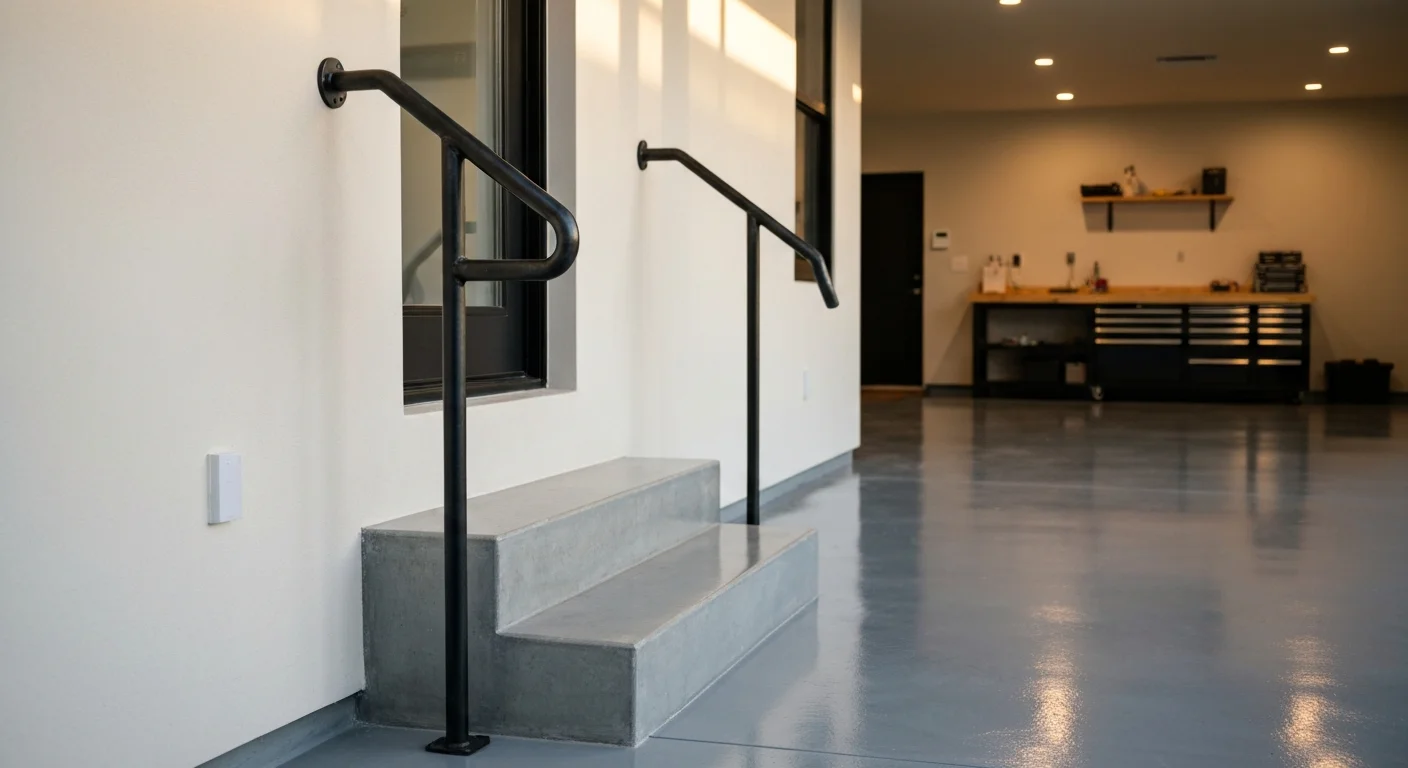
- Industrial Matte Black Steel Pipe: This look brings a rugged, workshop-inspired aesthetic to your garage. Constructed from threaded steel fittings, it offers incredible rigidity and complements dark garage cabinetry and tool storage systems.
- Brushed Marine-Grade Stainless Steel: Outstanding for coastal homes, stainless steel resists oxidation and salt-air corrosion. It delivers a sleek, ultra-modern look that matches premium home interiors.
- Integrated Under-Rail LED Lighting: Safety does not stop when the sun goes down. Running a low-voltage LED strip along the underside of your handrail illuminates your steps clearly, eliminating dark shadows without requiring you to turn on bright overhead garage lights.
- Floor-to-Ceiling Structural Posts: If you have open-sided steps and want to avoid wall-mounting, a vertical floor-to-ceiling post system creates a striking visual partition. This setup provides continuous vertical handholds at every step height.
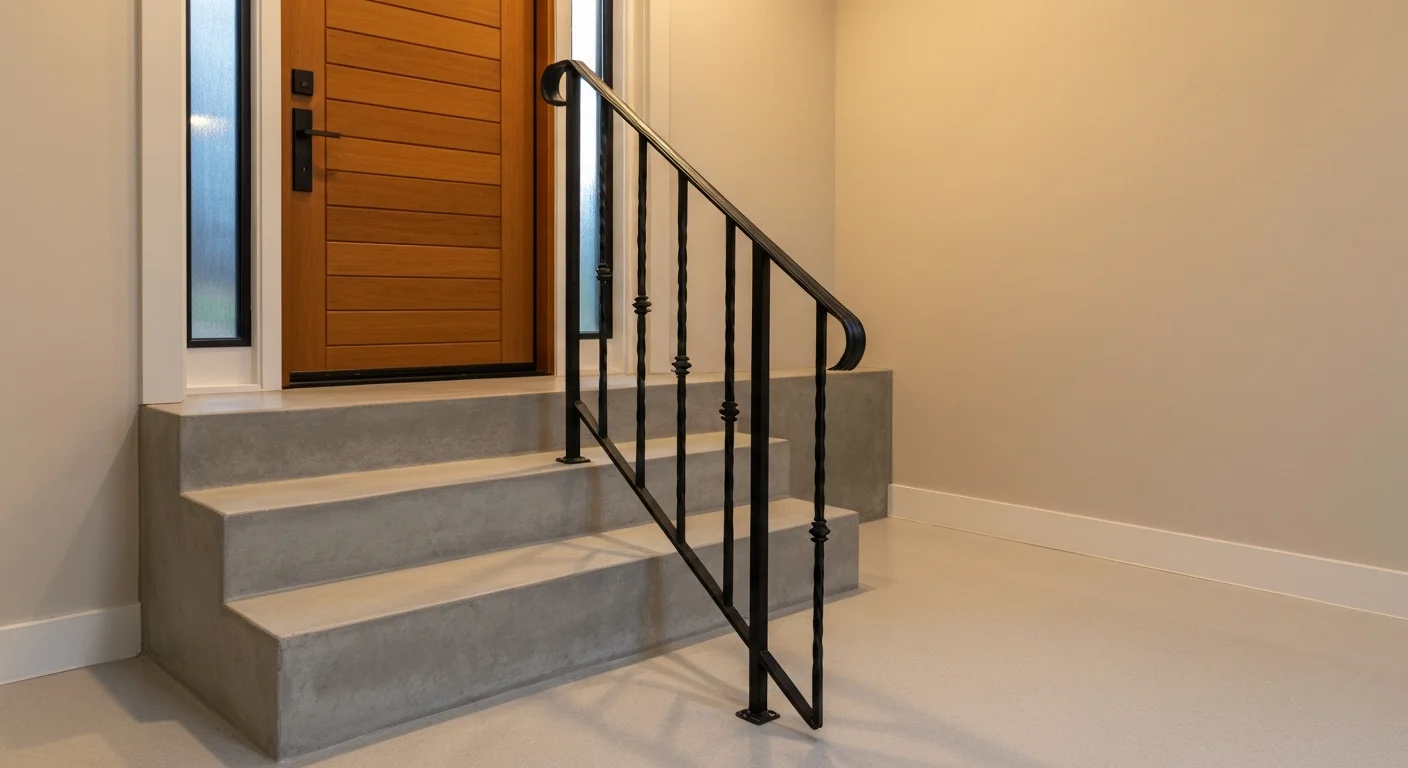
- Custom Wrought Iron Heritage Rails: Ideal for traditional or Mediterranean-style homes, custom-forged wrought iron adds timeless elegance. When finished with a high-durability powder coat, it resists chemical spills and impact scratches.
- Offset Wall-Mounted Continuous Rails: Perfect for exceptionally narrow stairwells, offset brackets keep the handrail tucked close to the wall. This design leaves the maximum amount of usable walking width on your stair treads.
- Modern Cable Railing Systems: To create an airy, open feeling on a wider garage landing, use a hybrid system featuring horizontal stainless steel cables tensioned between heavy-duty metal posts. When mapping out your stairwell configuration, understanding horizontal vs. vertical railing configurations is critical to matching your home’s existing style.
- High-Visibility Powder-Coated Aluminum: For safety-conscious households, powder coating aluminum in high-visibility charcoal, bronze, or white offers excellent contrast against dark concrete. This material is lightweight, strong, and entirely rust-proof.
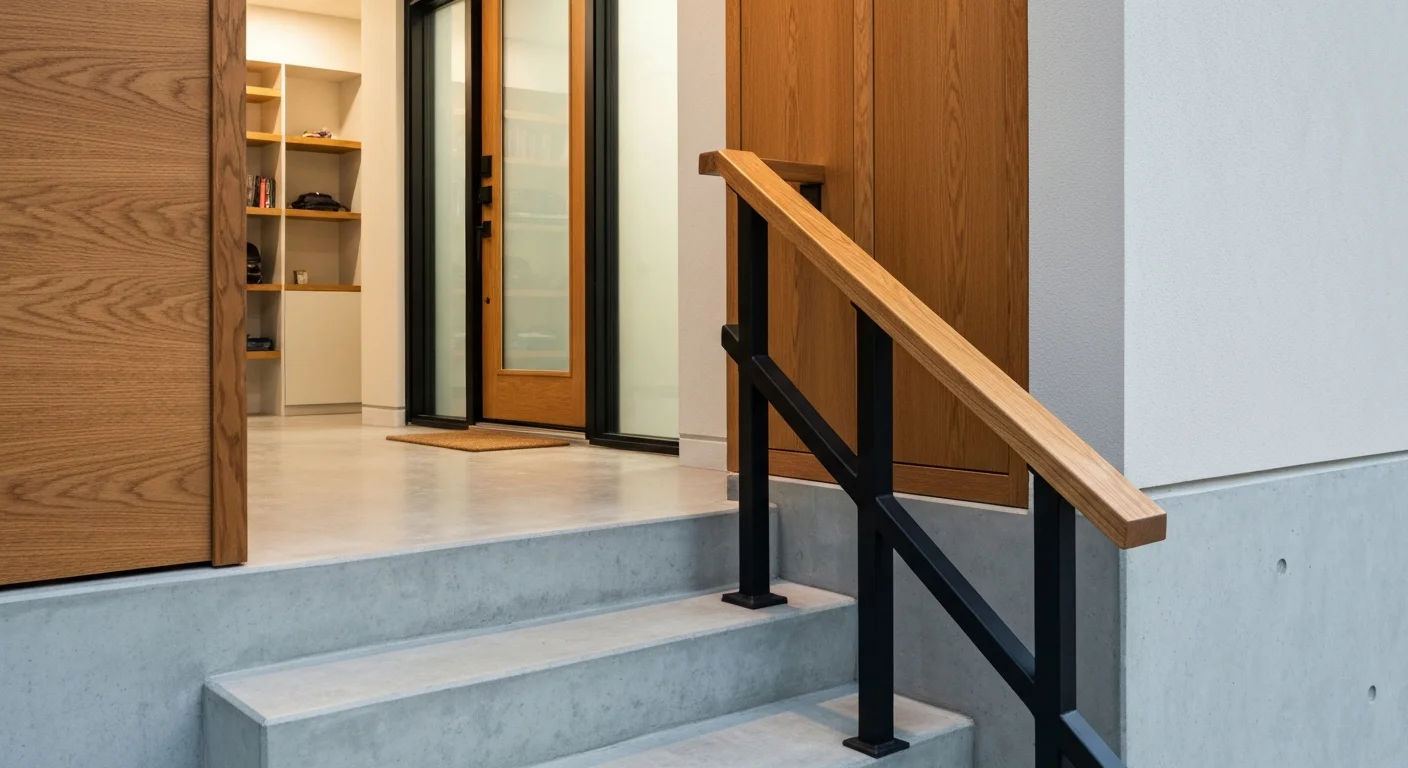
- Reclaimed Hardwood and Steel Fusion: Bring the warmth of natural wood into the garage by pairing a smooth, stained oak or maple handgrip with raw steel wall brackets. This blends rustic textures with modern industrial strength.
- Recessed Drywall Handrails: For the ultimate minimalist approach, carve a recessed niche into the stud bay of the garage wall. Mounting the handrail within this niche keeps it completely flush with the wall face, saving maximum physical space.
Material Breakdown: Wood vs. Aluminum vs. Steel vs. Glass
Selecting the right material is the most important decision you will make for your safety rail installation. Because garages are exposed to vehicle exhaust, gasoline vapors, lawn chemicals, and varying humidity levels, choosing a material that resists degradation is essential. While wood is a common choice for quick interior DIY projects, its susceptibility to warping, splintering, and moisture retention makes it less suitable for long-term garage use.
According to fire safety data from the National Fire Protection Association, garages present a elevated risk for fires due to stored flammable liquids, making non-combustible metals like steel and aluminum the safest structural choices. Metals do not absorb oils or grease, meaning they can be easily wiped clean with standard household degreasers. For modern luxury homes, combining metals with tempered glass panels can create an incredibly clean, high-end look for steps that lead directly into mudrooms or main living areas.
| Material | Durability Rating | Maintenance Requirements | Average Installed Cost Range |
|---|---|---|---|
| Powder-Coated Aluminum | Excellent | Very Low (Occasional wipe down) | $250 – $650 |
| Stainless Steel | Outstanding | Low (Resists rust and corrosion) | $500 – $1,300 |
| Wrought Iron | Very High | Moderate (Requires paint touch-ups) | $400 – $1,000 |
| Hardwood (Oak/Teak) | Moderate | High (Prone to moisture warping) | $150 – $450 |
| Tempered Glass Panels | High | Moderate (Periodic glass cleaning) | $900 – $2,500+ |
Step-by-Step Selection Guide for Homeowners
To ensure your new garage railing installation is safe, code-compliant, and visually appealing, follow this structured, professional approach to planning and execution:
- Analyze the Physical Layout: Examine your stairwell to determine if you have a solid drywall-over-stud wall, a bare concrete block wall, or an open-sided staircase. This dictates whether you need wall mounts, floor posts, or a hybrid system.
- Take Precise Measurements: Measure the total rise (vertical height) and run (horizontal depth) of your stairs. Note the width of the stairs to ensure your chosen rail leaves enough clearance for moving bulky items into the house.
- Choose the Ideal Material: Match the railing material to your climate and lifestyle. For example, if you live in a humid coastal region, prioritize rust-proof aluminum or marine-grade stainless steel over carbon steel.
- Verify Structural Anchor Points: Locate the wood studs behind your drywall using a high-quality stud finder. If mounting into concrete, prepare to use professional sleeve anchors or heavy-duty masonry fasteners to ensure a rock-solid connection.
- Consult a Professional fabricator: Working with a specialist ensures your railing is custom-tailored to your stairs’ exact angles. This step eliminates unsightly gaps, wobbly joints, and installation errors common with off-the-shelf DIY kits.
Common Installation Pitfalls to Avoid in Garage Settings
The most common mistake homeowners and inexperienced contractors make is anchoring wall brackets solely into drywall using plastic expansion anchors. Drywall has almost no structural shear strength. A person losing their balance can exert several hundred pounds of sudden force, which will instantly tear drywall anchors out of the wall. To prevent catastrophic failure, every mounting bracket must be secured with heavy-duty lag screws driven at least two inches deep into solid wood wall studs or structural concrete blocks.
Another frequent error is neglecting the transition at the ends of the handrail. If a handrail ends abruptly with an open, blunt edge, it poses a significant catch hazard. Loose clothing, purse straps, or grocery bags can easily snag on the exposed end, causing a serious fall. To prevent this, always specify “safety returns,” which are smooth, curved fittings that turn the handrail back into the wall or terminate it cleanly into a post. This simple detail ensures safe passage, even when you are navigating the steps in low-light conditions.
Finally, always account for temperature-induced contraction and expansion. In non-climate-controlled garages, long metal handrails will expand and contract slightly between summer and winter. If the railing is anchored too rigidly without room for minor thermal movement, it can slowly loosen its own wall anchors over time. Using high-quality, adjustable bracket joints and professional-grade fasteners ensures your railing remains stable, solid, and safe through every season of the year.
