

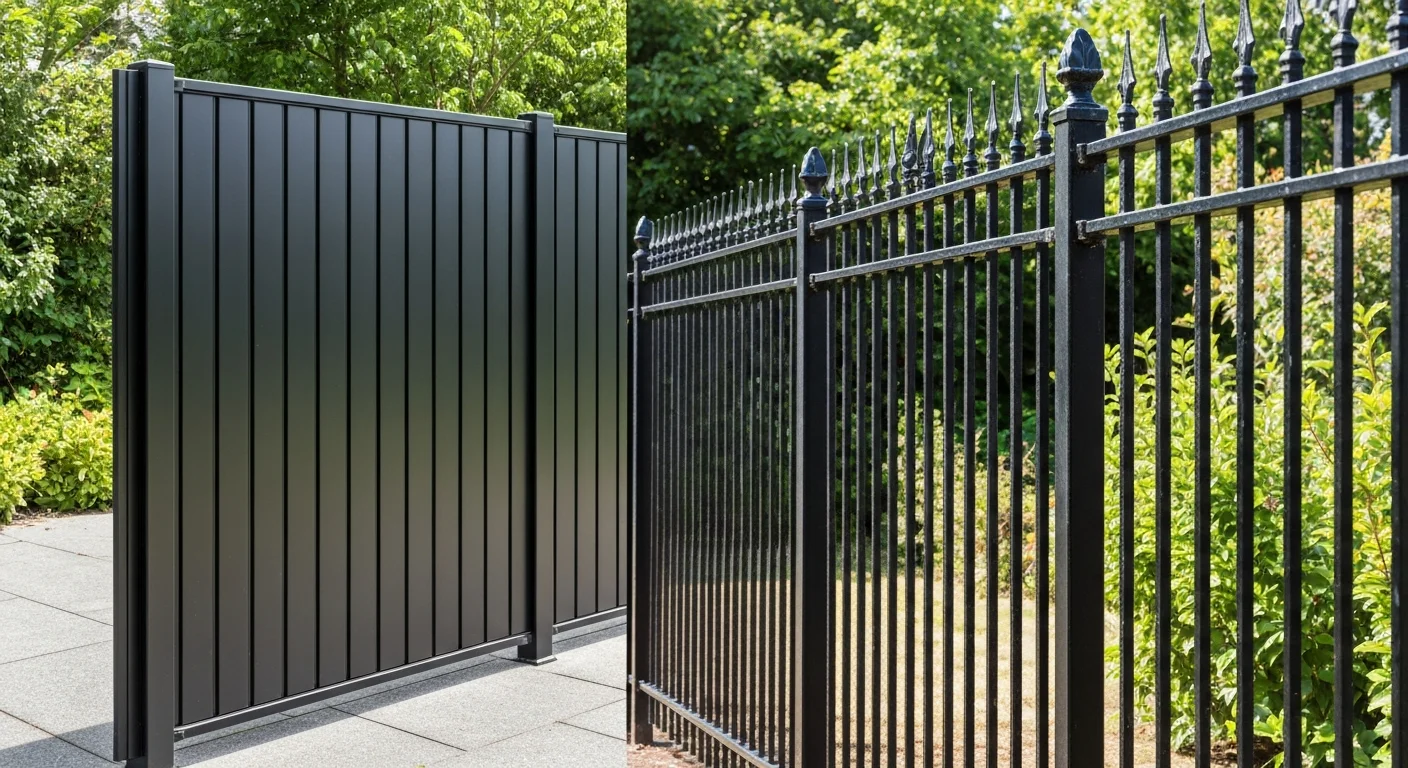
Complete Guide to Choosing an Aluminum vs Iron Fence
When choosing between an aluminum and an iron fence, the ideal option depends entirely on your project’s balance of maintenance, budget, and structural demands. For homeowners seeking a zero-maintenance, rust-proof, and budget-friendly boundary that mimics classic ornamental design, premium powder-coated aluminum is the superior choice. However, for those prioritizing maximum physical security, absolute structural rigidity, and bespoke architectural heritage, traditional wrought iron remains unmatched despite its higher cost and rigorous maintenance requirements. Aluminum stands as the most practical choice for coastal climates and standard residential yards, while wrought iron serves historic estates and high-security commercial perimeters. Modern manufacturing allows aluminum to replicate the heavy aesthetic of traditional metals at a fraction of the cost, making it the dominant residential option. Understanding the core physical differences, installation logistics, and long-term costs of these metals will ensure you make the correct investment for your property.
Key Takeaways
- Maintenance Differences: Aluminum does not rust, requiring only occasional rinsing, whereas iron needs regular sanding and repainting to prevent corrosion.
- Cost Analysis: Aluminum is significantly more affordable upfront and during installation, saving up to 50% compared to heavy iron fabrications.
- Security and Strength: Wrought iron is heavier and structurally stronger, making it ideal for security barriers, whereas aluminum is lighter but sufficient for pets, pool safety, and general boundaries.
- Environmental Adaptation: Coastal environments heavily favor aluminum due to salt-air corrosion, while inland estates often leverage the historic grandeur of iron or steel.
Wrought Iron vs Aluminum Fence: Material Properties and Performance
Wrought iron and aluminum possess entirely different chemical compositions, dictating how they react to weather, impact, and time. Wrought iron is an iron alloy with a very low carbon content. It contains fibrous slag inclusions that give it a wood-like grain when bent or etched. This unique composition makes it incredibly malleable when heated, allowing skilled artisans to craft beautiful, custom scrollwork. However, its high iron content means it is highly susceptible to rust when exposed to oxygen and moisture. Left unprotected, the metal oxidizes, compromising its integrity and aesthetic appeal.
Aluminum, conversely, is a non-ferrous metal that naturally generates a protective oxide layer when exposed to air. This microscopic layer prevents deeper corrosion, making it completely rust-proof even in highly humid or coastal environments. For properties near the ocean, such as those looking for luxury fencing in Boca Raton, FL, aluminum is the standard recommendation. It resists the damaging effects of salt air, whereas iron will rapidly degrade without constant sealant applications.
Furthermore, aluminum is a lightweight metal, measuring approximately one-third the weight of steel or iron. This reduces the load on posts, gates, and hinges, preventing sagging over decades of use. While it lacks the sheer density of iron, modern structural aluminum alloys are incredibly resilient, providing an optimal balance of strength and agility for residential and light commercial use.
Cost Breakdown: Aluminum vs Wrought Iron Fence Options
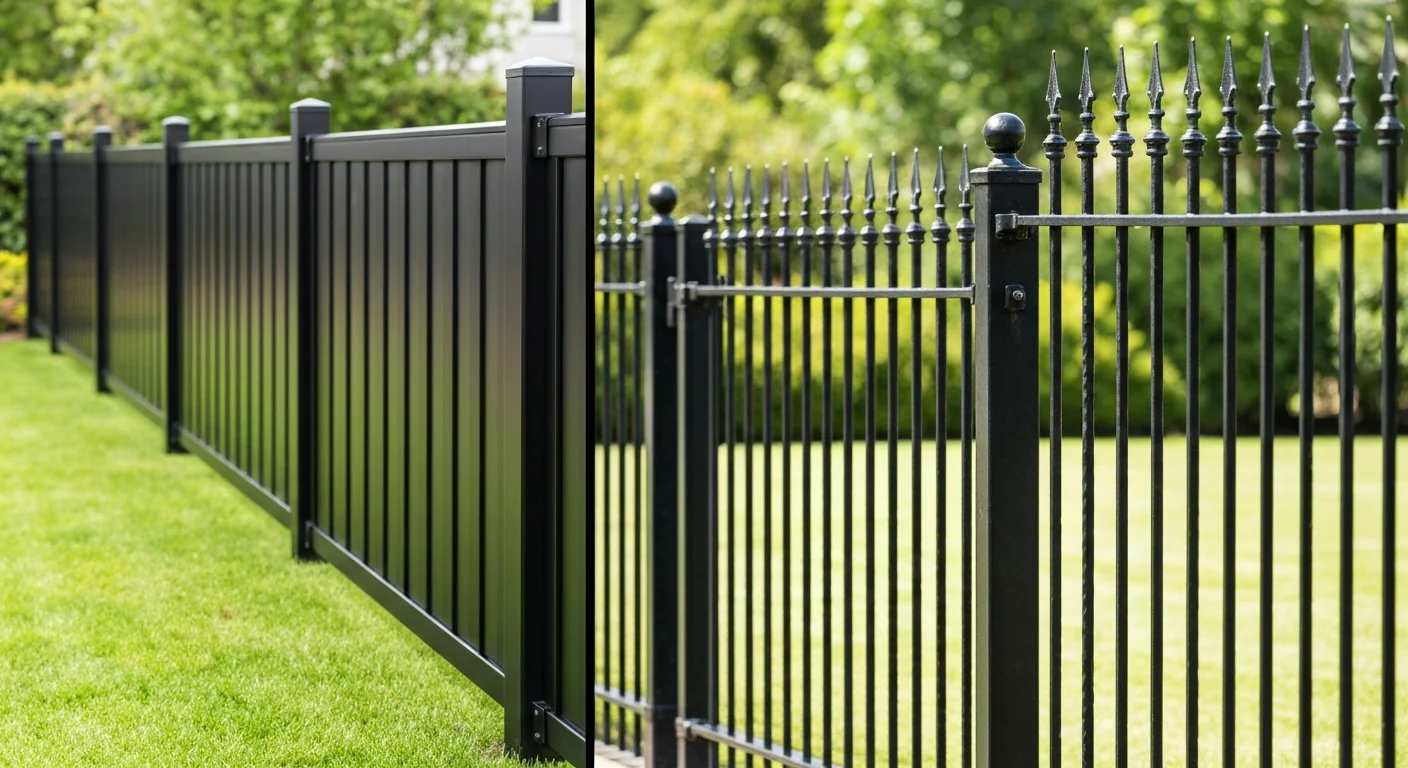
The cost difference between aluminum and wrought iron fences is substantial, with aluminum saving property owners thousands of dollars in both initial procurement and long-term upkeep. A standard residential aluminum fence generally costs between $20 and $75 per linear foot for materials. Custom, heavy-duty industrial-grade aluminum can run slightly higher, up to $100 per foot. Wrought iron, due to its weight, shipping costs, and labor-intensive manufacturing processes, ranges from $100 to over $450 per linear foot for custom artisan work.
Shipping heavy iron requires specialized freight, which can add up to 20% to the material cost. Aluminum panels ship flat-packed and lightweight, minimizing transportation fees. Furthermore, installation labor for iron is intensive. It requires onsite welding, heavy lifting, and deep concrete footers. Aluminum utilizes pre-punched posts and interlocking sections, reducing labor expenses by more than half.
According to financial analysis from the IBISWorld Industry Research, labor represents the fastest-growing cost component in residential construction, making easy-to-assemble systems highly advantageous. Over a twenty-year period, the cost of painting and treating an iron fence can easily double its initial purchase price, while aluminum maintains a net-zero maintenance cost. Homeowners also report excellent returns on investment; the National Association of Realtors indicates that high-quality landscaping and fencing projects can yield up to a 65% return on investment upon home resale.
Steel vs Aluminum Fence: Comparing Strength and Structural Integrity
Comparing steel and aluminum fencing requires balancing structural impact resistance against long-term environmental durability. Steel is significantly denser and stronger than aluminum. If a vehicle collides with a fence, or if a large tree limb falls on it, a steel fence will bend but rarely break. An aluminum fence under extreme impact may buckle or snap. For high-security installations or industrial yards, steel remains the industry benchmark due to this physical invulnerability.
However, raw steel must be heavily galvanized or powder-coated to prevent rust. According to the American Galvanizers Association, unprotected steel can corrode at a rate of up to 100 microns per year in harsh industrial or coastal environments. This makes raw steel impractical without zinc coatings or specialized powder coats. Once the protective coating of a steel fence scratches, rust will immediately form and spread beneath the paint layer.
Aluminum does not have this vulnerability. While it is more pliable, modern structural aluminum alloys (such as 6005-T5) offer impressive tensile strength. These alloys are specifically engineered to withstand high wind loads, which is crucial for hurricane-prone regions. For most residential pools and backyard boundaries, the high strength of steel is unnecessary. The flexible, lightweight nature of a premium aluminum fence offers more than enough security to satisfy local building codes while remaining exceptionally easy to install.
Comparison of Fencing Materials
To help visualize the practical differences between these popular metals, consider the following direct comparison table:
| Material Option | Average Material Cost (Per Foot) | Expected Lifespan | Maintenance Requirements | Best Application |
|---|---|---|---|---|
| Powder-Coated Aluminum | $20 – $75 | 50+ Years | Minimal (Hose rinse) | Coastal yards, pools, residential boundaries |
| Wrought Iron | $100 – $450+ | 100+ Years (With care) | High (Sanding, painting, rust treating) | Historic estates, bespoke architectural gates |
| Tubular Galvanized Steel | $40 – $110 | 25 – 40 Years | Moderate (Touch-up paint on scratches) | High-security perimeters, industrial zones |
Wrought Iron vs Steel Fence: Understanding Heavy Metal Options
Property owners choosing between wrought iron and steel are deciding between traditional hand-forged artistry and modern, carbon-alloy industrial strength. Many people use these terms interchangeably, but they are distinct materials. True wrought iron is rarely produced on a commercial scale today. Most modern “iron” fences are actually made of mild steel, which is molded and welded to replicate the look of classic ironwork. Mild steel is an alloy of iron and carbon. It is stronger and less expensive to produce than genuine wrought iron. However, it lacks the unique fibrous texture and natural rust-resistance that genuine wrought iron possesses due to its slag content.
When comparing a modern steel fence to old-fashioned wrought iron, steel is much easier to source and install. However, both require meticulous rust prevention. If you choose either material, you must ensure it undergoes hot-dip galvanization. This process coats the metal in protective zinc to prevent moisture from reaching the iron molecules. Without this protection, both metals will oxidize quickly, leading to structural failure. When examining your layout, consider the horizontal vs. vertical railing anatomy to ensure water drains away from joints, as pooling water accelerates rust in ferrous metals.
Durability, Lifespan, and Environmental Considerations
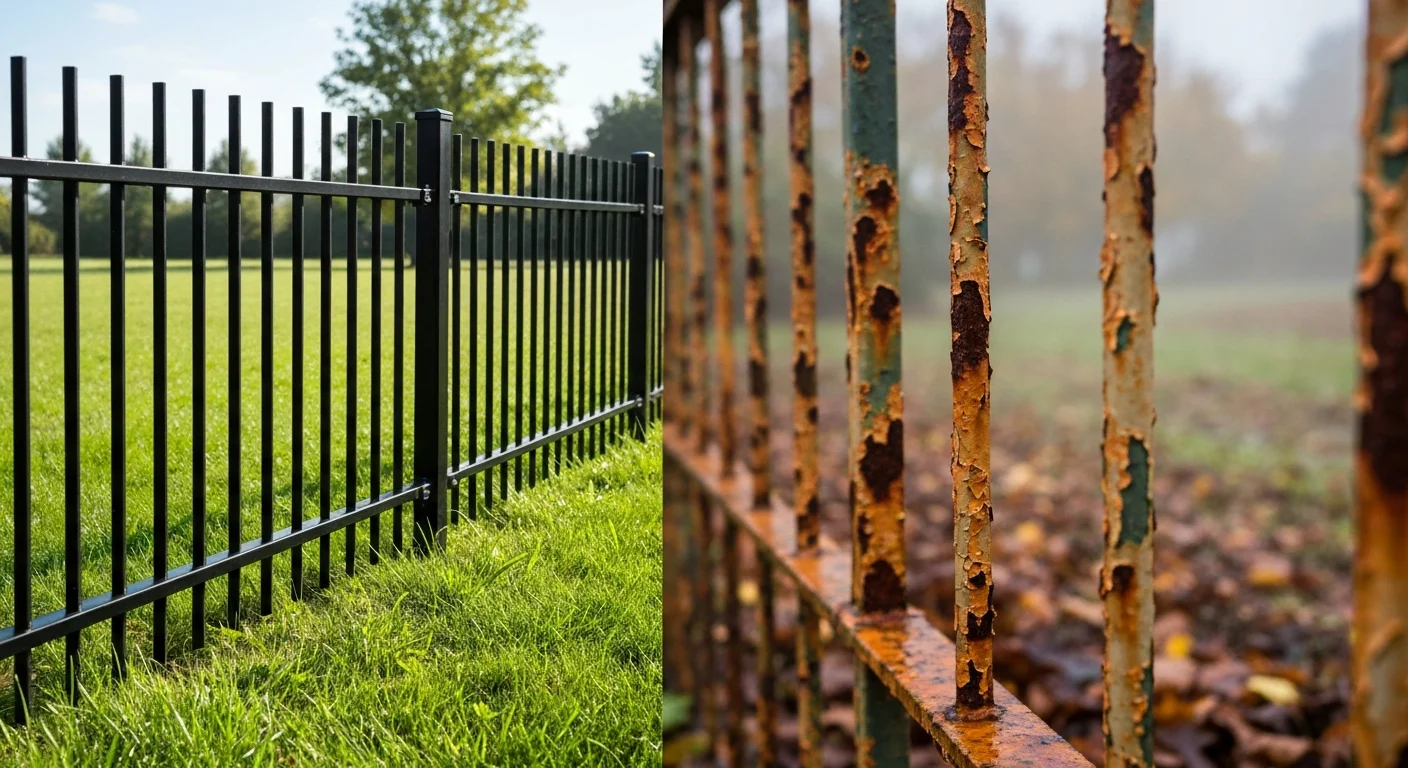
The lifespan of a fence depends entirely on its base material, protective coating, and exposure to environmental elements. An aluminum fence can easily last 50 years or more with virtually no degradation. Because it does not rust, the metal core remains intact indefinitely. The only component that can wear down is the exterior powder coating, which may fade slightly under intense UV exposure over decades. This makes it an incredibly sustainable choice that does not require chemical treatments or toxic paints over its lifecycle.
In contrast, a wrought iron or steel fence can last for centuries, but only if it receives consistent upkeep. If left neglected in a humid climate, rust will compromise its structural integrity within 10 to 15 years. This requires regular scraping, sanding, priming, and painting, which consumes both time and chemical resources.
From an environmental perspective, aluminum is highly sustainable. The U.S. Environmental Protection Agency reports that recycling aluminum saves more than 90 percent of the energy required to produce new aluminum from bauxite ore. Aluminum can be recycled repeatedly without losing any of its structural properties. Iron and steel are also highly recyclable, but the smelting process is far more energy-intensive. Additionally, the chemical solvents, paints, and rust inhibitors required to maintain iron fences over their lifespan add a notable chemical footprint to their environmental profile.
Step-by-Step Selection and Installation Guide
Selecting and installing the right metal fence requires systematic planning to ensure compliance with local zoning laws and long-term stability.
- Determine your primary objective: Identify if you need pool safety, high security, pet containment, or purely aesthetic appeal.
- Check local zoning laws and HOA guidelines: Ensure your chosen material, height, and color comply with all local neighborhood standards.
- Measure your perimeter accurately: Mark out the exact lines and identify any sloping terrain that will require “racked” or “stepped” panels.
- Choose your material and grade: Opt for residential-grade aluminum for standard yards, or commercial-grade steel for security boundaries.
- Prepare the post footings: Dig post holes below your local frost line and use high-quality concrete to secure each support post.
Professional installers recommend avoiding the common mistake of choosing cheap, non-powder-coated fasteners. Using low-grade steel screws on an aluminum fence creates galvanic corrosion, a chemical reaction that rapidly destroys both metals at the contact point. Always use stainless steel or coated fasteners to maintain structural integrity. Additionally, ensuring proper drainage at the base of each post prevents water from pooling and undermining the concrete foundation.
Security and Aesthetic Flexibility
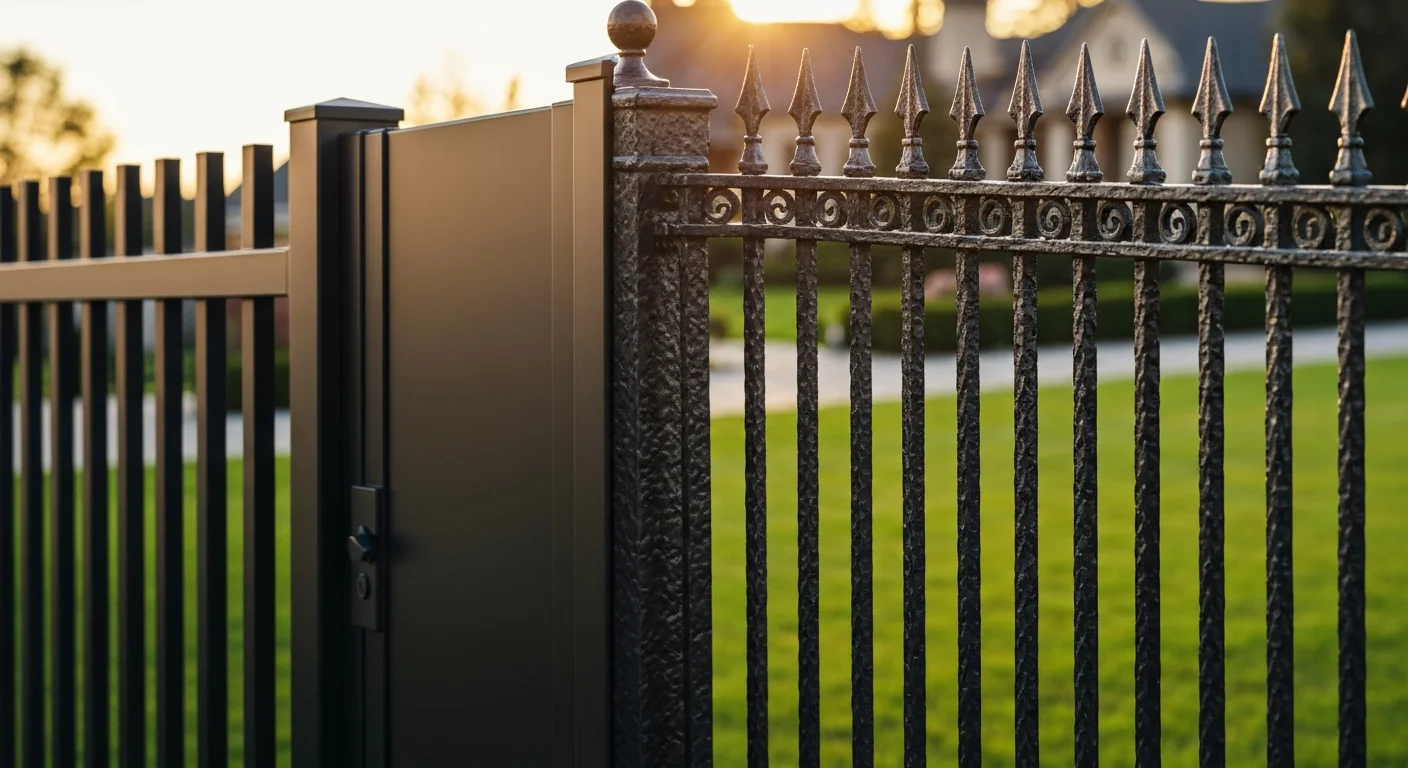
Both aluminum and iron offer exceptional visual appeal, but they cater to very different architectural styles and security profiles. Wrought iron is heavy, imposing, and difficult to cut or climb. This makes it the premier choice for high-security facilities, commercial perimeters, and luxury estate gates. The sheer physical presence of a heavy iron gate acts as a powerful deterrent to intruders, as it cannot be easily bent or breached by hand tools.
Aluminum, while strong, is more flexible. It is perfect for securing children and pets in a residential backyard, but it does not offer the same anti-ram security as thick steel or iron. However, modern aluminum fences can be customized with security pickets, spear tops, and curved profiles to deter climbing. It serves as an excellent boundary marker that meets pool safety codes without making your property look like a fortress.
Aesthetically, aluminum offers incredible flexibility. It comes pre-finished in various colors, including matte black, bronze, gloss white, and forest green. It can be manufactured to mirror historic wrought iron details, such as ornate finials, rings, and scrollwork, giving you the classic look without the weight or maintenance. This allows homeowners to achieve the prestigious look of traditional ironwork while enjoying the modern benefits of a lightweight, rust-free material.
FAQ
What is the main difference between aluminum and wrought iron fences?
The main difference lies in their maintenance and weight. Aluminum is lightweight and completely rust-proof, requiring virtually zero upkeep. Wrought iron is heavy, extremely strong, but highly susceptible to rust, requiring regular painting and maintenance to preserve its structure.
Which fence material is better for coastal areas?
Aluminum is the superior choice for coastal areas. Salt-heavy air accelerates rust on iron and steel, leading to rapid degradation, whereas aluminum naturally resists salt-air corrosion and maintains its clean appearance for decades.
How long does a powder-coated aluminum fence last?
A premium powder-coated aluminum fence can easily last 50 years or more. The aluminum itself will never rot or rust, and modern powder coats are designed to resist UV fading, cracking, and peeling for multiple decades.
Can you install an aluminum fence on sloped ground?
Yes, aluminum fencing is highly adaptable to uneven terrain. Most modern aluminum panels are designed to “rack,” meaning they can adjust to follow the natural slope of your yard without leaving large, unsightly gaps at the bottom.
Is steel stronger than aluminum for fencing?
Yes, steel is significantly denser and stronger than aluminum, making it more resistant to physical impacts. However, steel is much heavier and must be galvanized or painted regularly to prevent rust, whereas aluminum remains strong enough for standard residential use without the rust risk.
How often do you need to repaint a wrought iron fence?
A wrought iron fence typically requires repainting every 3 to 5 years, depending on the local climate and humidity. If you spot chips, scratches, or rust spots, you must sand and touch them up immediately to prevent the corrosion from spreading.
