

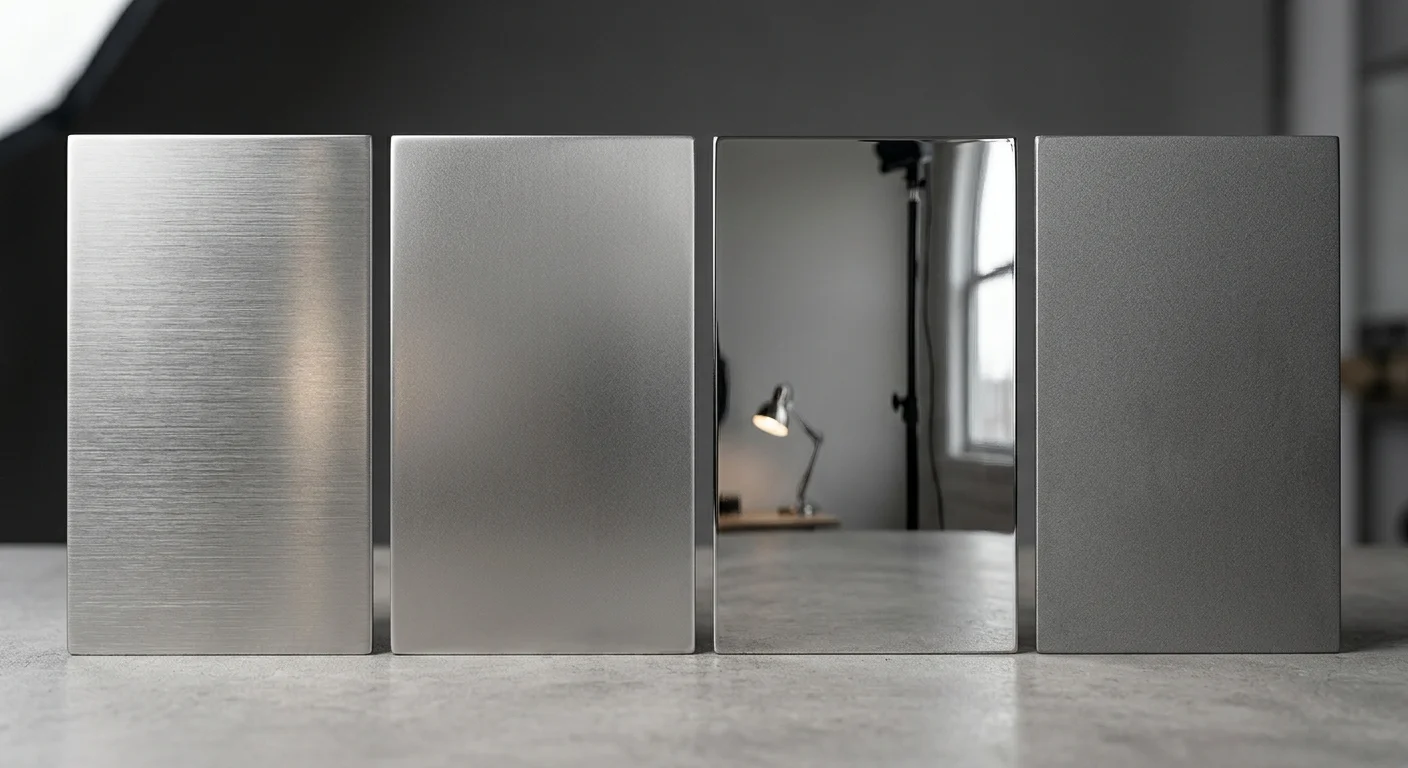
Stainless Steel Finishes Explained: Brushed, Mirror & Matte Options
For high-traffic, scratch-prone architectural installations like handrails, high-end balustrades, or kitchen cabinetry, choose a No. 4 brushed stainless steel finish. For ultra-luxury focal points, ornamental panels, and high-salinity coastal environments, select a highly polished No. 8 mirror finish. For structural, hidden, or industrial assemblies where budget is the primary driver, a standard 2B or 2D matte mill finish is the most practical selection. The chosen surface treatment directly dictates not only the aesthetic character of your project but also its susceptibility to fingerprints, its ease of sanitation, and its long-term resistance to localized corrosion. Matching the correct finish type to your environmental conditions and daily wear patterns avoids costly replacement and maintenance cycles. At Luxury Staircase Railings, we leverage these distinct metal finishes to deliver high-performance residential and commercial architectural installations that withstand both high-frequency touch and challenging climatic conditions.
Key Takeaways
- No. 4 Brushed finishes are the industry standard for high-traffic environments because their directional grain effectively masks fingerprints, scuffs, and minor surface scratches.
- No. 8 Mirror finishes provide the highest level of corrosion resistance because the intensive mechanical polishing eliminates microscopic surface crevices where corrosive chlorides gather.
- Mill finishes (2B and 2D) represent unpolished, raw steel straight from the manufacturing rolls, serving as cost-effective options for non-visible structural components.
- Environmental factors must dictate finish selection, with mirror-polished surfaces performing significantly better in saltwater coastal environments to prevent unsightly tea staining.
Understanding Stainless Steel Finish Classifications
Architects, fabricators, and custom metal designers categorize stainless steel finishes using standardized industry designations. The surface characteristics of stainless steel are determined by the specific rolling, annealing, descaling, and polishing processes performed at the mill or during secondary fabrication. These processes alter the topography of the metal, impacting its light reflectance, mechanical friction, and biological cleanability. Modern standards, such as those established by ASTM International, divide these surface qualities into distinct numbered and lettered categories.
The primary distinction lies between mill finishes and polished finishes. Mill finishes are the direct result of the steel-making process and are left unpolished. They range from dull, matte surfaces to slightly reflective, cold-rolled sheets. Polished finishes, on the other hand, undergo secondary mechanical processing with abrasive belts or polishing wheels to achieve specific decorative textures or reflective qualities. According to the World Stainless Association, over 85% of stainless steel products are successfully recycled at the end of their life cycle, preserving their intrinsic metallic properties and allowing for the re-creation of high-grade finishes without any material degradation.
When selecting a stainless steel finish, you must also evaluate the underlying alloy chemistry. Standard 304-grade stainless steel is highly versatile and works beautifully with brushed and mirror polishes. However, marine and coastal environments require 316-grade stainless steel due to its molybdenum content, which dramatically resists pitting corrosion when coupled with a highly polished surface. Selecting the right finish requires a delicate balance of aesthetic preference, structural requirements, and maintenance feasibility.
The Brushed Finish: Aesthetics and Performance of No. 4 Polished
A No. 4 brushed finish is the most widely specified decorative option for modern commercial and residential metal installations. Recognized by its uniform, satin sheen and fine parallel grit lines, this finish offers an elegant, muted appearance that prevents glaring light reflections. The production of a No. 4 finish involves grinding the raw metal surface with a series of progressively finer abrasive belts. Fabricators typically utilize a 120-grit to 180-grit abrasive belt, followed by a non-woven nylon abrasive brush to soften the linear scratch pattern.
This directional grain pattern offers unmatched practical benefits in high-traffic applications. While highly reflective surfaces easily show oily fingerprints and light scuffs, the brushed texture diffuses light to hide minor surface abrasions. This characteristic makes it the premier choice for escalators, elevator cabs, retail display fixtures, and custom metal balustrades. The unique visual appeal of this finish has historically defined major landmarks, such as the Gateway Arch in St. Louis, Missouri, which features a custom-brushed stainless steel exterior cladding designed to prevent blinding sun glare.
Despite its visual appeal, a brushed finish has one distinct disadvantage in harsh outdoor settings. The microscopic grooves created during the brushing process can collect moisture, dust, and airborne salt particles. In humid coastal environments, these trapped particles can initiate localized oxidation, commonly referred to as tea staining. Regular washing and the application of protective metal sealants are necessary to preserve the pristine appearance of a brushed surface in highly humid areas.
The Mirror Finish: High-Reflectivity Elegance of No. 8 Polished
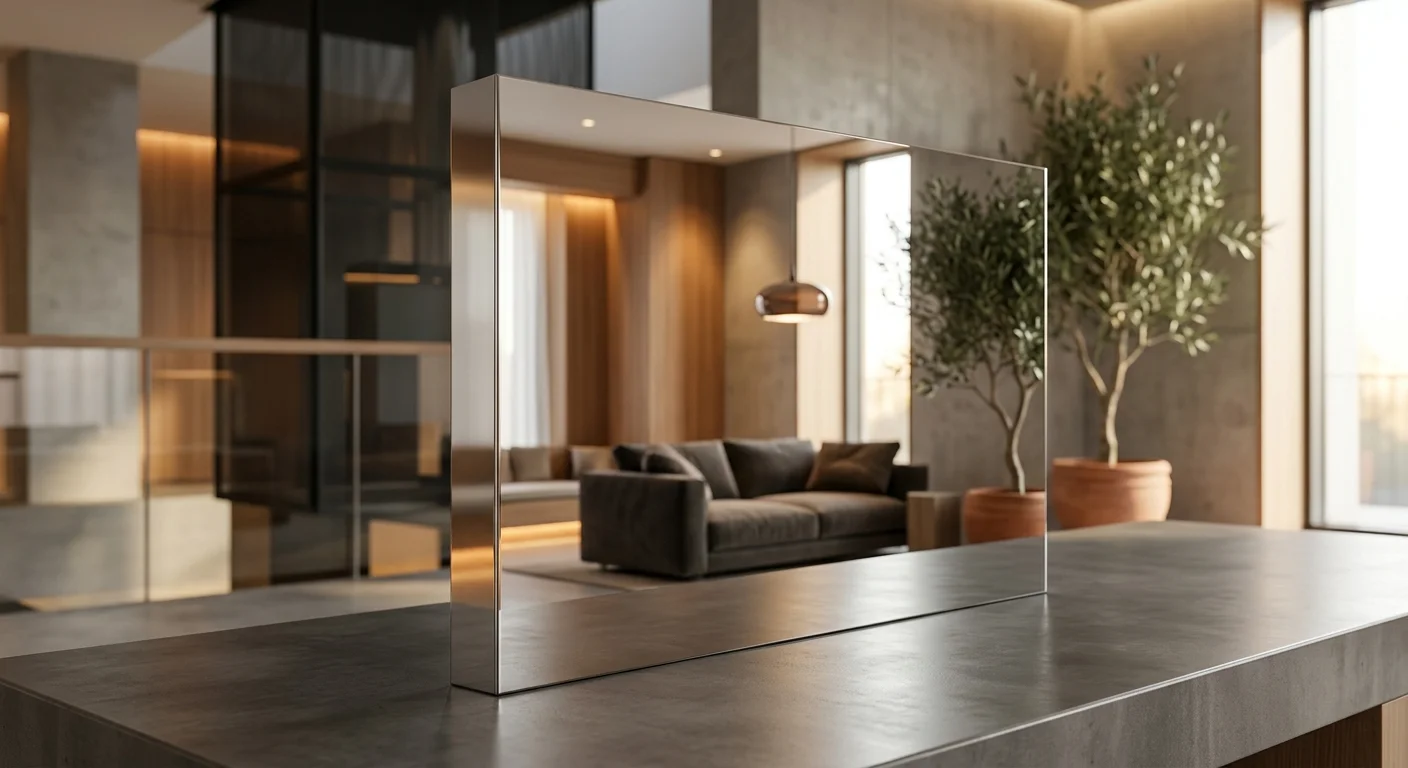
A No. 8 mirror finish represents the pinnacle of luxury, reflectivity, and corrosion resistance in architectural metalwork. This surface treatment is completely non-directional, with all visible abrasive scratch lines entirely polished out. To achieve this brilliant, mirror-like quality, fabricators mechanically treat the metal with a sequence of increasingly fine polishing wheels. The process begins with aggressive grinding to eliminate surface imperfections, moves through finer silicon carbide compounds, and concludes with a deep buffing process utilizing jewelry-grade rouge compounds for up to ten minutes.
This exhaustive mechanical polishing does more than create a striking, reflective aesthetic. By smoothing the metal down to a microscopic level, the polishing process eliminates the tiny valleys and crevasses where moisture and salt ions lodge. Consequently, a mirror-polished finish exhibits the highest level of corrosion resistance among all finishing options. Data compiled by the National Association of Architectural Metal Manufacturers shows that surface roughness (Ra) values below 0.5 micrometers are critical for minimizing bacterial retention and particle adhesion in high-traffic commercial environments. This characteristic makes mirror-polished stainless steel highly valuable for sterile pharmaceutical cleanrooms, food processing plants, and marine structures exposed to aggressive saltwater spray.
However, the highly reflective nature of a No. 8 finish demands a rigorous cleaning schedule when installed in high-touch residential or commercial spaces. Oil from human skin easily disrupts the uniform light reflection, making fingerprints stand out clearly. Additionally, sharp objects can leave noticeable scratches on the pristine face of the metal. For these reasons, mirror-polished elements are most frequently installed as elevated wall panels, ceiling accents, or protected ornamental trim where contact is minimized but visual impact is maximized.
Matte and Mill Finishes: Budget-Friendly 2B and 2D Finishes for Stainless Steel
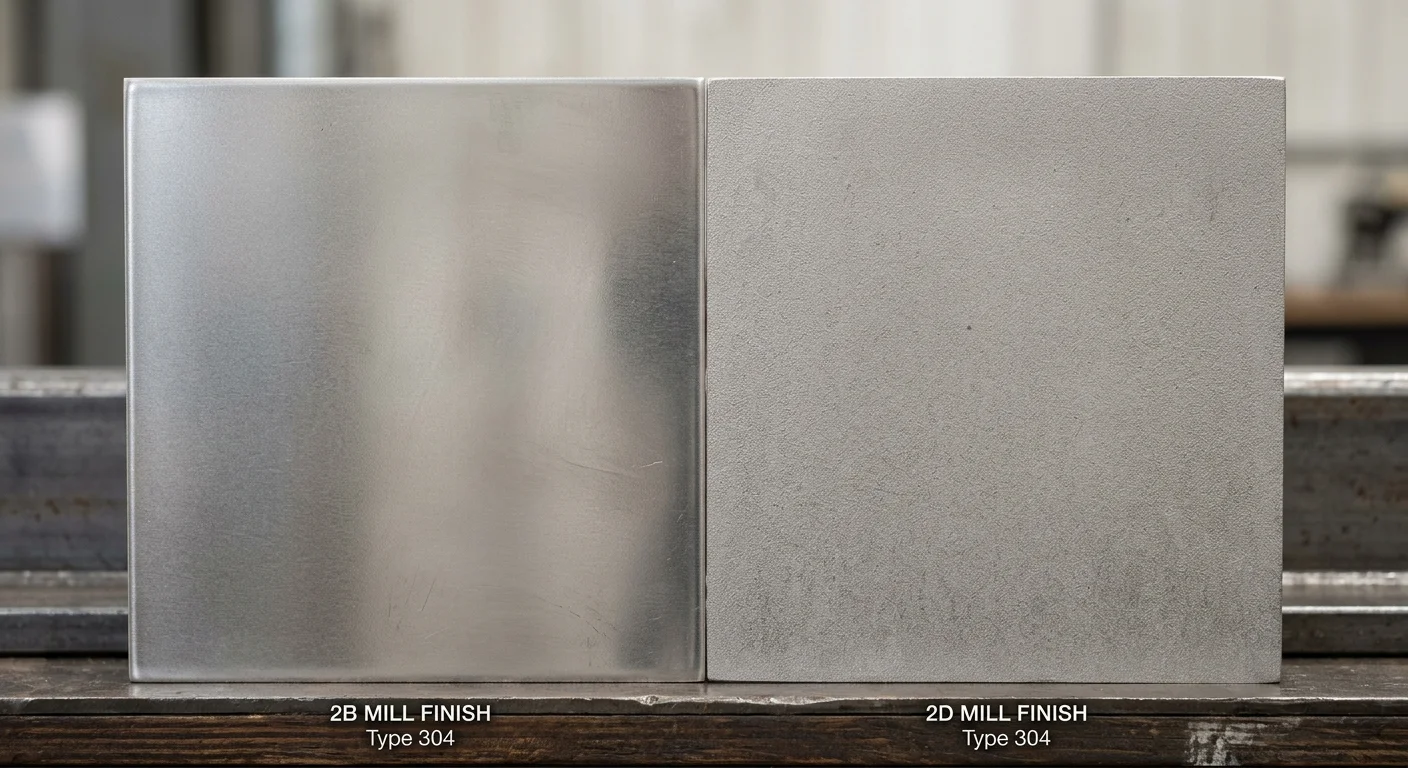
Mill finishes represent the raw, utility-focused side of stainless steel production, prioritizing cost efficiency and structural integrity over decorative appeal. The two most prominent mill finishes are 2B and 2D. A 2D finish is produced by cold rolling the steel, followed by annealing and pickling. Annealing softens the metal, while pickling removes scale by bathing the steel in an acid solution. The resulting surface is dull, matte, and slightly rough to the touch. This finish is typically utilized as a substrate for subsequent polishing, or in industrial settings where the metal remains hidden from public view.
The 2B finish is a step up in reflectivity from the 2D category. It undergoes the same cold-rolling, annealing, and pickling steps, but receives a final light pass through highly polished, rotating rolls. This final process, known as a skin pass, imparts a smooth, semi-reflective luster to the metal. Because it requires no manual polishing, the 2B finish is the most economical stainless steel sheet option available on the market today. It serves as the standard material for industrial mixing tanks, chemical processing vessels, sewage treatment systems, and the interior structural frameworks of high-end buildings.
For custom fabrication shops, mill finishes provide a clean slate. Builders can cut, weld, and assemble structural elements using 2B or 2D sheets, and then apply a post-fabrication brush or mirror polish to the completed structure. This approach protects the raw metal from weld discoloration and tool marks during the initial construction phases, saving significant labor and material costs.
Selecting the Best Finishes for Stainless Steel Railings
When selecting materials for staircases, balconies, and structural handrails, balancing touch ergonomics with climate performance is critical. The physical sensation of grasping a handrail requires a surface that feels smooth and secure without feeling cold or slippery. A No. 4 brushed finish is the ideal selection for a high-durability stainless steel railing system in high-traffic commercial buildings, schools, and private residences. The micro-textured grain provides a subtle tactile grip, while effectively concealing the hand oils and fingerprints left by daily use.
In humid coastal regions, however, architectural designers must account for salt-air exposure. For oceanfront residences and outdoor commercial decks, utilizing a mirror-polished No. 8 finish on marine-grade 316 stainless steel is highly recommended. The lack of microscopic grain lines prevents salt crystal buildup, keeping the railing immaculate with minimal maintenance. To help homeowners choose the optimal metal for their exterior projects, we compare the structural and aesthetic properties of different architectural metals in our guide on steel vs. aluminum railings.
Mixing different finishes within a single staircase design can create beautiful visual contrast. For example, pairing a brushed handrail with mirror-polished accent clamps or cable posts creates a sophisticated, multi-dimensional aesthetic. When incorporating glass panels, the contrast between transparent glass and clean metal finishes elevates the entire architectural space. Understanding how these materials interact allows homeowners to make informed decisions regarding their property’s long-term value and style.
Comparing Stainless Steel Finish Types: Performance, Costs, and Care
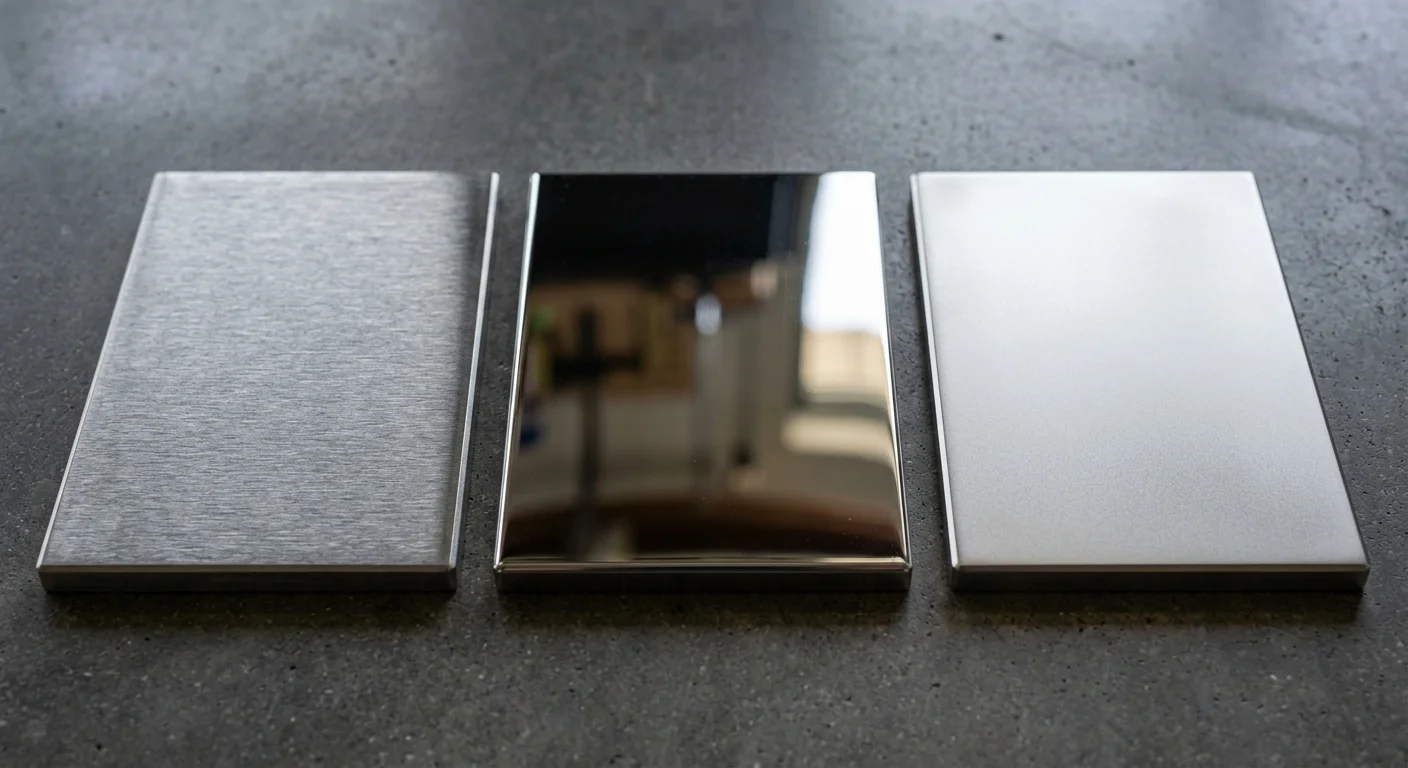
To help you select the ideal surface treatment for your architectural or industrial project, the table below compares the four primary stainless steel finish categories across key performance metrics.
| Finish Designation | Surface Appearance | Corrosion Resistance | Scratch & Fingerprint Masking | Relative Cost Index |
|---|---|---|---|---|
| No. 2D Mill Finish | Dull, non-reflective gray matte | Moderate (higher microscopic surface area) | Good (raw, irregular surface) | Low (Standard base mill cost) |
| No. 2B Mill Finish | Semi-reflective, smooth, milky sheen | Moderate-High | Fair (shows deeper scratches easily) | Low-Medium (economical production) |
| No. 4 Brushed Finish | Satin luster with fine, parallel grain lines | Moderate (grooves can collect salt/moisture) | Excellent (highly effective masking) | Medium (requires specialized abrasive processing) |
| No. 8 Mirror Finish | Highly reflective, mirror-like, non-directional | Excellent (ultra-smooth surface sheds moisture) | Poor (demands frequent maintenance) | High (requires labor-intensive polishing) |
According to the Specialty Steel Industry of North America, secondary polished finishes like No. 4 and No. 8 can increase material costs by 20% to 50% compared to standard mill finishes. This cost difference reflects the specialized labor, machinery, and quality control steps required to produce flawless surfaces. To maintain the beautiful appearance of your selected stainless steel finish over time, follow this standard cleaning and care protocol:
- Identify the grain direction: If cleaning a brushed No. 4 finish, always rub in the direction of the grain lines. Wiping across the grain can damage the finish and dull the metal’s natural luster.
- Use mild cleaning agents: Apply a solution of warm water and mild dish soap, or use a specialized, non-abrasive stainless steel cleaner. Avoid any cleaners containing chlorine, bleach, or harsh acids, as these chemical compounds break down the steel’s protective chromium oxide layer.
- Wipe with microfiber cloths: Avoid using abrasive scouring pads, steel wool, or stiff wire brushes on polished or brushed surfaces. These abrasive tools will create permanent scratches and introduce carbon steel particles that lead to surface rust.
- Rinse and dry thoroughly: Thoroughly rinse away any soap residue with clean water. Dry the surface completely with a clean towel to prevent mineral-rich water spots from forming on the metal.
Professional Application and Common Metalworking Mistakes to Avoid
Achieving a flawless, long-lasting stainless steel finish requires precise control during the fabrication and installation phases. One of the most common mistakes made by inexperienced fabricators is the cross-contamination of metals. If a fabricator uses the same grinding wheel or wire brush on both standard carbon steel and high-end stainless steel, microscopic carbon particles become embedded in the stainless steel’s surface. These foreign carbon particles quickly rust when exposed to moisture, creating unsightly orange spots that can ruin a premium No. 4 or No. 8 finish.
Another common issue is failing to align the grain direction of brushed finishes during final installation. If a handrail consists of multiple welded sections, the brushing direction must run parallel across the entire assembly. A professional fabricator must carefully weld the joints, grind the weld bead flush, and manually blend the weld zone with matching grit belts. This process hides the weld seam and ensures a continuous, unbroken grain flow along the entire handrail.
Finally, keeping the protective vinyl film on the stainless steel during shipping and installation is essential. Polished sheets are shipped with a heavy-duty adhesive film to protect the surface from tool scrapes, plaster dust, and rough handling on active construction sites. Removing this protective film too early can lead to costly repair and polishing work before the project is even completed. For optimal results, keep this protective wrap intact until all nearby masonry, painting, and heavy structural work are finished.
FAQ
What is the difference between brushed and satin stainless steel?
While often used interchangeably, a brushed finish has distinct parallel grit lines created by mechanical abrasive belts. A satin finish features a smooth, matte sheen without visible grain lines, often achieved through chemical treatment, bead blasting, or acid-etching. Satin finishes diffuse light uniformly and are highly resistant to fingerprints.
Does mirror finish stainless steel rust easier than brushed stainless steel?
No, a mirror finish actually resists rust better than a brushed finish. Because the mirror-polishing process removes microscopic crevices where water and corrosive salts can settle, moisture rolls off the surface easily. However, a mirror finish will show surface smudges, oils, and fingerprints much more clearly than a brushed surface.
How do you restore a scratched brushed stainless steel surface?
You can restore a scratched brushed finish by rubbing the metal with a fine-grit abrasive pad or specialized stainless steel restoration compound. It is critical to rub gently in the direction of the existing grain, avoiding circular motions that can ruin the pattern. For deep scratches, consult a professional metal refinisher to avoid creating flat spots on the metal.
Why is a 2B finish called a mill finish?
A 2B finish is called a mill finish because it is produced entirely at the steel mill without any secondary manual polishing. It receives its smooth, semi-reflective appearance during the cold-rolling process as it passes through highly polished finishing rolls. This makes it an incredibly cost-effective option for industrial and structural applications.
Can you powder coat over a polished stainless steel finish?
Powder coating over a highly polished No. 8 or No. 2B finish is not recommended because the smooth surface lacks the mechanical profile needed for the coating to adhere properly. To ensure a durable powder coat, the metal surface must first be sandblasted or treated with a rough mill finish like 2D to create a textured surface that the powder can bond with.
How does salt water affect brushed stainless steel railings?
Saltwater can cause tea staining and pitting corrosion on brushed stainless steel railings because salt crystals easily accumulate in the microscopic grooves of the grain. To prevent this corrosion in coastal areas, always use 316-grade stainless steel with a highly polished mirror finish, and rinse the railings regularly with fresh water.
