

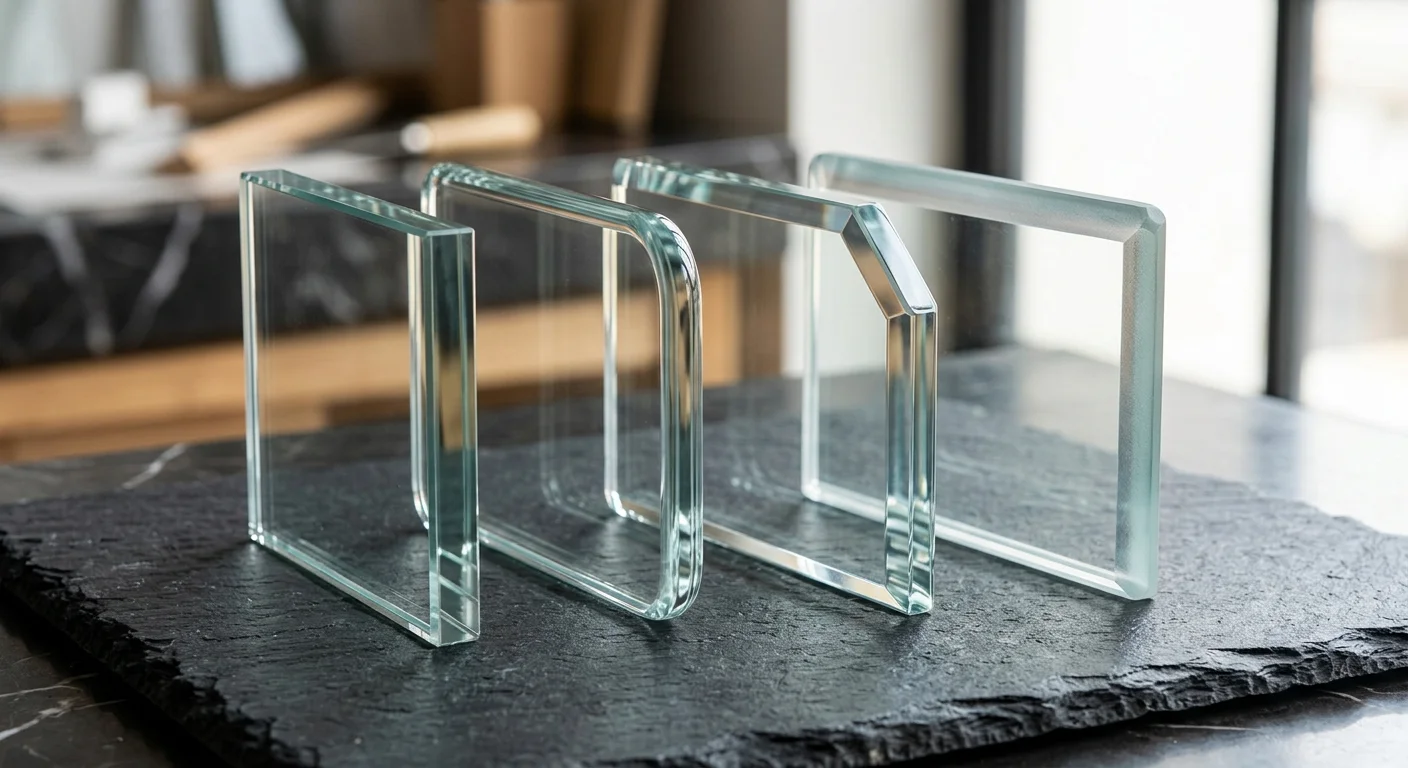
Glass Edge Finishes Explained: Polished, Beveled & Seamed Glass
For highly visible, minimalist structural installations like frameless glass stairways, select a flat polished edge to achieve a sleek, premium, and perfectly square architectural look. For decorative applications such as luxury wall mirrors, ornate cabinet panels, and traditional focal-point features, choose a beveled glass edge to introduce classical dimension and beautiful light refraction. If the glass edge will be entirely hidden within a metal pocket, heavy wood frame, or structural u-channel, opt for a cost-effective seamed edge to minimize fabrication expenses while ensuring safe handling. Choosing the wrong edge finish not only ruins your overall design aesthetic but can also compromise structural integrity, leading to premature cracking under mechanical load. Understanding how these glass edge finishes differ in safety, visual impact, and manufacturing cost is essential for executing a structurally sound and visually striking project.
Key Takeaways
- Flat Polished Edges: Deliver a high-gloss, minimalist, and perfectly squared look, which is essential for exposed frameless structural installations.
- Beveled Edges: Create a sloped perimeter (typically 25 to 45 degrees) that acts as a light-catching frame, perfect for premium mirrors and accent glass.
- Seamed Edges: Are lightly sanded to remove razor-sharp borders but remain dull and unfinished; these are strictly meant for framed, non-visible glass edges.
- Structural Safety: All edge treatments must be executed before the tempering process, as attempting to grind glass after tempering will cause the entire panel to shatter.
- Budget Management: Flat polished and seamed edges are highly cost-effective, whereas specialized beveling and custom mitering add fabrication labor and cost.
Understanding Glass Edge Finishes in Modern Architecture
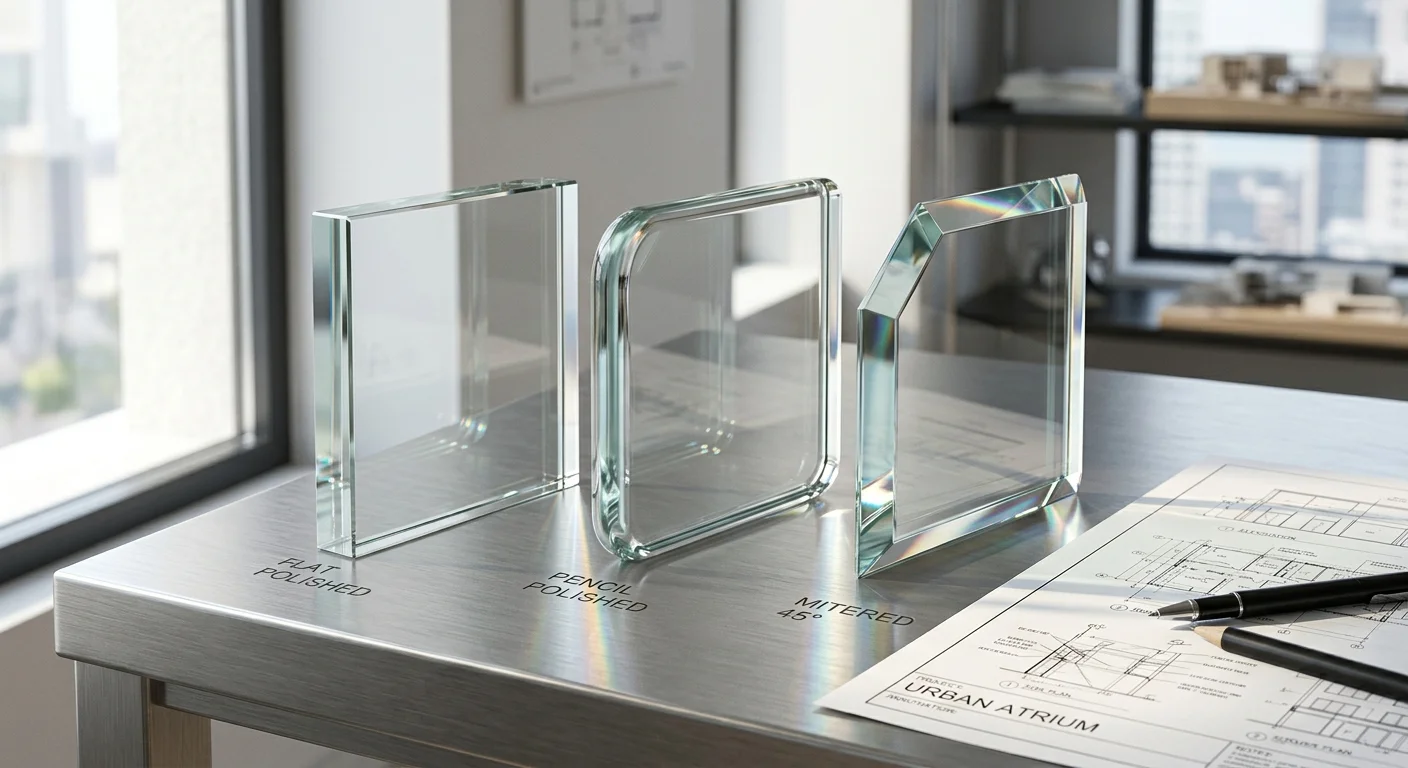
Glass edge finishes refer to the precise mechanical treatments applied to the raw, sharp perimeter of a glass panel after it is cut to size. When a fabricator scores and snaps a large sheet of raw glass, the resulting edges are razor-sharp, highly irregular, and structurally vulnerable. Unfinished glass contains microscopic fractures along its perimeter. These micro-fractures can propagate under thermal stress or physical impact, leading to sudden, catastrophic failure. By grinding and polishing these edges, we transform raw, dangerous glass into safe, functional, and beautiful architectural components.
For high-end structural designs, selecting the right edge is not just an aesthetic choice but a crucial safety measure. In 2026, modern building codes mandate specific safety treatments for exposed glass edges in public and private spaces. Professional glazing teams utilize computerized straight-line edgers and advanced CNC machines to shape the glass. These advanced tools ensure exact tolerances down to fractions of a millimeter. According to the National Glass Association, edge defects account for over 80% of spontaneous glass breakage incidents in tempered panels, highlighting the critical importance of high-quality edge polishing. Whether you are planning a grand staircase or choosing materials for sleek office partitions, understanding the mechanics of these finishes is essential.
Different applications demand distinct edge treatments depending on exposure and load-bearing requirements. For example, a glass pane destined for an outdoor balcony requires a vastly different finish than a mirror resting inside an ornate wooden frame. By aligning the edge finish with the functional demands of the space, you protect your investment and ensure maximum durability.
Why Choose Flat Polished Edge Glass for Modern Interiors?
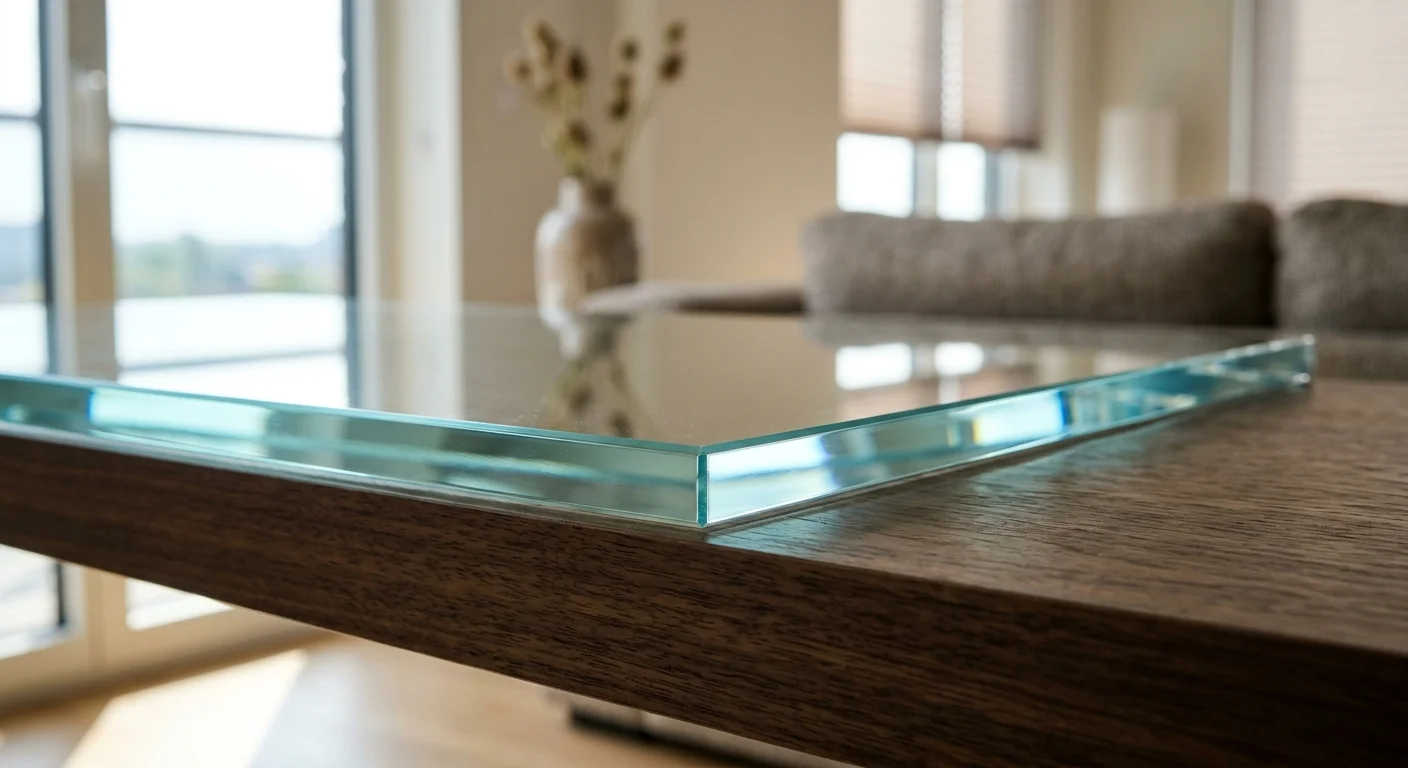
Flat polished edge glass features a perfectly flat, square profile with thin, delicate chamfers on the top and bottom to eliminate sharpness. This finish is the gold standard for minimalist architectural designs because of its clean profile and flawless transparency. The face of the edge is ground flat and then polished to a water-clear, glossy shine. This allows light to pass cleanly through the glass, making the edge look like an extension of the panel itself.
We frequently specify this option for our high-end frameless glass railing installations. When the top edge of a railing is exposed without a metal handrail, a flat polished edge provides a visually striking, continuous line. It feels incredibly smooth to the touch and coordinates beautifully with modern steel and concrete. A study by the ASTM International indicates that proper edge finishing increases the mechanical load capacity of glass panels by up to 40% compared to rough-cut or improperly seamed edges.
In terms of production, fabricators achieve this look using multi-stage polishing wheels with increasingly fine grits. This process removes all grinding marks, leaving a mirror-like sheen. It is ideal for tabletops, glass shelves, floating stair panels, and structural partitions. Standard pricing for flat polishing ranges from $8 to $22 per linear foot, depending on the glass thickness. When compared to other metal materials, as detailed in our guide on glass railing vs steel, polished glass provides unmatched visual openness while maintaining excellent structural stability.
For designers working with extra-clear, low-iron glass, flat polishing is particularly effective. Standard clear glass has a distinct green tint along its edge due to iron content. Low-iron glass, when flat-polished, exhibits a brilliant, ice-blue or nearly transparent edge that enhances the clean, ultra-modern aesthetic of high-end commercial spaces and luxury residences.
Understanding the Elegance of a Beveled Glass Edge
A beveled glass edge is created by grinding and polishing the perimeter of the glass at a sloped angle rather than a ninety-degree square. This angled border, which typically slopes down from 1/2 inch to 1-1/2 inches wide, acts as a prism. It catches natural light and refracts it into beautiful, subtle patterns. The center of the glass remains at full thickness, while the outer edge thins down to a narrow, polished margin.
This decorative treatment is historically associated with luxury and classical craftsmanship. It is a highly popular choice for custom mirrors, premium glass doors, and elegant cabinet inserts. The bevel itself serves as a built-in decorative frame. This eliminates the need for bulky wooden or metal borders in minimalist, high-end designs. The width of the bevel can be customized to match the scale of the room, with wider bevels offering a more dramatic, traditional look.
From a technical standpoint, creating a high-quality bevel requires specialized machinery and highly skilled operators. The glass must be ground down gradually to prevent heat build-up, which can weaken the material. Because of this intensive labor, beveling is typically more expensive than standard flat polishing. Homeowners should expect to pay between $15 and $45 per linear foot for beveled edges. While it is less common for structural balustrades, a beveled glass edge adds helical dimension and traditional charm to focal-point mirrors and custom entry doors.
Additionally, beveled glass can be tempered for safety applications, although the thinning of the edges requires careful handling during the heating and cooling cycles. When designing custom glass partitions or entryways, combining beveled glass panels with brass or bronze hardware creates a stunning transition between classic and contemporary architectural styles.
Choosing Seamed Edges for Framed Applications
A seamed glass edge, also known as a swiped edge, is a utility finish where the sharp corners are lightly sanded down solely for safe handling. Unlike polished finishes, a seamed edge does not have a smooth, glossy, or aesthetically pleasing appearance. The finish remains dull, slightly rough, and shows visible sanding lines from the abrasive belts. It is the most practical choice when aesthetics are not a priority because the edge will be completely hidden.
We utilize seamed edges exclusively in framed installations where the glass perimeter is completely hidden from view. For example, if we are installing glass panels inside solid wooden channels, metal frames, or recessed pocket systems, a polished edge is an unnecessary expense. The primary goal of a seamed edge is to prevent the glass from cracking during the tempering process. Unfinished, raw glass edges contain microscopic flaws that expand rapidly when subjected to the intense heat of a tempering furnace.
Because seaming requires minimal processing time, it is the most economical edge finish available. It typically adds little to no cost to the base price of the cut glass. However, you must never use seamed edges in frameless or exposed designs, as the dull appearance looks unfinished and can still feel slightly abrasive to the touch. In high-wind areas or structural applications, always ensure that even a seamed edge is free of deep chips, as any edge damage can compromise the structural integrity of the entire pane.
Pencil Polish vs. Mitred Edges: Specialty Finishes
Specialty glass edge finishes like pencil-polished and mitred edges cater to specific safety requirements and complex architectural joints. A pencil-polished edge features a rounded, C-shaped profile that resembles the curve of a lead pencil. This smooth, rounded finish is highly effective at dispersing impact energy, making it the safest choice for high-traffic environments or homes with young children.
We frequently recommend pencil-polished finishes for glass furniture, dining tables, and low-standing shelving. The lack of sharp angles dramatically reduces the risk of accidental injury. The rounded edge also helps prevent chipping when vacuum cleaners, chairs, or toys accidentally bump against the side of the glass. It provides a soft, organic aesthetic that works beautifully in transitional and contemporary spaces.
In contrast, a mitred edge is cut at a precise angle, typically 45 degrees, to allow two glass panels to join seamlessly at a corner. Mitred edges are essential for creating clean, glass-to-glass corner joints without bulky metal corner posts. When executed correctly, mitred joints create the illusion of a single, continuous sheet of glass wrapping around a corner. This technique is common in high-end display cases, modern office partitions, and custom shower enclosures. Because mitering requires perfect alignment and specialized CNC grinding, it is a premium service that demands expert installation and adds significant value to the space.
Fabricator’s Comparison: Choosing the Right Edge Finish
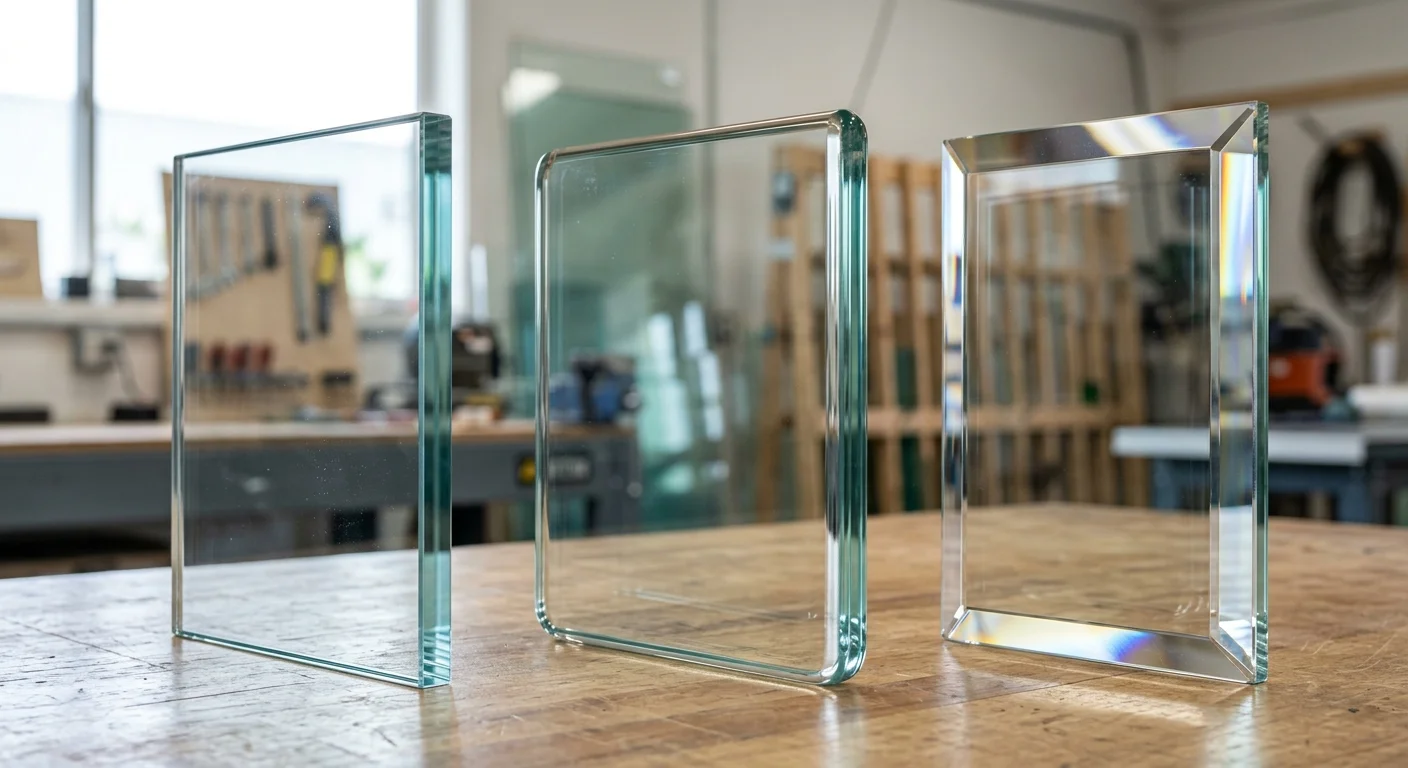
Selecting the ideal glass edge finish requires balancing visual goals, safety requirements, and your project’s overall fabrication budget. The right choice depends on whether the edge will be exposed to touch, visible to the eye, or completely enclosed within structural hardware. According to architectural cost reports by the RSMeans data consortium, custom edge work such as beveling or double-mitering typically adds 15% to 35% to the base fabrication cost of structural glass panels.
To help you evaluate your options, we have compiled a direct comparison of the most common glass edge finishes used in premium residential and commercial designs:
| Edge Finish Type | Aesthetic Appearance | Primary Applications | Relative Cost Factor |
|---|---|---|---|
| Flat Polished | Glossy, modern, square profile with minor safety arris | Frameless railings, exposed shelving, modern table tops | Moderate ($8 – $22 / linear foot) |
| Beveled Edge | Sloped, decorative border that refracts light beautifully | Wall mirrors, luxury cabinetry, decorative doors | Premium ($15 – $45 / linear foot) |
| Pencil Polished | Smooth, rounded, C-shape profile with no sharp corners | Children-friendly furniture, heavy table tops, low shelves | Moderate to High ($12 – $30 / linear foot) |
| Seamed / Swiped | Dull, sanded, non-reflective utility finish | Framed windows, pocket glass, fully enclosed balustrades | Low (Minimal to no extra charge) |
| Mitred Edge | Angled profile for clean, seamless corner connections | Glass-to-glass corners, modern display cases, office walls | High (Requires specialized CNC cutting) |
Step-by-Step Selection Guide
Determining the correct glass edge finish involves analyzing the structural design, exposure level, and safety standards of your specific installation. Glaziers use a systematic process to evaluate architectural blueprints and client needs before sending glass to the fabrication line.
Follow this step-by-step method to select the perfect finish for your next project:
- Identify the exposure level of the glass: If the edges are completely hidden inside a metal channel or wood frame, select a cost-effective seamed edge. If any part of the edge is visible, proceed to the next step.
- Determine the risk of physical contact: For areas where children, pets, or guests will frequently touch or bump into the glass, choose a rounded pencil-polished edge to maximize safety.
- Assess the design style of the surrounding space: Select a flat polished edge for ultra-modern, minimalist environments, or a beveled edge for classical, ornate interiors that require extra visual depth.
- Evaluate the joint configurations: If two glass panels must meet at a corner, specify a precision mitred edge to ensure a tight, structural glass-to-glass seal without bulky metal profiles.
- Consult with an elite glazing contractor: Always verify that your chosen finish aligns with local building safety codes and is fabricated before the tempering process to avoid costly mistakes.
Professional Installation and Common Structural Mistakes to Avoid
The most critical mistake a designer or builder can make is failing to specify glass edge finishes before the panels undergo the thermal tempering process. Once glass is tempered, its internal tension structure is locked. Any attempt to grind, polish, cut, or bevel the glass afterward will cause the entire panel to violently shatter into thousands of tiny pieces. Therefore, all edge work must be completed on raw annealed glass before it enters the tempering furnace.
Another frequent error in structural installations is using standard clamp systems on poorly polished or uneven glass edges. If a clamp applies uneven pressure over a micro-fracture or a rough seamed edge, the concentrated stress can cause spontaneous shattering over time. To ensure maximum safety, always pair high-quality polished glass with the correct mounting components, as discussed in our guide to glass railing hardware explained. This ensures even load distribution and prevents metal-to-glass contact, which is a leading cause of installation-phase breakage.
Additionally, never use seamed-edge glass in frameless stairways, pool surrounds, or high-traffic walkways. Not only does it look unpolished and cheap, but it also increases the risk of skin cuts and fabric snags. Working with an experienced, certified glass fabricator ensures that your glass is cut, edged, and tempered in the correct sequence, guaranteeing long-term beauty and structural durability.
FAQ
What is the difference between a polished glass edge and a seamed glass edge?
A polished glass edge is ground smooth and buffed to a clear, shiny, mirror-like finish, making it perfect for visible, modern installations. A seamed glass edge is simply sanded to remove razor-sharp corners, leaving a dull, matte, and slightly rough surface designed exclusively for framed applications where the edge is completely hidden.
How does a beveled glass edge improve the look of custom mirrors?
A beveled glass edge acts as a prism that catches and refracts light around the perimeter, creating a striking visual border. This slope adds depth and luxury, allowing the mirror to stand out as an artistic focal point without needing an external wooden or metal frame.
Which glass edge finish is the safest for homes with young children?
The pencil-polished edge is the safest option because of its rounded, smooth, C-shaped profile. It eliminates all sharp corners and vertical ninety-degree angles, drastically reducing the risk of cuts or impact injuries in high-traffic household areas.
Can you bevel or polish glass after it has been tempered?
No, you cannot cut, grind, polish, or bevel glass after the tempering process has been completed. Tempering alters the inner tension of the glass, and any mechanical impact on the edges after this process will cause the entire sheet to explode immediately.
Is flat polished edge glass more expensive than a seamed edge?
Yes, flat polished edge glass is more expensive than a seamed edge because it requires multiple stages of mechanical grinding and fine polishing. While seaming is a quick utility safety step, flat polishing requires highly specialized machinery to achieve its water-clear, mirror-like shine.
When should I choose a mitred glass edge for my project?
You should choose a mitred glass edge when joining two glass panels at an angle, such as a ninety-degree corner in a shower enclosure or office partition. Mitring allows the glass panels to meet flush against each other, eliminating unsightly gaps and the need for vertical metal posts.
