

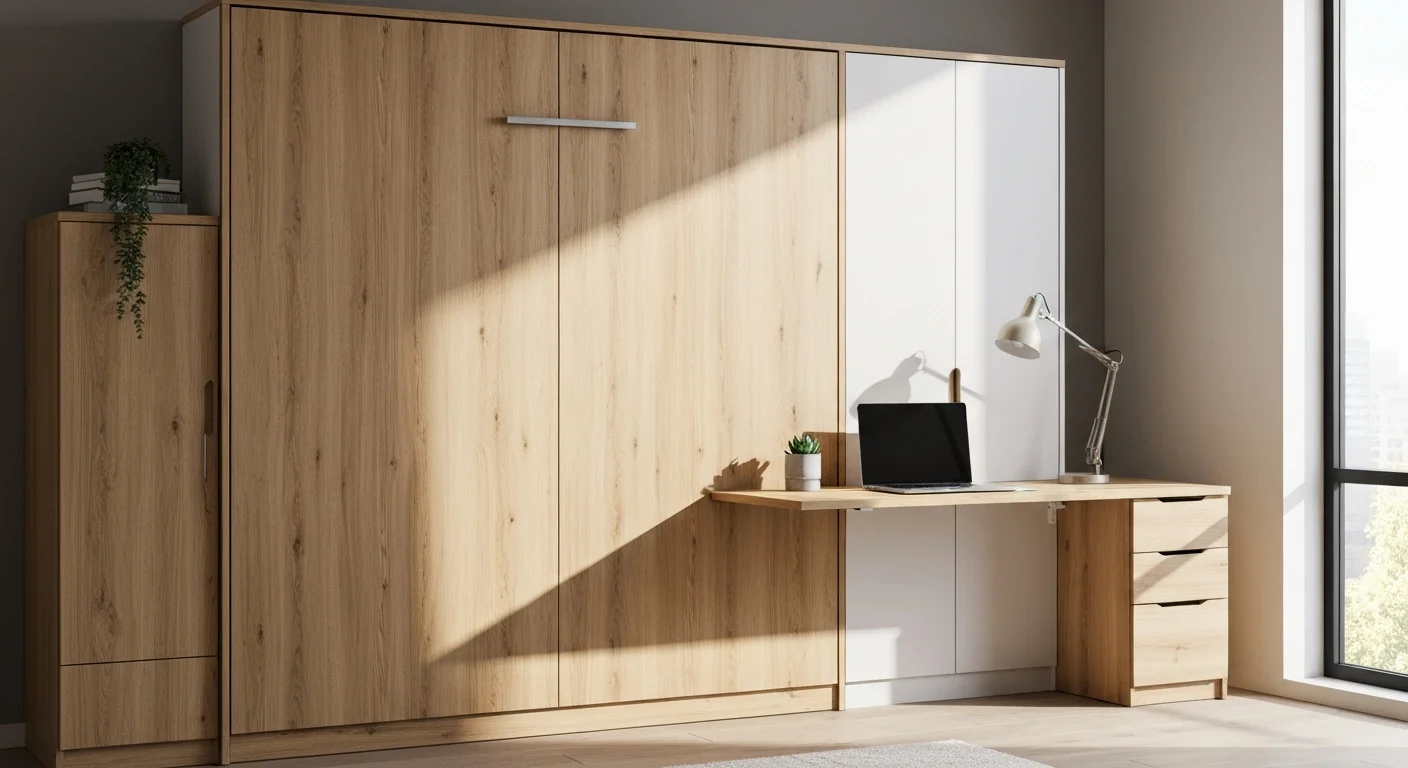
Best Murphy Beds With Desk for Home Office and Guest Rooms
For home offices that double as guest rooms, the best Murphy bed with a desk is a custom-engineered lateral system with a cantilevered, always-level workspace. This setup allows you to keep your laptop, dual monitors, and paperwork undisturbed even when lowering the bed. If your room is deep but narrow, a vertical-pivot queen system with a fold-down or detachable desk offers a superior layout. Avoid cheap particle-board flat-packs ($1,000 to $2,000) that warp and sag under daily use; instead, opt for solid hardwood cabinetry and steel frames ($3,500 to $8,000+) designed to withstand daily mechanical cycles. Achieving the perfect balance of workflow and sleeping comfort requires assessing structural wall studs, room clearance, and weight capacities. By choosing the right mechanical system, you can transform any spare room into an executive suite by day and a luxury oasis by night.
Key Takeaways for Selecting the Best Murphy Bed With Desk
- Cantilevered Desks Rule: Choose a parallel-pivoting desk mechanism if you want to keep your computer, papers, and accessories on the desktop when the bed is lowered.
- Prioritize Real Wood: Solid hardwoods (such as White Oak, Maple, and Walnut) offer the structural integrity needed to handle repetitive mechanical torque without warping.
- Calculate Accurate Clearances: Always allow at least 30 inches of walking clearance around the perimeter of the bed when it is fully extended.
- Professional Anchoring is Critical: Murphy beds must be anchored directly into structural wood or metal wall studs using heavy-duty lag bolts to prevent tipping hazards.
- Gas Pistons Over Springs: Modern gas-piston lifting systems provide a smoother, quieter transition and require less manual effort than traditional spring-loaded hinges.
What is a Murphy Bed With Desk and How Does It Function?
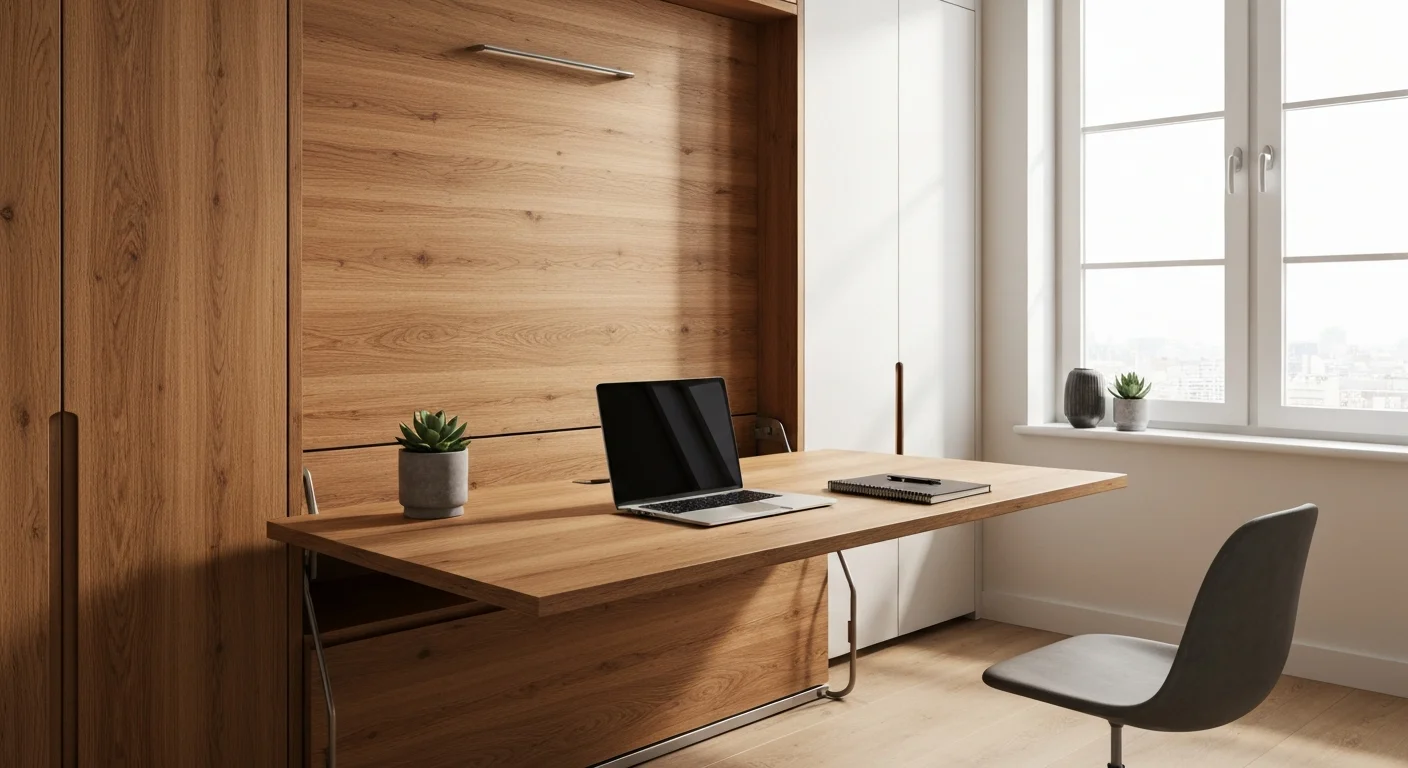
A Murphy bed with a desk is a dual-purpose, space-saving furniture system that integrates a functional work surface with a fold-down mattress frame. Unlike traditional fold-out couches that compromise on both sleep quality and workspace comfort, this system relies on counterbalanced spring or gas-piston mechanisms to shift between modes seamlessly. When you understand the core mechanics, you can easily learn what is a Murphy bed and how modern manufacturing has evolved beyond the clunky, heavy units of the past.
Today’s premium systems feature pivot points engineered to handle heavy loads while maintaining a smooth, single-handed transition. The desk component is either mounted to the face of the bed cabinet or integrated via a parallel hinge system. In high-end models, the desk remains completely parallel to the floor as the bed pivots down, keeping up to 5 inches of items on the desk surface safe and undisturbed. This makes it an invaluable asset for busy professionals who cannot afford to pack up their workstation at the end of every day.
Furthermore, these integrated systems minimize the physical footprint of your furniture. Instead of crowding a room with a separate queen-size bed frame and an executive desk, the wall bed consolidates both functions into a single wall footprint. This consolidation frees up valuable floor space, allowing for better air circulation, improved room aesthetics, and more physical space for daily movement, exercise, or additional seating.
Choosing the Best Wall Bed Desk Configurations for Small Spaces
Selecting the ideal wall bed configuration depends entirely on your room’s architectural footprint and how frequently you intend to host guests. For narrow rooms or tight corridors, a horizontal (or lateral) Murphy bed is the superior choice because the mattress folds down parallel to the wall, requiring significantly less clearance space into the center of the room. Conversely, a vertical-pivot system is best for rooms with high ceilings and ample floor depth, allowing for a traditional bed entry from both sides.
To maximize productivity, consider a system with a built-in desk and side cabinetry. According to a market analysis by Grand View Research, the demand for multifunctional, modular home furniture continues to surge as urban residences require higher utility per square foot. When designing your layout, you must decide between a drop-down desk, which folds away to reveal the bed, and a cantilevered desk, which moves under the descending bed frame.
If you use external monitors, documents, and desk accessories daily, the cantilevered option is the only logical choice to prevent constant setup and tear-down of your workspace. However, if your home office is only used for occasional laptop work, a simpler drop-down or folding desk option can save money and offer a more streamlined, minimalist exterior look when the bed is closed.
Material Selection and Engineering Standards for Daily Use
The longevity of a Murphy bed with an integrated desk relies completely on the structural integrity of its materials and the precision of its lifting mechanism. Professional builders and custom carpenters avoid low-density particle board and MDF because these materials strip their wood screws under the repetitive torque of opening and closing the bed. Instead, specify solid hardwoods such as White Oak, Maple, or Walnut, paired with premium multi-ply plywood cores for the cabinet housing.
The metal sub-frame should feature powder-coated, heavy-gauge steel rather than thin aluminum to prevent sagging over time. For the mechanical core, gas-piston lifters offer a quieter, smoother transition than traditional metal springs, though high-quality spring systems remain highly adjustable for mattress weight changes. Look for hardware systems rated for at least 10,000 cycles, which ensures reliable performance for over 25 years of daily use.
Additionally, high-end manufacturers incorporate safety locks that prevent accidental deployment, protecting children and pets while maintaining a clean, professional aesthetic during business hours. A well-engineered lift system should allow you to lower and raise the bed with a single hand, requiring less than ten pounds of lifting force to complete the transition. This mechanical ease is crucial for turning a potentially cumbersome chore into a seamless, satisfying daily routine.
Key Dimensions and Clearance Requirements for Installation
Accurate measurements are the single most important factor when planning a Murphy bed installation to ensure the unit does not block doorways, windows, or electrical outlets. A standard vertical queen-size wall bed requires a cabinet height of at least 85 to 90 inches, a width of 65 to 70 inches, and an open projection depth of 85 to 92 inches into the room. Horizontal systems, by contrast, require less vertical height (typically 60 to 68 inches for a queen) but occupy a wider horizontal footprint of 80 to 85 inches along the wall.
You must also account for the desk projection, which typically adds an extra 18 to 24 inches to the front of the cabinet when the bed is closed. Safe operation dictates leaving a minimum of 30 inches of walking clearance around the sides and foot of the bed when fully opened. Failing to measure this clearance is a classic amateur mistake that leads to cramped layouts and blocked pathways.
Always verify that your ceiling height can accommodate the cabinet and that your walls are completely plumb before initiating installation. In older homes, floors may slope slightly, requiring the installation team to shim the base of the cabinet to ensure the mechanism operates on a perfectly level plane. Taking these precise measurements upfront prevents binding in the hinges and guarantees a smooth, frictionless operation for decades.
Comparing Different Murphy Bed With Desk Systems
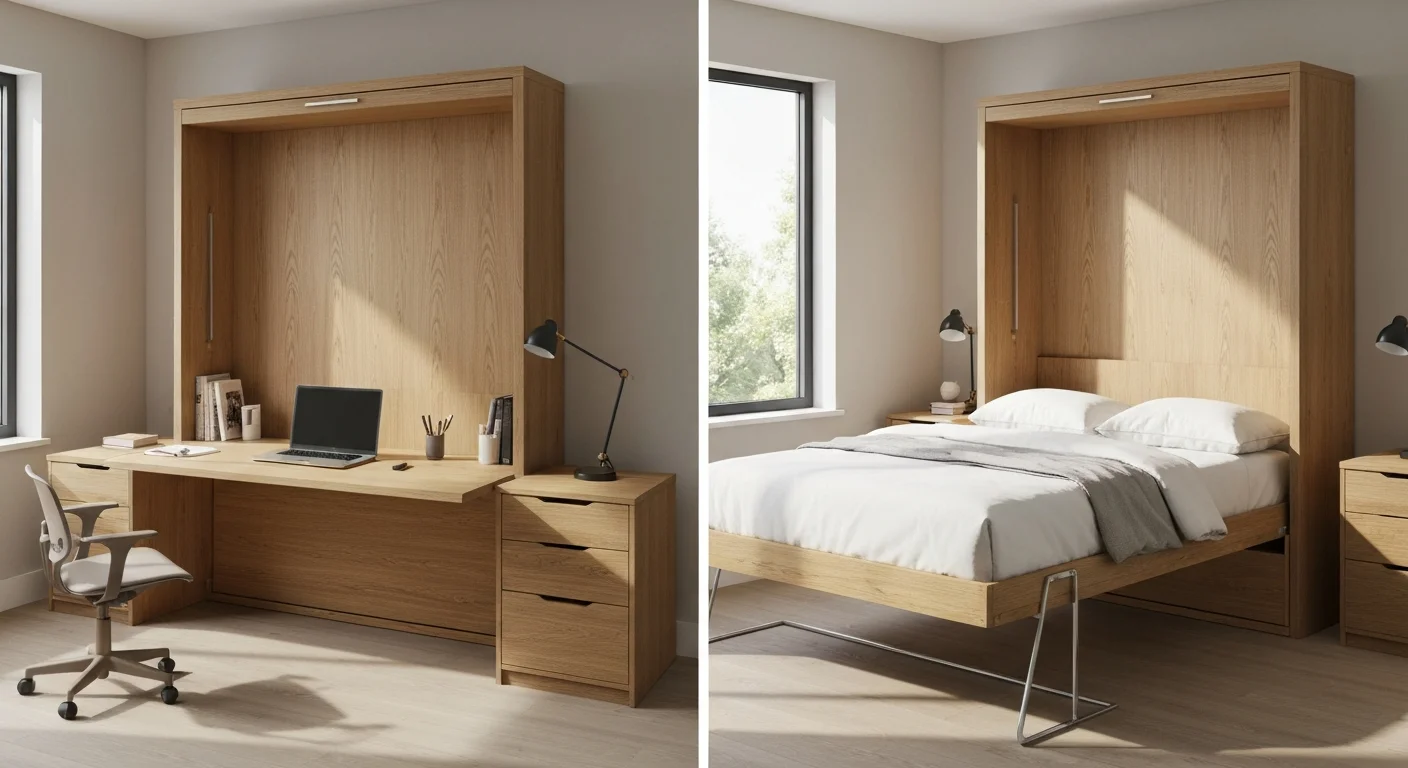
Evaluating different Murphy bed and desk configurations side-by-side helps identify which mechanical system aligns with your lifestyle and budget. While mass-produced retail units offer a lower initial entry price, they often fall short in durability and weight capacity compared to custom-built architectural systems.
| System Type | Desk Behavior During Bed Transition | Ideal Room Size & Layout | Price Range (Installed) | Pros & Cons |
|---|---|---|---|---|
| Parallel-Pivot Cantilever | Remains perfectly level; swings down underneath the bed frame | Small to medium rooms; used daily as a primary home office | $4,500 – $9,000+ | Pros: No need to clear desk. Cons: Higher cost, heavy mechanism. |
| Drop-Down Hinge Desk | Folds flat against the bed face or down onto the floor | Guest rooms with occasional, light office use | $2,000 – $4,500 | Pros: Cost-effective, simple design. Cons: Must clear desk completely before use. |
| Lateral (Horizontal) Desk Bed | Slides down horizontally; low vertical profile on the wall | Narrow rooms, low ceilings, basements, or loft spaces | $3,500 – $7,500 | Pros: Excellent for low ceilings. Cons: Takes up significant wall width. |
| Custom Wall Unit Combo | Modular built-in; desk is attached to adjacent side cabinets | Large rooms; executive home offices requiring heavy storage | $7,000 – $15,000+ | Pros: Maximum storage, luxury finish. Cons: Large footprint, non-portable. |
When analyzing these systems, the structural weight of the unit must be taken into account. According to safety data published by the Consumer Product Safety Commission (CPSC), heavy furniture tipping is a major safety concern; therefore, every system, regardless of its design, must be securely anchored to structural wood or metal studs using heavy-duty lag bolts. Budget units made of compressed wood often lack the solid anchoring points required to guarantee absolute safety under high load stresses, making custom solid-wood framing the gold standard for residential properties.
Step-by-Step Guide to Planning Your Dual-Purpose Home Office Layout
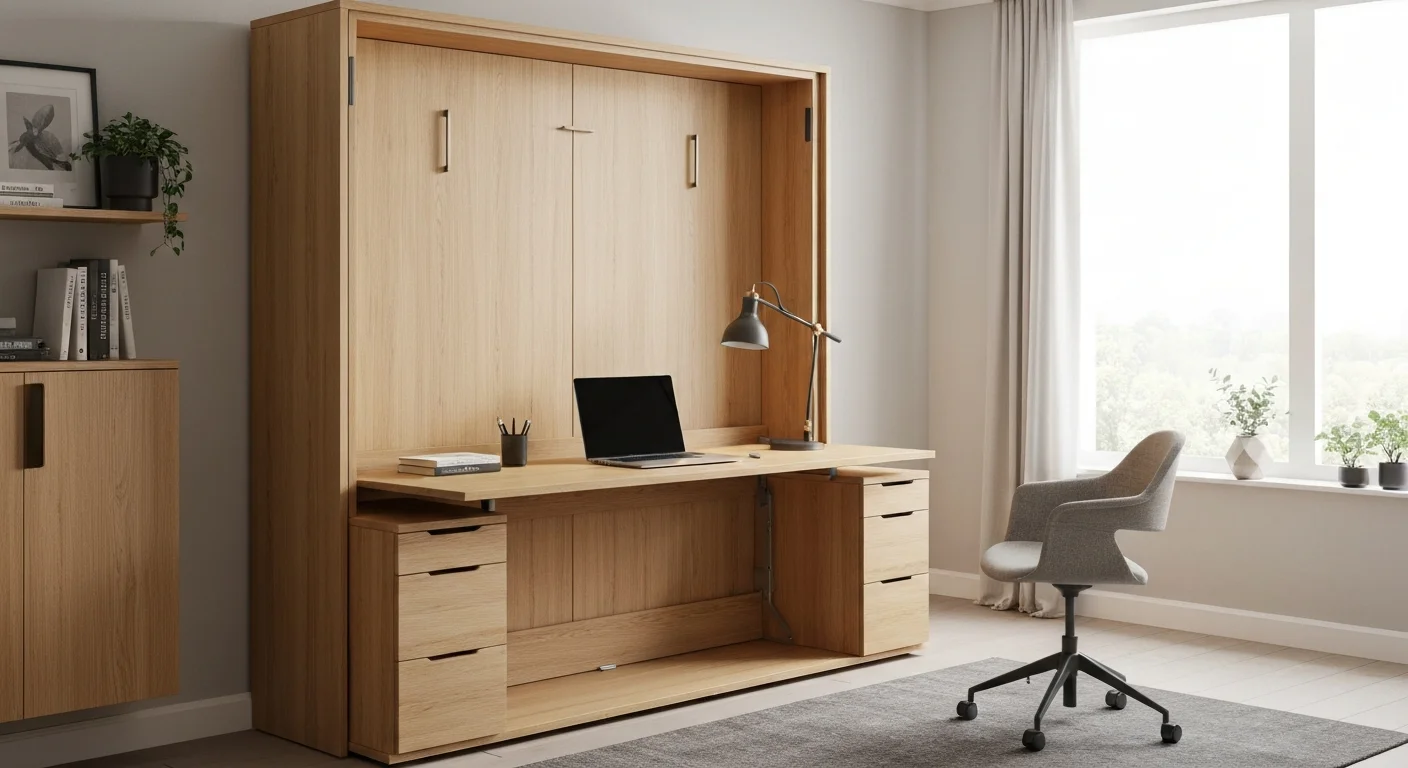
Planning a highly functional dual-purpose room requires a systematic approach to spatial design, electrical layout, and structural assessment. By treating the project as a strategic architectural upgrade, you avoid the common pitfalls of cramped workspaces and dark sleeping quarters.
- Assess the Wall Structure: Locate the studs using a high-quality deep-scan stud finder and ensure there are no hidden plumbing pipes, HVAC ducts, or electrical conduits behind the drywall where the mounting bolts will penetrate.
- Map Electrical Outlets: Determine if you need to relocate or add electrical outlets inside the cabinet frame. This step is crucial for powering computer monitors, task lighting, and phone chargers without leaving messy cords exposed.
- Choose Your Orientation: Select between a vertical-pivot or horizontal-pivot system based on your room’s natural pathways, closet doors, and window placements to prevent any physical interference when the bed is down.
- Verify Mattress Compatibility: Select a high-quality coil or memory foam mattress that fits the cabinet’s maximum depth specification (typically 10 to 12 inches) and falls within the weight limits of your lift mechanism.
- Install Structural Blocking: For steel-studded walls or plaster-and-lath walls, install wood blocking behind the drywall to provide a solid, unyielding anchor point for the bed’s top header bracket.
- Balance the Mechanism: Once the mattress is placed on the frame, adjust the tension springs or gas pistons to achieve perfect balance, allowing the bed to float in place without slamming down or springing upward.
In 2026, remote workers increasingly prioritize integrated technology in their built-in furniture. This includes routing high-speed USB-C charging ports, LED task lights with touch dimmers, and hidden wire-management grommets directly into the desktop and headboard. Taking the time to pre-plan these electrical components prevents messy cords from cluttering your polished office space and ensures a clean, streamlined aesthetic when the bed is tucked away.
Custom Cabinetry and Design Integration for Premium Properties
Integrating your Murphy bed with desk into high-end custom cabinetry transforms a functional piece of furniture into a seamless, permanent architectural feature of your home. Rather than looking like an afterthought pushed against a wall, a professionally designed unit can be flanked by built-in bookshelves, file drawers, and wardrobe closets that match the existing trim, molding, and color palette of your home. Utilizing high-end custom remodeling techniques allows you to design a cohesive, upscale workspace that elevates your home’s resale value and aesthetic appeal.
For example, selecting premium wood finishes like rift-sawn white oak or deep walnut adds natural warmth and texture to an office space. You can also incorporate specialized features such as pull-out nightstands, integrated wardrobe closets, and dimmable LED accent lighting that automatically switches from cool office illumination to warm bedroom lighting. This level of customization ensures that whether you are hosting an important corporate video conference or welcoming overnight guests, the room feels intentional, sophisticated, and completely uncluttered.
Furthermore, custom architectural millwork allows you to hide irregularities in your walls and floors. Experienced carpenters can scribe the outer cabinets to your baseboards and crown molding, making the entire assembly look like it was built with the house. This high-end finish is particularly valuable in luxury homes where free-standing, flat-pack furniture would detract from the overall design aesthetic and value of the property.
Evaluating the Economics: Retail Kits vs. Custom Handcrafted Systems
Understanding the financial and long-term value differences between mass-market retail kits and custom Murphy bed systems is crucial for making an informed investment. While a flat-pack retail kit from a major online merchant can cost anywhere from $1,200 to $2,800, these units typically rely on low-grade laminates, plastic veneer edging, and lightweight spring systems that wear out after a few years of consistent use. In contrast, custom handcrafted Murphy beds, which run between $4,500 and $10,000+ depending on materials and integrated storage, are built to last a lifetime.
According to statistical surveys conducted by the Pew Research Center regarding home improvement trends, premium, multi-functional home modifications offer some of the highest satisfaction and utility returns for modern homeowners, particularly in high-cost-of-living metropolitan areas. When you invest in a custom built-in system, you are not just buying a bed; you are adding permanent square footage value to your real estate. The structural integrity of solid wood, soft-close hinges, and precision-engineered European piston lifts ensure that the system functions flawlessly every single day without warping, sagging, or squeaking.
FAQ
What is the average cost of a premium Murphy bed with a desk?
A premium, professionally installed Murphy bed with a desk typically ranges from $4,500 to $10,000. The total cost depends heavily on whether you select solid hardwoods, custom side cabinetry, integrated LED lighting, and advanced cantilevered hardware mechanisms.
Can you leave a laptop on the desk when lowering the bed?
Yes, if you choose a cantilevered, always-level desk mechanism, you can leave your laptop, paperwork, and writing tools on the desk. The mechanism is engineered to keep the desktop perfectly parallel to the floor as it swings down underneath the bed frame.
Which mattress thickness works best with a wall bed system?
Most modern Murphy beds are designed to accommodate standard mattresses up to 10 or 12 inches in thickness. Using a thicker mattress can prevent the bed from closing completely or put excessive strain on the locking mechanism and cabinetry doors.
How do you securely anchor a Murphy bed to the wall?
A Murphy bed must be securely anchored to structural wood or metal wall studs using heavy-duty lag screws or toggle bolts through the top header rail. You should never anchor a wall bed into drywall alone, as the dynamic mechanical forces can pull the cabinet off the wall.
Is a vertical or horizontal Murphy bed configuration better for small rooms?
Horizontal configurations are best for narrow rooms or spaces with low ceilings, as the bed extends less into the room when opened. Vertical configurations are ideal for wider rooms with standard or high ceilings, allowing guests to enter the bed comfortably from both sides.
Can a Murphy bed with a desk be used as a daily bed?
Yes, high-quality Murphy beds built with solid wood frames and heavy-duty gas piston lifts are fully capable of daily use. When paired with a supportive, high-quality mattress, they offer the exact same comfort level and durability as a traditional stationary bed.
