

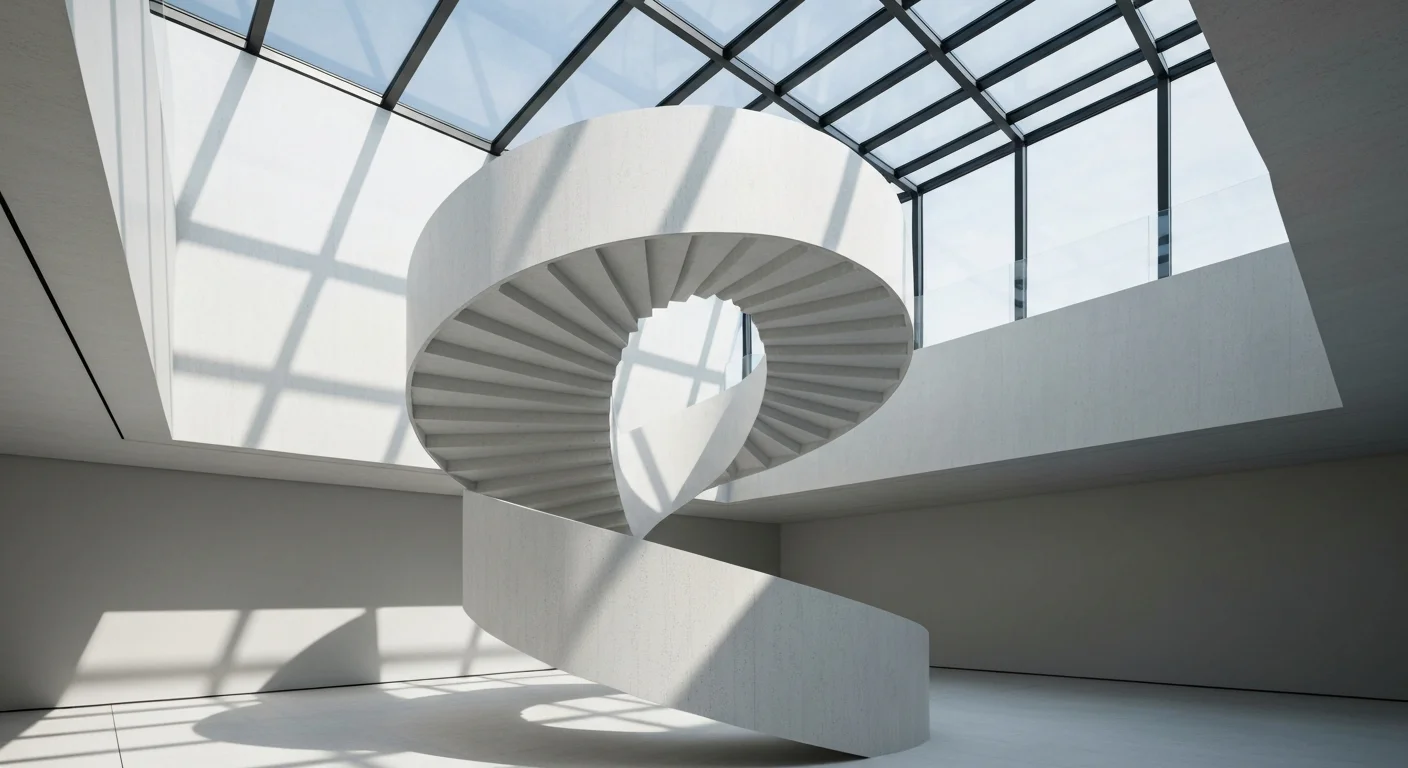
Floating Spiral Staircase Design Ideas
For high-end residential and commercial spaces seeking a striking architectural statement, a custom cantilevered steel and glass floating spiral staircase offers the ultimate combination of structural transparency and modern luxury. For traditional or transitional interiors, a concealed steel mono-stringer paired with thick hardwood treads provides a warmer, more grounded aesthetic without sacrificing the floating effect. Achieving this delicate balance of engineering and design requires careful planning of your home’s structural load capacity, local building code requirements, and material selections. Precision-engineered floating systems typically range from $18,000 to upwards of $65,000 depending on materials and custom fabrications. Choosing the correct structural configuration ensures safety, minimizes deflection, and delivers a stunning focal point that elevates your entire property’s value.
Key Takeaways

- Structural engineering must prioritize rigid anchorage to prevent bounce and rotational deflection in cantilevered treads.
- Combining steel supports with premium hardwoods or laminated glass treads offers the best balance of strength and aesthetic appeal.
- Compliance with the International Residential Code (IRC) requires specific tread depths, riser heights, and continuous handrails.
- Incorporate integrated LED lighting early in the design phase to enhance safety and highlight the floating geometric lines.
- Professional installation by certified structural fabricators is critical to avoid costly structural failures and inspection delays.
Engineering the Modern Floating Spiral Staircase
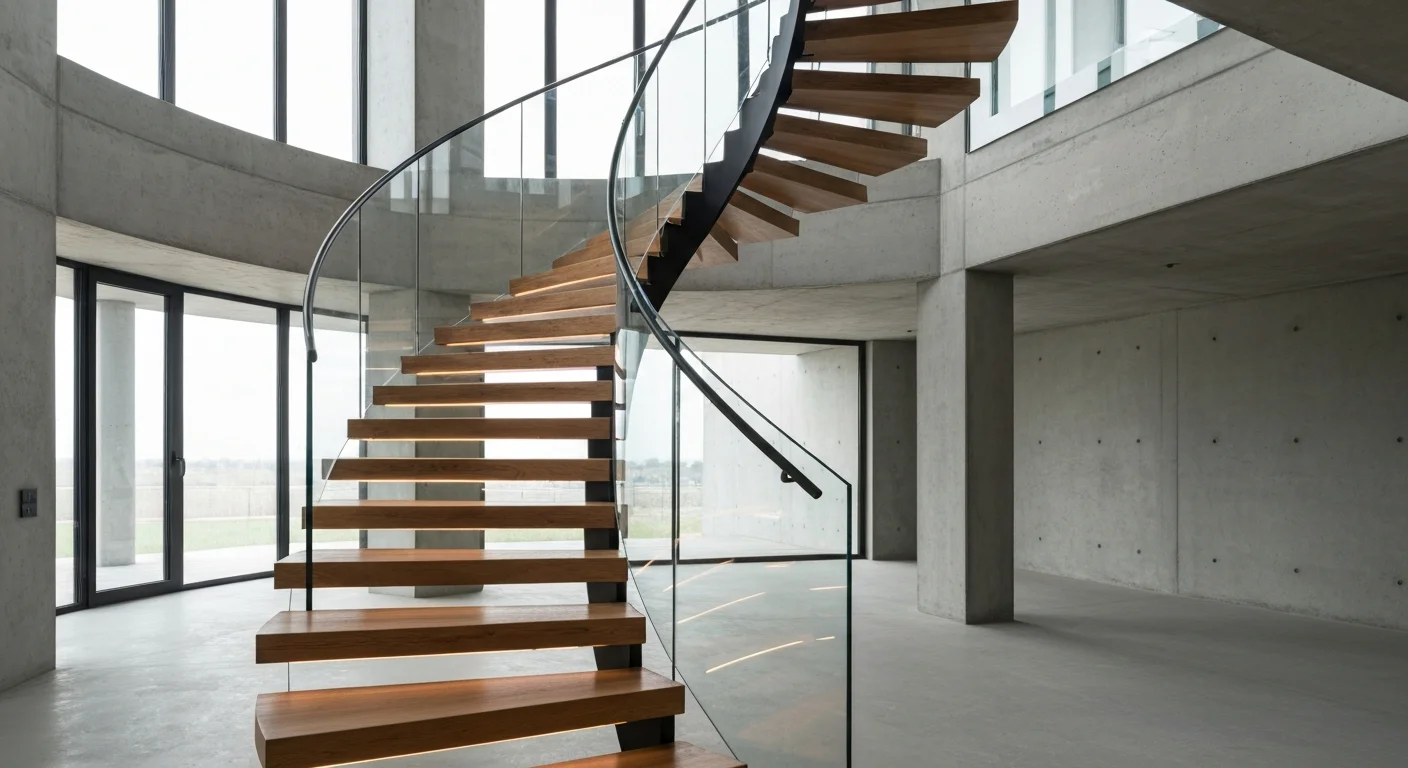
Designing a floating helical system requires a deep understanding of physics, structural load distribution, and material science. Standard staircases rely on support walls on both sides. In contrast, a floating spiral staircase projects steps from a single central column or a reinforced curved wall. This cantilevered engineering demands that each tread acts as an individual structural beam. Engineers must calculate both vertical loads and torsional forces. Torsional forces occur when a person’s weight causes the tread to twist or rotate around its mounting point.
To handle these forces, fabricators use heavy-gauge structural steel for the inner core. According to structural guidelines published by the American Institute of Steel Construction, the central steel column must handle extreme rotational torque. This limits deflection under dynamic loads to less than L/360 of the span. Additionally, the anchorage points at the top and bottom of the staircase must tie directly into the building’s structural framing. Builders often reinforce these connection points with heavy steel plates and through-bolts. This prevents the staircase from shifting, vibrating, or sagging over decades of daily use.
Another critical aspect of engineering is the connection method between the tread and the central support. Fabricators utilize full-penetration structural welds or heavy-duty grade-8 mounting bolts. This ensures that the joint does not suffer from metal fatigue over millions of footsteps. The choice of wall construction also matters if you are mounting the treads directly to a curved wall. In these designs, the wall must contain a concealed steel stringer plate. This plate distributes the load across several wall studs or concrete columns, preventing drywall cracking and structural failure.
Best Material Combinations for Floating Spiral Staircase Designs
Selecting the right materials determines the durability, maintenance requirements, and overall visual impact of your floating helical staircase. Structural steel serves as the foundational skeleton for almost all floating designs due to its immense tensile strength and design flexibility. For tread surfaces, designers frequently pair steel frames with premium hardwoods, laminated glass, or architectural concrete.
Hardwoods such as white oak, walnut, and mahogany remain highly popular for residential applications. These woods add natural warmth and acoustic dampening to the staircase. For a sleeker, more futuristic appearance, structural laminated glass treads allow light to pass completely unobstructed through the stairwell. If you want to elevate this ultra-modern aesthetic, pair these steps with a curved-glass staircase design that features seamless glass railings. This creates an unparalleled sense of openness and light in tight or dark foyers.
For industrial or minimalist environments, raw or powder-coated steel and ultra-high-performance concrete (UHPC) offer exceptional wear resistance. UHPC allows fabricators to cast incredibly thin, lightweight treads that possess the strength of traditional reinforced concrete. When selecting tread materials, always consider the tactile feel, slip resistance, and maintenance requirements. Polished glass and stone look spectacular but require specialized anti-slip coatings or acid-etched patterns to ensure safe footing in high-traffic homes.
How to Choose the Right Footprint and Radius for Your Space
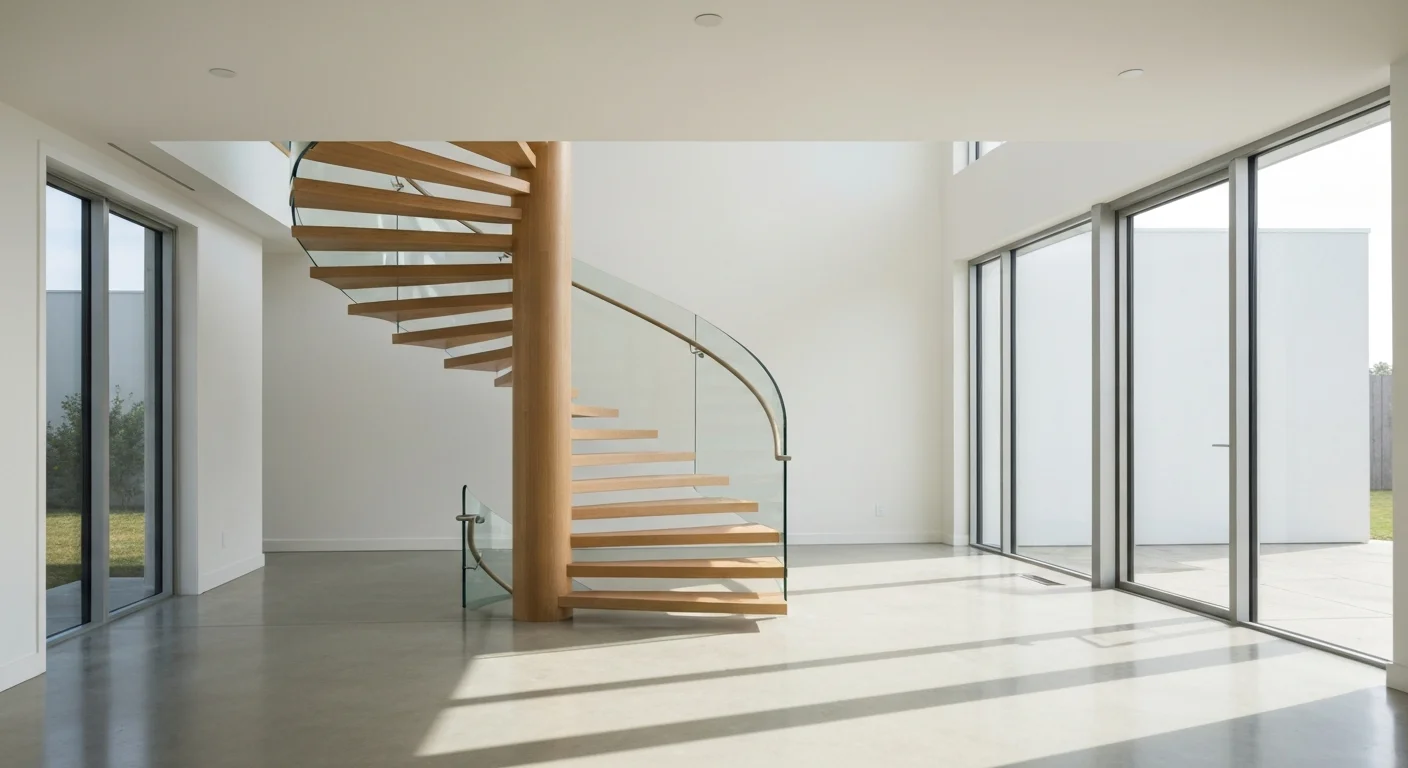
Determining the correct dimensions for a floating spiral staircase requires balancing your available floor area with comfortable climbing ergonomics. The overall footprint of a spiral stair is defined by its diameter, which typically ranges from 4 feet to over 6 feet. While a compact 4-foot diameter saves maximum square footage, it results in steep steps and narrow walking paths. This size is generally reserved for low-traffic secondary lofts or mechanical rooms.
For main residential staircases, building codes and comfort dictate a minimum diameter of 5 feet to 6 feet. According to home design trends tracked by the National Association of Home Builders, properties featuring spacious open-concept layouts with wider stairwells sell faster and appreciate more rapidly. A larger radius allows for wider treads and a more gradual rise, which significantly improves safety and ease of transit.
To calculate your layout, you must measure the total floor-to-floor height and divide it by the desired riser height. Most residential building codes mandate a maximum riser height of 9.5 inches for spiral stairs, compared to the standard 7.75 inches for traditional stairs. However, aiming for a more conservative 7.5 to 8.5 inches provides a much more comfortable climb. Additionally, ensure you maintain a minimum headroom clearance of 6 feet 6 inches along the entire path of travel to prevent taller users from bumping their heads on the upper floor ceiling or steps above.
Comparing Floating Spiral Staircase Materials and Costs
The total investment for a floating spiral staircase varies widely depending on material choices, engineering complexity, and installation logistics. Custom-engineered architectural staircases require highly skilled labor, precise digital modeling, and premium materials.
Below is a comparison of the most popular material options, structural performance, and typical price ranges:
Tread Material
Structural Performance
Estimated Price Range (Installed)
| Premium Hardwood (Oak/Walnut) | Excellent acoustic dampening, moderate weight, high flexural strength | $18,000 – $35,000 |
| Laminated Structural Glass | Maximum light transmission, low acoustic dampening, heavy weight | $30,000 – $65,000+ |
| Powder-Coated Structural Steel | Maximum durability, low weight, high structural rigidity | $15,000 – $28,000 |
| Ultra-High-Performance Concrete | Exceptional wear resistance, high weight, modern industrial appeal | $22,000 – $40,000 |
These estimates reflect professional manufacturing and installation services. Shipping, structural wall reinforcement, engineering stamps, and custom architectural railings will impact final project budgets. For the best long-term results, always obtain a comprehensive engineering evaluation prior to purchase.
Professional Installation Tips and Common Structural Mistakes
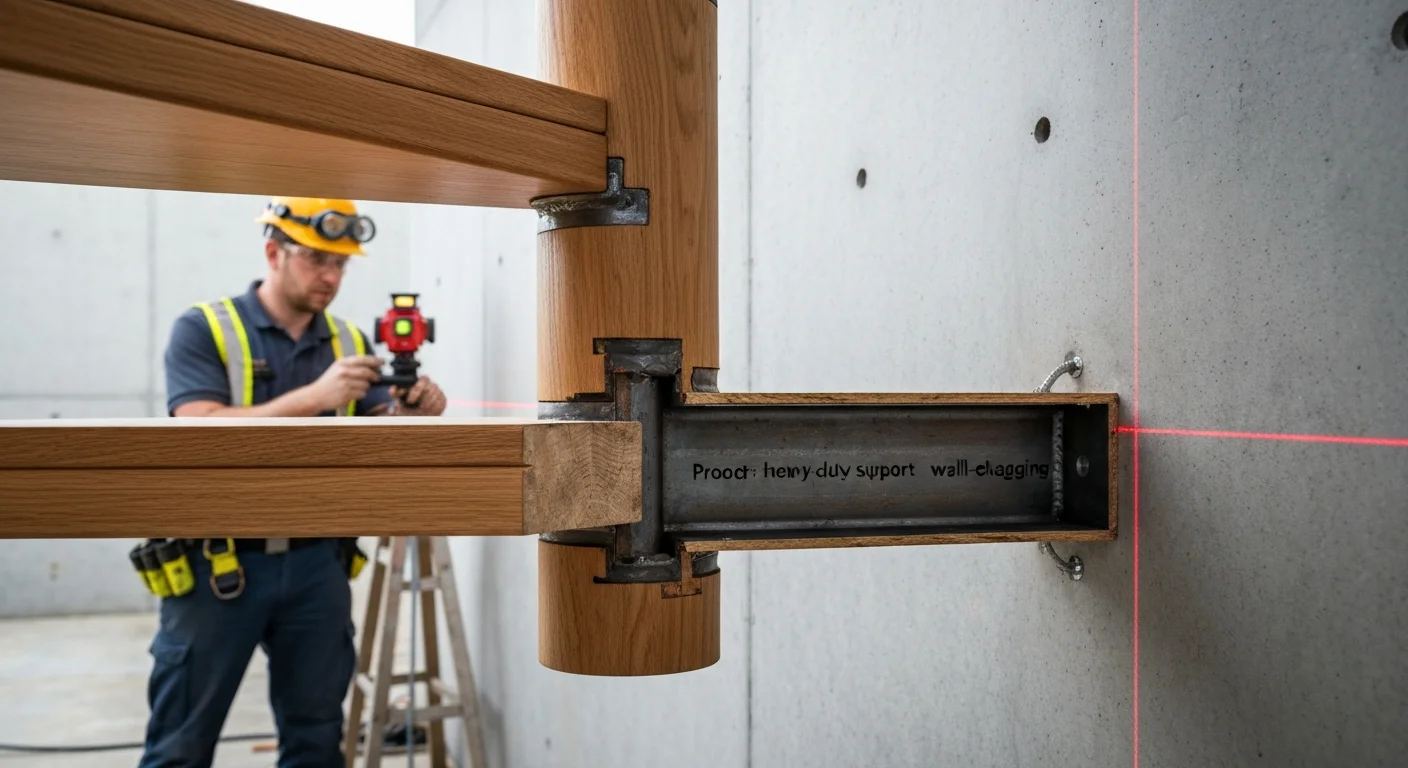
Installing a floating spiral staircase requires absolute precision, specialized heavy rigging equipment, and experienced structural welding. One of the most common mistakes DIY installers and general contractors make is failing to reinforce the subfloor and header joists before mounting the staircase. A floating helical system exerts concentrated point loads rather than distributing weight across a wide footprint. Without proper blocking and structural steel headers, the floor framing can warp or sag over time.
Another critical error to avoid is ignoring vibration damping during the design phase. Floating stairs can act like tuning forks if they lack proper mass or structural dampening. When people walk up and down, the staircase can produce subtle vibrations or metallic rings. Experienced fabricators prevent this by injecting acoustic dampening materials inside hollow steel stringers or utilizing thicker, heavier tread plates.
For the safest and most reliable installation, follow these essential steps:
- Consult a structural engineer to assess floor load capacities and design the necessary framing reinforcements.
- Use 3D laser scanning to capture exact job site dimensions, ensuring the custom staircase fits perfectly without field modifications.
- Install structural blocking and heavy steel mounting plates behind the wall finishes before hanging the steps.
- Assemble the central column and primary structural stringers first, verifying perfect plumb alignment using digital levels.
- Securely mount individual floating treads and apply high-strength thread-locking compound to all structural fasteners.
- Install a code-compliant handrail system to provide rigid lateral support and tie the entire structure together.
Safety is paramount when designing elevated walkways and staircases. According to database records from the National Safety Council, falls remain one of the leading causes of preventable residential injuries, emphasizing the importance of securing your staircase with robust handrails and slip-resistant tread surfaces.
Innovative Styling and Lighting Ideas for Floating Stairs
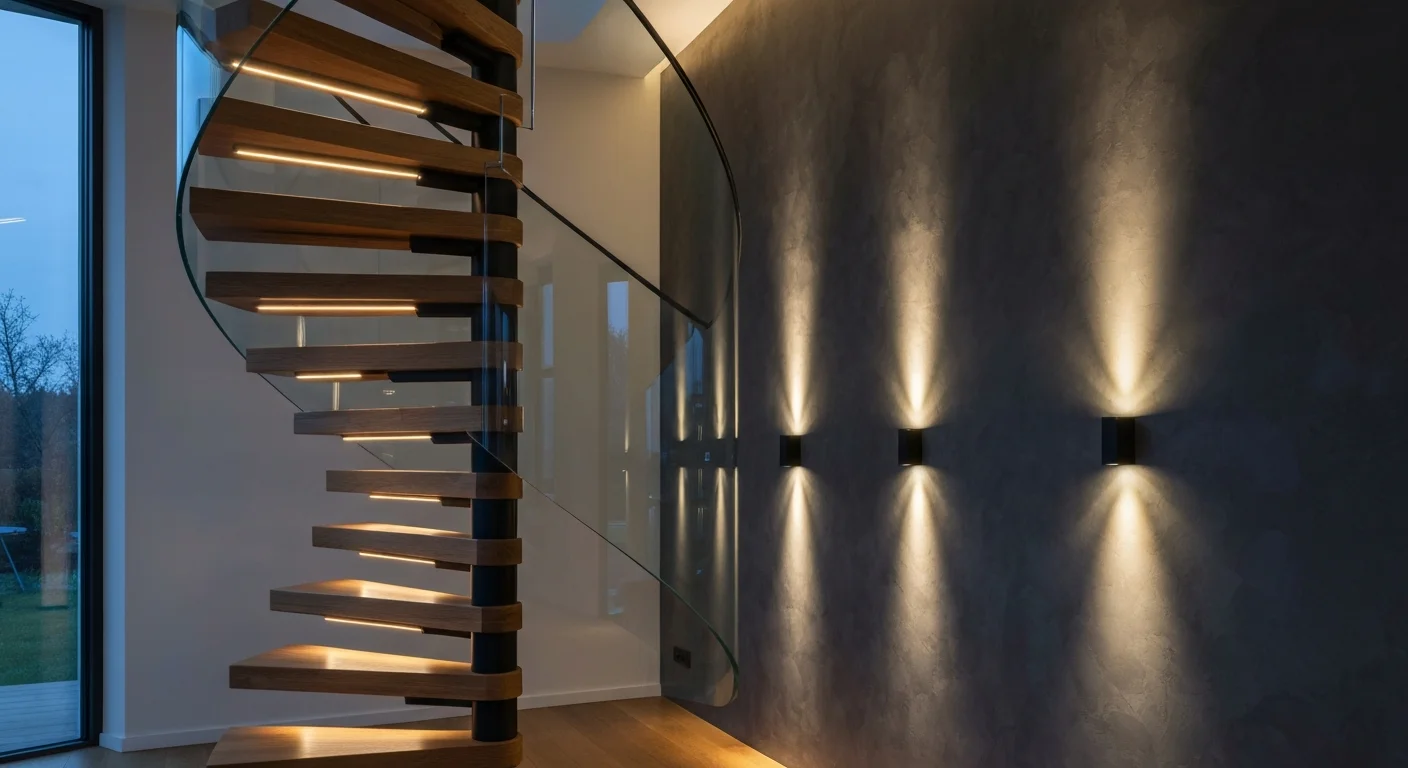
Elevating a floating spiral staircase from a functional transit point to a breathtaking sculpture requires creative styling and modern lighting techniques. Lighting is not just an aesthetic addition; it is a critical safety feature that defines each step in low-light conditions. Low-voltage LED strip lights can be routed directly into the underside of each tread, casting a soft, downward glow that highlights the floating illusion.
Another popular lighting approach involves installing recess-mounted wall fixtures next to every third step. This creates a rhythmic pattern of light and shadow that accentuates the spiral’s elegant geometry. To complement the open and airy nature of these stairs, select a minimalist handrail system. Utilizing a premium handrail system for stairs provides essential safety without visual clutter.
For ultra-modern homes, consider pairing floating wood or glass treads with black powder-coated steel posts and horizontal cable railings. This design maintains open sightlines and allows natural light to flood the space. In more classic settings, custom ornamental wrought iron handrails can be hand-forged to follow the precise helical curve of the staircase. This blends traditional craftsmanship with modern structural lightness. No matter your aesthetic, ensure your railing is continuous and easy to grip from the top landing to the very bottom step.
